
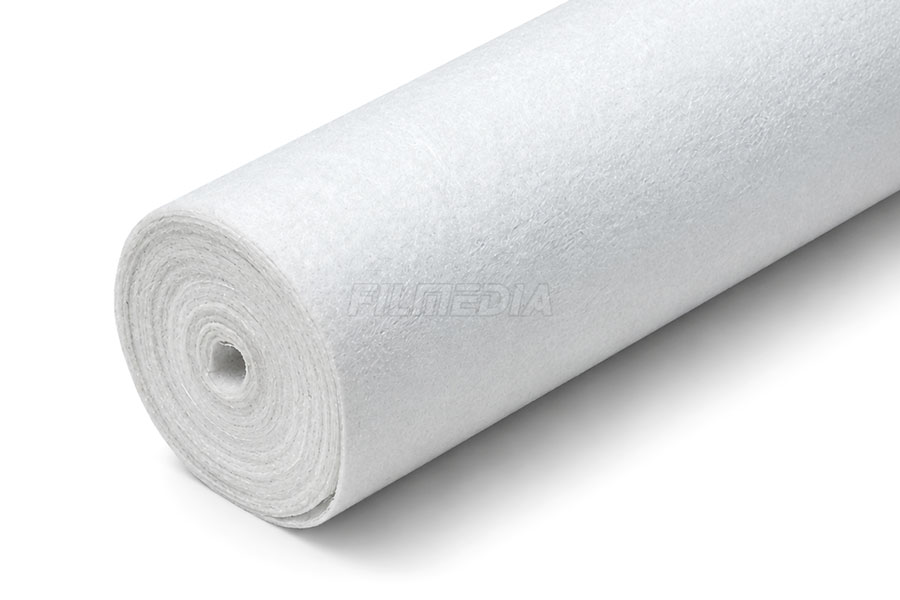
PTFE Needle Punched Felt Filter Fabric
Can operate stably for extended periods in environments up to 240℃, and can withstand temperatures above 260℃ for short periods, making it particularly suitable for high-temperature flue gas dust removal systems.
Impactless against strong acids, alkalis, and organic solvents, adaptable to various corrosive conditions within a pH range of 0-14.
PTFE fibers form a uniform microporous structure, providing excellent interception capabilities for ultrafine particles. After coating with a PTFE microporous membrane, the filtration efficiency can reach over 99.99%, effectively meeting ultra-low emission requirements.
The smooth surface of PTFE provides excellent self-lubrication, preventing dust adhesion. Dust easily detaches during pulse cleaning, effectively reducing operating resistance and improving dust removal efficiency.
PTFE material is naturally hydrophobic, non-hygroscopic, and non-condensing, effectively preventing filter bag clogging, making it particularly suitable for high-humidity flue gas environments.
Description
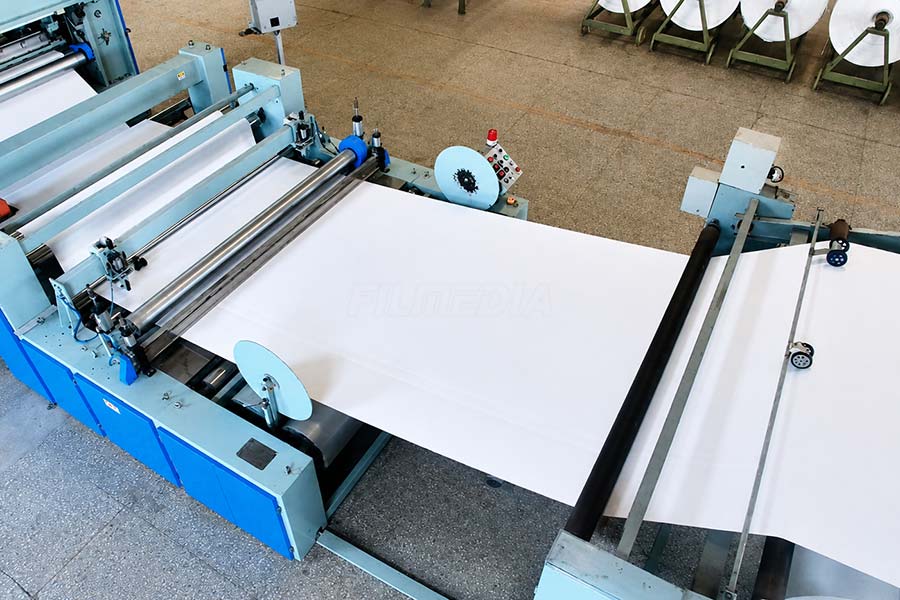
PTFE (Polytetrafluoroethylene) needle felt is a nonwoven filtration material manufactured through the three-dimensional needle punching of 100% ultrafine pure polytetrafluoroethylene fibers. Featuring a linear macromolecular structure, PTFE fibers possess extraordinary heat resistance, wear resistance, corrosion resistance, and chemical stability. With continuous technological advancements and growing market demands, its application prospects in filtration, separation, and environmental protection are expanding rapidly.
As a manufacturer of premium needle-felt filtration materials, Filmedia® leverages extensive industry experience and a team of technical experts to gain a deep understanding of filtration requirements across diverse operating conditions. We provide scientifically sound, practical, and reliable filtration solutions tailored to our customers’ specific applications. Our comprehensive technical support—encompassing material selection, product design, and process optimization—aims to enhance filtration efficiency, extend product service life, and reduce overall operating costs.
Physical and Chemical Properties
| Weight(gsm) | 750 | |
| Thickness(mm) | 1.5 | |
| Width(m) | ≤2.2 | |
| Finish treatment | Singeing & Calendering, PTFE Impregnation, PTFE Membrane Lamination | |
| Air permeability(L/m2.s) | 60 | |
| Tensile strength(N/5cm) | warp | ≥700 |
| weft | ≥600 | |
| Tensile elongation(%) | warp | ≤20 |
| weft | ≤30 | |
| Heat shrinkage(%) | warp | ≤1.5 |
| weft | ≤1.0 | |
| Temperature(°C/°F) | Continue | 240 |
| Instant | 260 | |
| Anti-acid | Good | |
| Anti-alkali | Good | |
| Anti-abrasion | Excellent | |
| hydrolysis stability | Middle | |
Common Post-Treatment Processes
To adapt to different operating conditions and extend service life, PTFE needle felt is typically subjected to specialized surface treatments before leaving the factory.
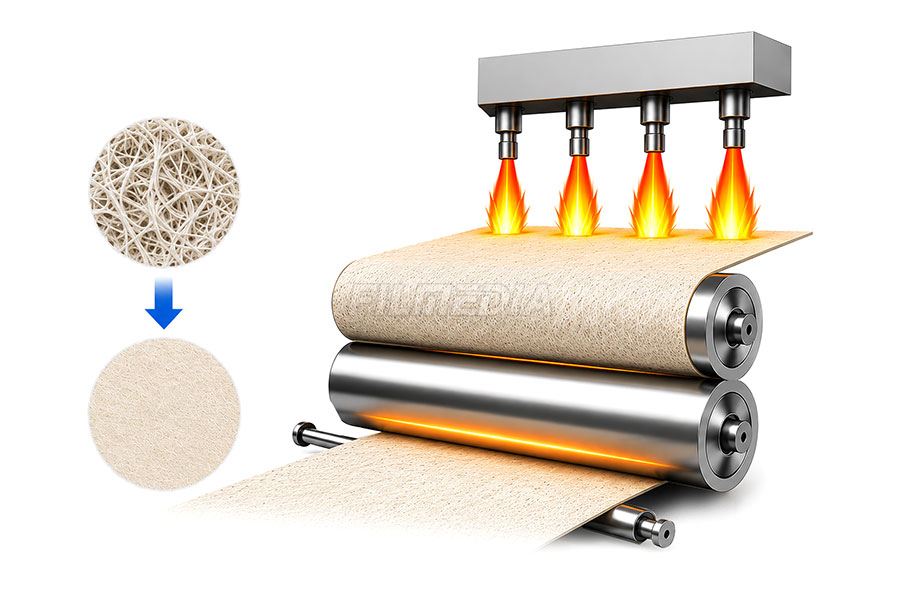
☑ Singeing & Calendering
This process removes loose fibers from the fabric surface through high-temperature singeing and then smooths the surface using heated rollers. The resulting filter media has a smoother finish, significantly improving dust cake release and cleaning efficiency while reducing dust accumulation on the filter surface.
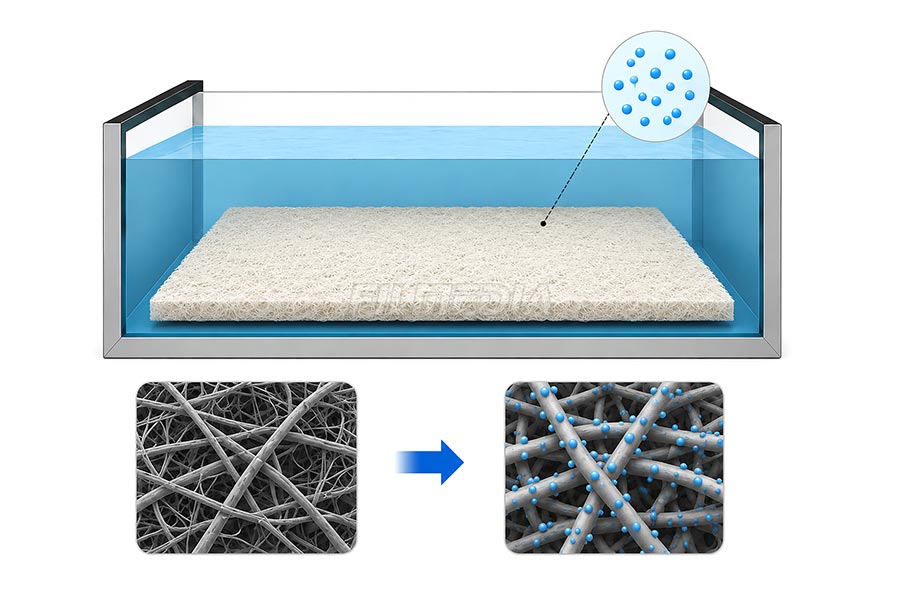
☑ PTFE Impregnation
The entire filter fabric is impregnated with a PTFE emulsion, allowing each individual fiber to be coated with a protective PTFE layer. This treatment further enhances resistance to oxidation, chemical attack, and harsh operating environments, thereby extending the service life of the filter media.
☑ PTFE Membrane Lamination
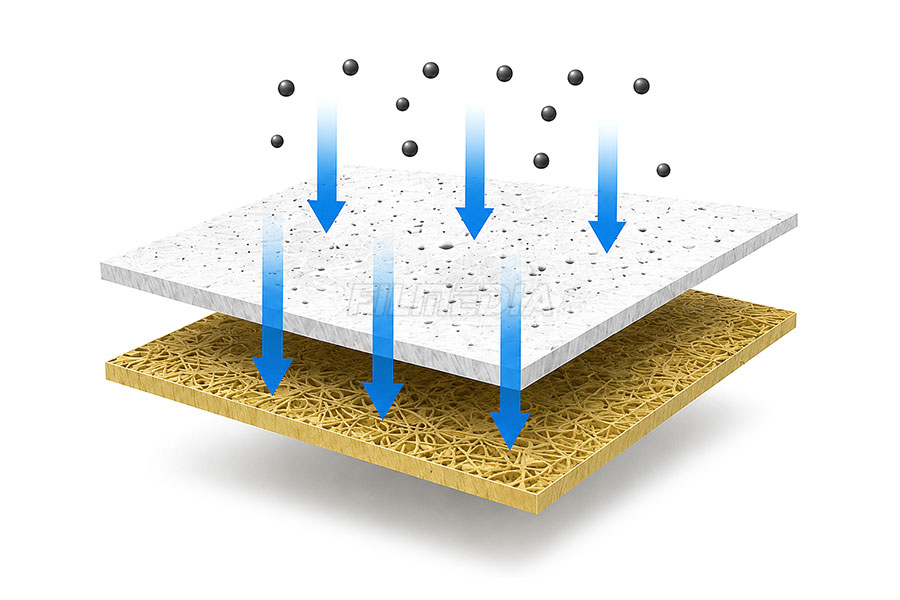
A microporous PTFE membrane is laminated onto the surface of the needle felt to create a highly efficient surface filtration layer. This treatment enables near-zero emission performance and is particularly suitable for capturing highly toxic, high-value, or ultra-fine particulate matter. The membrane also improves filtration efficiency, dust release properties, and overall system stability.
Application Industries
PTFE needle-punched felt demonstrates exceptional adaptability, whether in high-temperature, highly corrosive industrial flue gas dedusting or in solid-liquid separation applications involving strong acids and alkalis.
Dust Filtration Applications
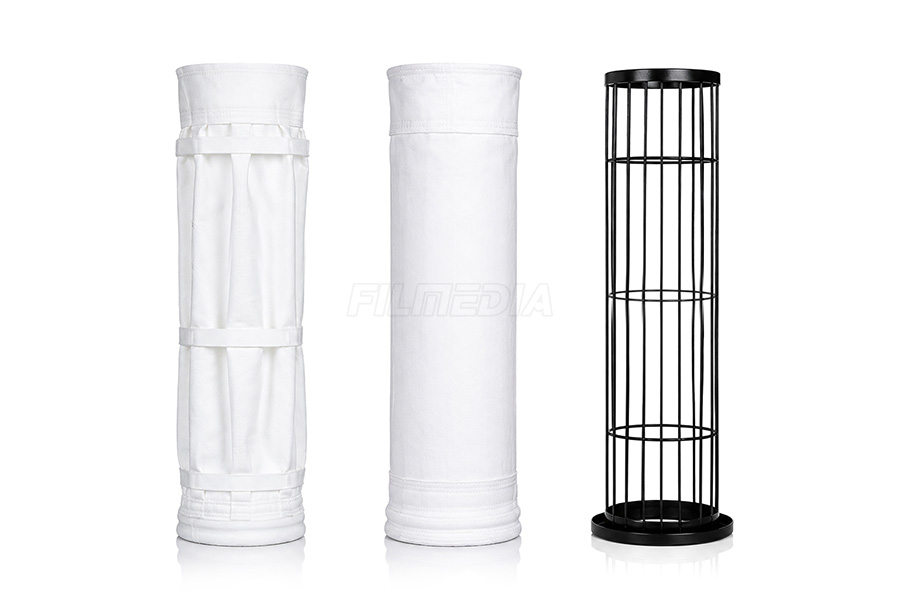
In harsh environments characterized by high temperatures, strong acids or alkalis, high humidity, or requirements for ultra-low emissions, PTFE needle-felt dust collection filter bags are the key choice for ensuring the long-term, stable operation of dust removal systems and avoiding the risks associated with frequent bag replacement.
PTFE needle felt is widely used in waste incineration power plants, where flue gas conditions are characterized by high temperatures, high humidity, and strong acidic components. Its excellent resistance to heat and chemical corrosion ensures long-term stable filtration performance.
PTFE filter media is commonly applied in acid and alkali exhaust gas treatment, fertilizer production, and the chlor-alkali industry. Its outstanding chemical resistance makes it suitable for handling highly corrosive process gases.
In the iron and steel industry, PTFE needle felt is used in sintering plants, pelletizing systems, and steelmaking dust collection systems. It effectively withstands high temperatures and complex flue gas compositions while maintaining excellent filtration efficiency.
PTFE filter media is widely employed in the flue gas treatment systems of aluminum, copper, lead, and zinc smelting operations. Its exceptional resistance to corrosive gases helps ensure reliable performance under harsh smelting conditions.
PTFE needle felt is an ideal choice for high-sulfur flue gas filtration and ultra-low emission retrofit projects in coal-fired power plants. It provides superior resistance to acid attack and enables compliance with increasingly stringent environmental regulations.
In cement manufacturing, PTFE filter media is commonly used for kiln exhaust dust collection and high-temperature flue gas filtration. Its high-temperature stability and excellent dust-release properties contribute to efficient and reliable plant operation.
Liquid Filtration Applications
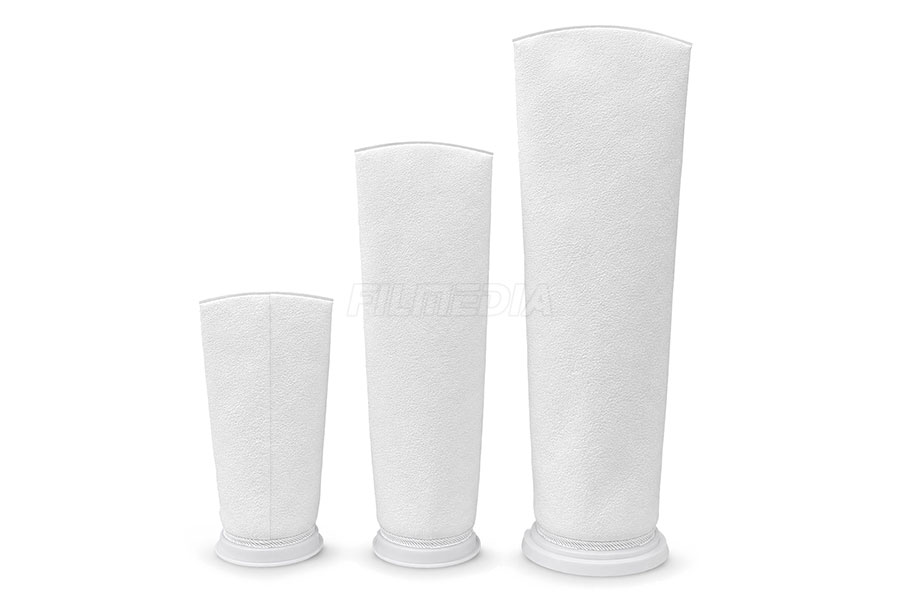
PTFE has become the preferred filtration material for extreme liquid filtration applications due to its unmatched chemical resistance, exceptional thermal stability, biological inertness, and long service life. These characteristics enable PTFE filter media to operate reliably in environments involving high temperatures, highly corrosive chemicals, stringent purity requirements, and demanding continuous-use conditions where conventional filter materials cannot perform effectively.
PTFE filter media is widely used for the clarification and purification of strong acids such as concentrated sulfuric acid, hydrochloric acid, and nitric acid, as well as strong alkalis, oxidizing agents, and highly corrosive organic solvents. The primary reason for selecting PTFE is its exceptional chemical resistance. Virtually no chemical solvent can swell, dissolve, or degrade PTFE, ensuring that the filter bag remains intact without rupture, contamination, or material degradation even under the most aggressive chemical conditions.
In the pharmaceutical and biotechnology industries, PTFE is commonly used for high-temperature pharmaceutical liquid filtration, corrosive solvent crystallization processes, and antibiotic extraction. PTFE can withstand repeated steam sterilization and high-temperature autoclave cycles without losing its structural integrity. In addition, its outstanding biological inertness prevents the release of additives, fibers, or contaminants into the process stream, ensuring product purity and compliance with strict pharmaceutical standards.
PTFE filtration media is highly suitable for treating industrial wastewater containing strong acids or alkalis, performing solid-liquid separation after heavy metal precipitation, and recovering high-temperature process water. Conventional polypropylene (PP) and polyethylene (PE) filter bags are susceptible to hydrolysis, aging, and degradation under harsh chemical and thermal conditions. In contrast, PTFE can maintain stable filtration performance for extended periods in liquid temperatures ranging from 120°C to 150°C, significantly improving reliability and service life.
In hydrometallurgical and electroplating operations, PTFE filter media is used for the circulation filtration and purification of acidic electroplating baths and high-temperature metal leaching solutions, including copper sulfate and nickel sulfate electrolytes. PTFE offers long-term resistance to the combined effects of high temperatures, acidic environments, and continuous fluid abrasion. Its excellent filtration precision helps remove impurities effectively, contributing to smoother electroplated surfaces, improved product quality, and higher metal recovery purity.