
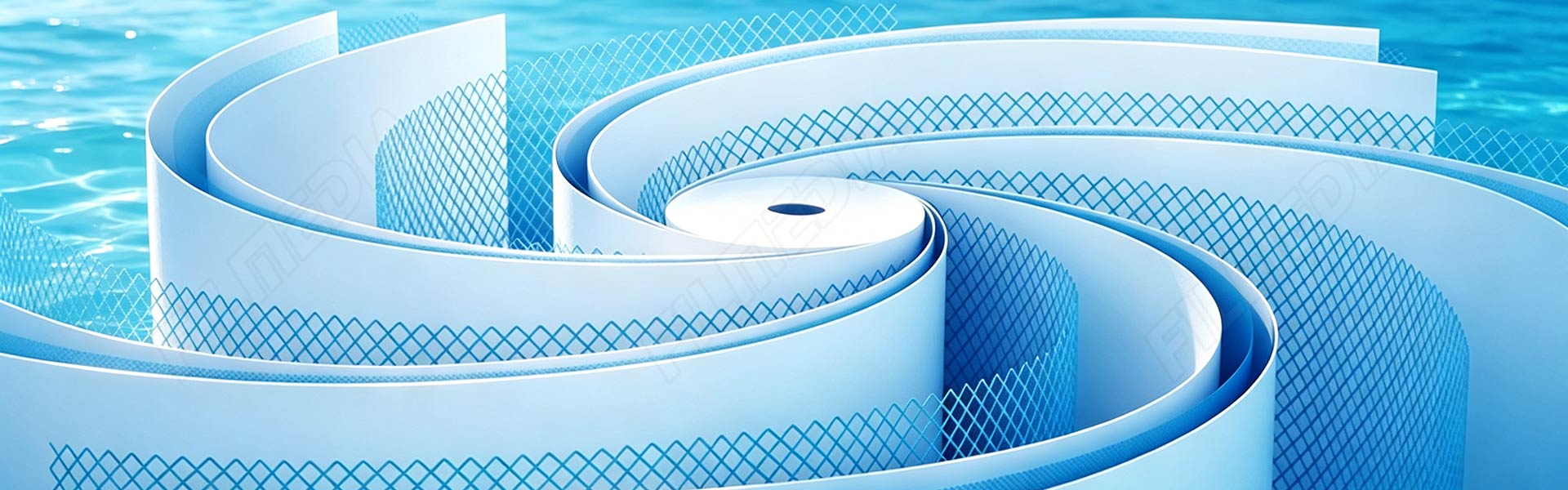
Reverse Osmosis Membranes
Filmedia® high-efficiency reverse osmosis (RO) membrane is manufactured using advanced high-performance polyamide composite membrane materials. It offers excellent anti-fouling properties and strong structural stability, ensuring consistently reliable separation performance during long-term operation while effectively extending membrane service life and reducing overall system maintenance costs. Whether used in residential water purification systems, commercial water treatment units, or industrial-scale water processing applications, Filmedia® RO membranes deliver stable, efficient desalination and high-quality permeate production, meeting stringent water purity and operational reliability requirements across multiple industries.
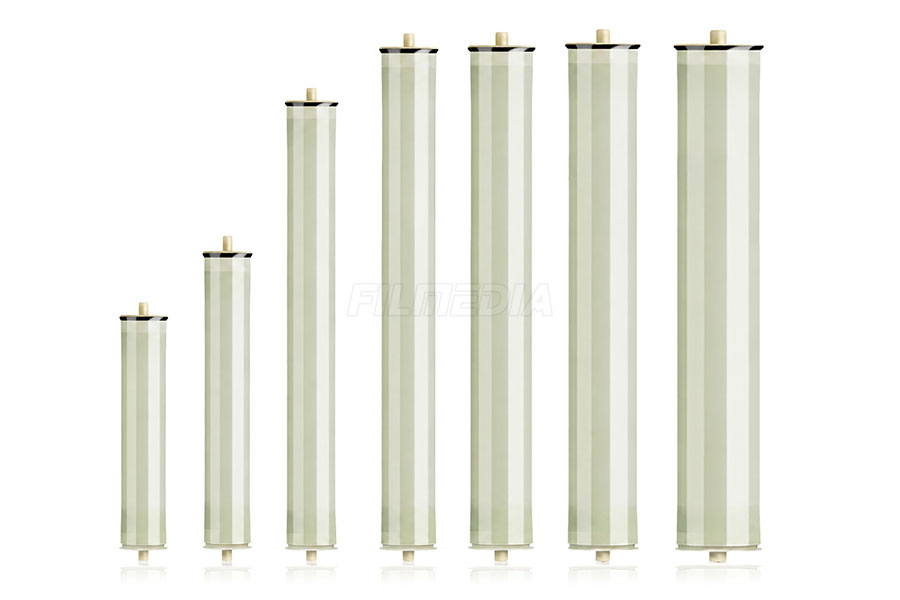
| Model | Dimensions (Diameter × Length) |
|---|---|
| 2514 | 2.5″ × 14″ |
| 2521 | 2.5″ × 21″ |
| 2540 | 2.5″ × 40″ |
| 4021 | 4.0″ × 21″ |
| 4040 | 4.0″ × 40″ |
| 8040 | 8.0″ × 40″ |
Features
Designed for demanding 24/7 continuous operation, these engineering solutions offer high stability, high recovery rates, and high energy efficiency, making them ideal for large-scale water treatment processes. They must withstand higher pressures and more complex water quality fluctuations, maintaining low degradation and high reliability over long-term operation.
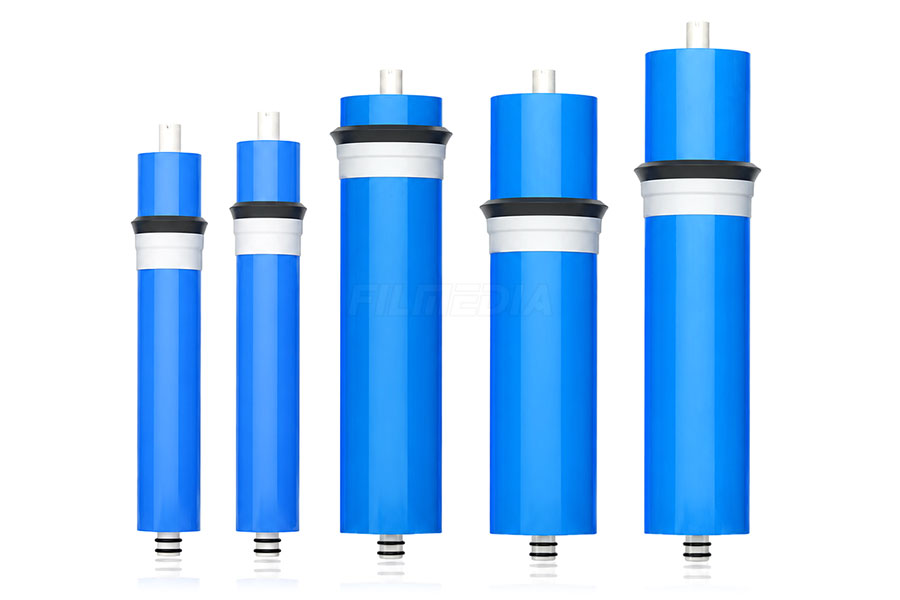
| Model | Dimensions (Diameter × Length) |
|---|---|
| 1812 | 1.8″ × 12″ |
| 2012 | 2.0″ × 12″ |
| 3012 | 3.0″ × 12″ |
| 3013 | 3.0″ × 13″ |
Features
Serving intermittent, low-load household drinking water scenarios, the equipment is small in size, easy to use, and low in cost, providing families with a safe and convenient solution for instant drinking water.
Performance Advantages
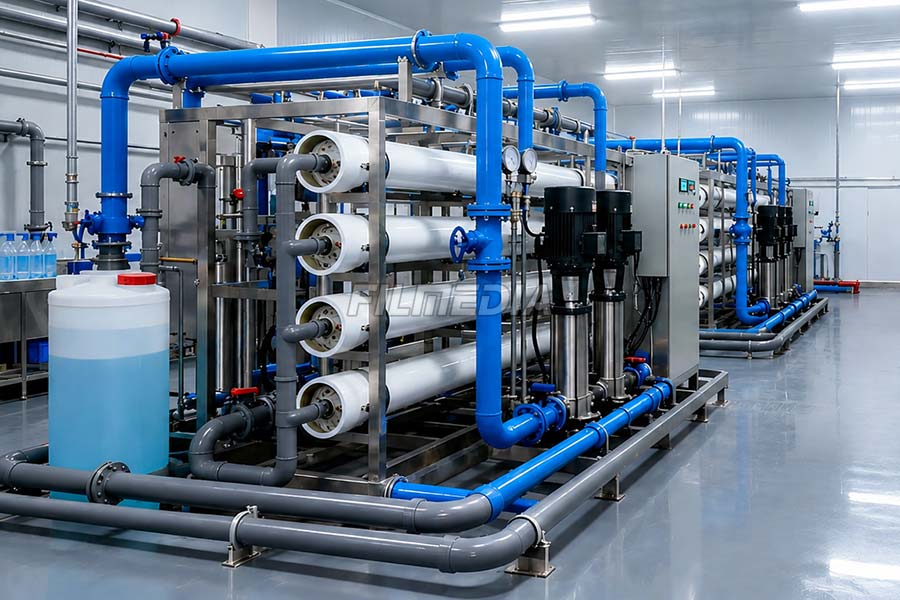
☑ High Salt Rejection
Precision separation that effectively removes heavy metals, dissolved salts, and trace organics to ensure consistent permeate quality.
☑ High Permeate Flow (Water Yield)
Optimized membrane flux design that achieves higher water output per unit time under standard operating pressures.
☑ High Recovery Rate
Minimizes concentrate discharge, maximizes water utilization, and significantly reduces operational costs for enterprises.
What is “Reverse Osmosis”?
The invention and large-scale application of reverse osmosis (RO) technology is a milestone achievement in the field of modern water treatment. With increasingly scarce freshwater resources, this technology has become one of the key technologies for solving the global water crisis. As the core component of this technology, the reverse osmosis membrane is an artificial semi-permeable membrane that mimics biological semi-permeable membranes, playing the role of the “core engine.”
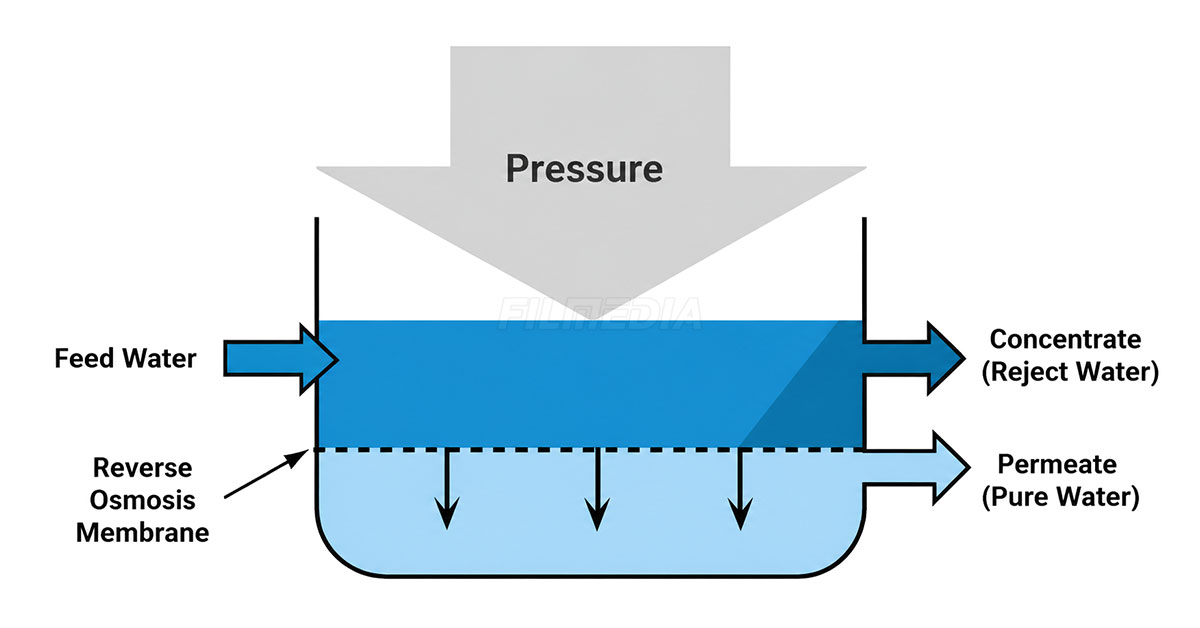
The operating principle of reverse osmosis is that, under pressure higher than the osmotic pressure of a solution, substances other than water are separated from water because they cannot pass through a semipermeable membrane.
Under natural conditions, water on both sides of a membrane flows from the dilute solution to the concentrated solution. However, when sufficient pressure is applied on the concentrated side, water is forced to flow in the opposite direction—from the concentrated solution to the dilute solution. Since this flow direction is opposite to natural osmosis, it is called reverse osmosis.
Most components in the feed water, such as dissolved salts, particles, bacteria, and pyrogens, are retained on the feed side of the membrane and are ultimately discharged as wastewater.
Material Composition of Reverse Osmosis Membrane
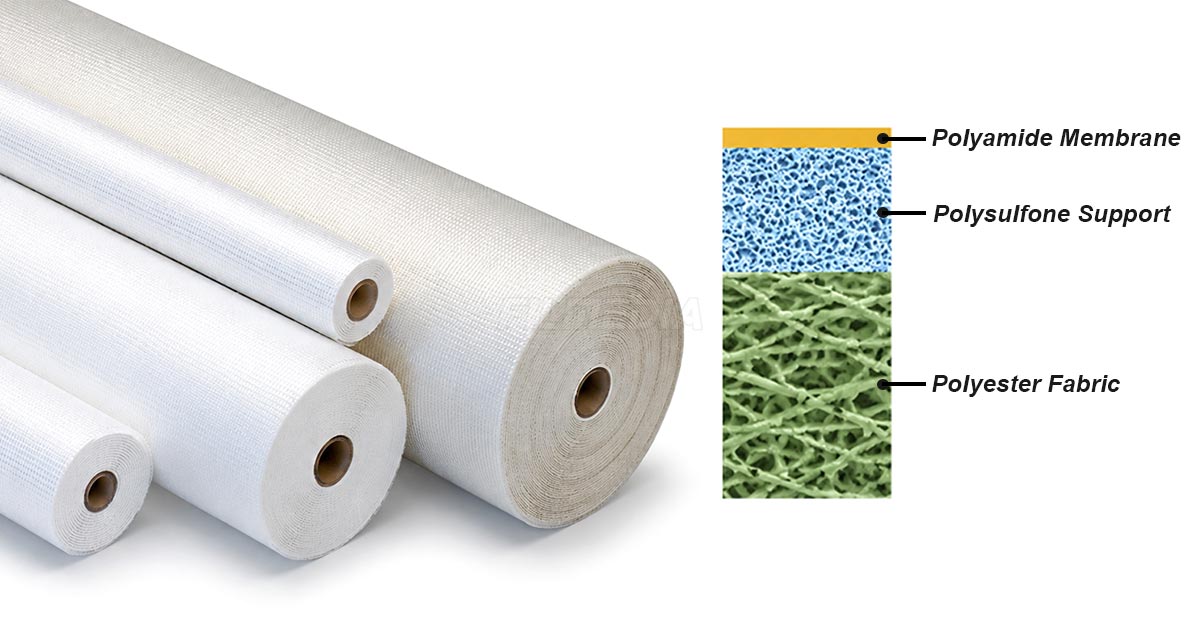
- Top layer (ultra-thin desalination layer) – Polyamide
The core functional layer that determines salt rejection and water permeability; it selectively rejects dissolved solute molecules.
- Middle layer (porous support layer) – Polysulfone
Provides microporous structural support, withstands high pressure, and prevents deformation of the top selective layer.
- Bottom layer (reinforcing substrate layer) – Polyester reinforced nonwoven fabric
Enhances the overall mechanical strength and tensile resistance of the membrane sheet.
Structure and Working Process of Reverse Osmosis Elements
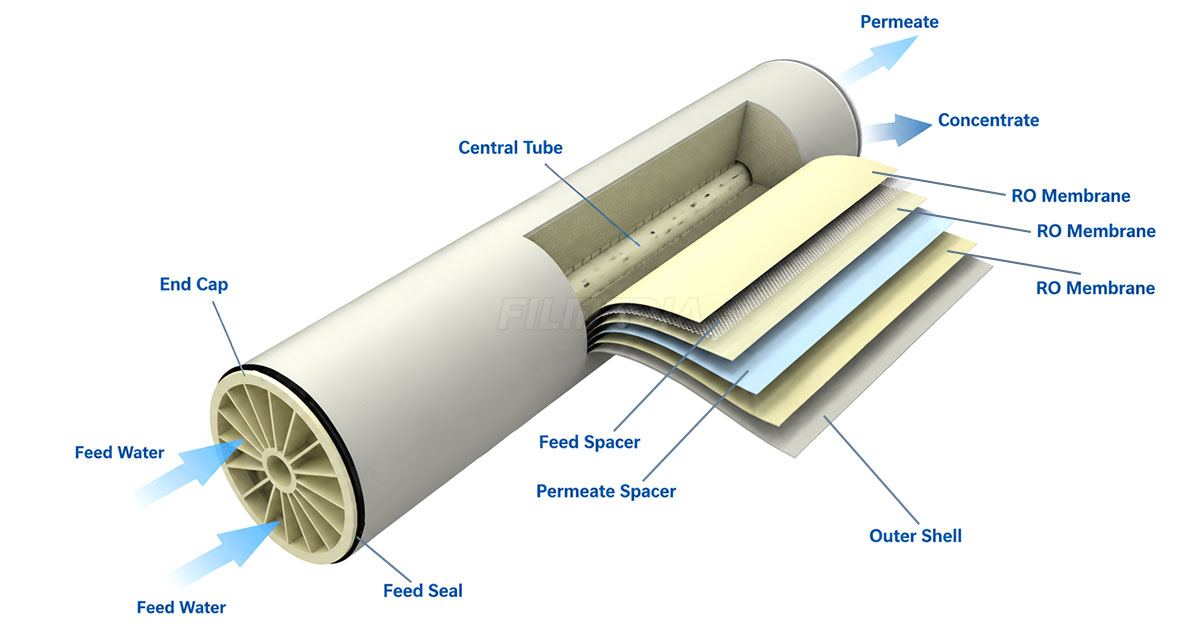
Structural Composition
Secure and position the module.
Collects and aggregates the final purified water.
Strictly isolates the feed water from the product water, preventing cross-contamination.
Performs the core desalination and filtration functions.
Creates a channel for raw water inflow and prevents membrane sheets from sticking together.
Creates a drainage channel to guide the filtered clean water toward the central tube.
Working Process
The water source passes through a pretreatment system to remove large particulate impurities and organic matter, preventing reverse osmosis membrane clogging.
The pretreated water is pressurized to apply sufficient pressure, forcing water molecules to pass through the reverse osmosis membrane.
Only water molecules can pass through the membrane pores, while dissolved salts and pollutants are effectively retained.
The purified water passing through the reverse osmosis membrane is collected and further treated, such as undergoing subsequent mineralization and disinfection.
The retained impurities and salts constitute concentrate, which is ultimately treated or reused through a discharge system.
Applications of Reverse Osmosis Membranes
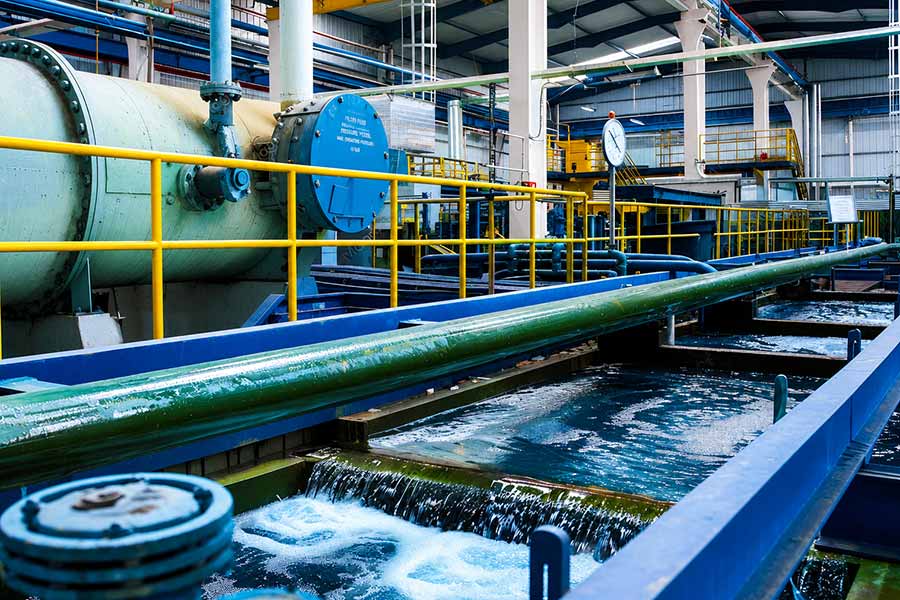
Reverse osmosis technology is widely used in various water treatment applications.
Reverse osmosis technology is used to remove salts and impurities from seawater, producing fresh water resources and serving as a key solution to global freshwater scarcity.
High-salinity groundwater is treated through deep desalination processes and converted into potable or industrial-grade freshwater.
Widely used in high-end industries such as electronics and pharmaceuticals to produce pure water, ultrapure water, and process water.
Removes hardness ions such as calcium and magnesium to prevent scaling and corrosion in boilers, improving operational efficiency and equipment lifespan.
Applied in the concentration, purification, and separation of products such as fruit juices and dairy products, enhancing product quality and stability.
Maintenance of Reverse Osmosis Elements
★ Regular Inspection
Regularly inspect the RO membrane elements and system operating conditions, focusing on key parameters such as membrane appearance, differential pressure, permeate flow rate, and salt rejection performance. Through trend analysis of operational data, potential fouling or performance decline can be detected early, allowing timely maintenance actions.
★ Periodic Cleaning
During operation, membrane elements are prone to contamination from microorganisms, colloids, suspended solids, and organic matter, which may lead to reduced flux or increased pressure drop. Therefore, a properly designed chemical cleaning schedule should be established based on actual operating conditions. Appropriate cleaning agents and procedures should be used to effectively restore membrane performance and extend service life.
★ Scaling Prevention
Membrane surfaces are susceptible to inorganic scaling caused by salts such as calcium carbonate, calcium sulfate, and other dissolved minerals, which can reduce productivity and system stability. Scaling can be effectively controlled by optimizing pretreatment processes, dosing antiscalants, and managing recovery rates, ensuring long-term stable operation of the system.
★ Oxidation Protection
RO membranes are sensitive to oxidizing agents such as residual chlorine and ozone. Long-term exposure may damage the membrane structure and reduce salt rejection performance. Therefore, oxidizing substances should be effectively removed at the feed water stage, and their concentration must be strictly controlled to prevent irreversible membrane damage.