
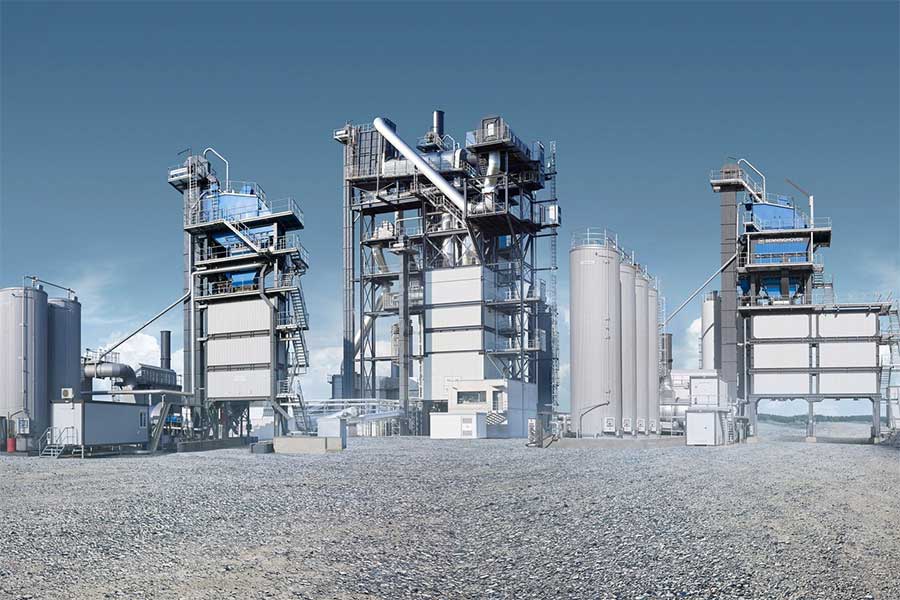
Dust and Fume Challenges in Asphalt Mixing Plants
Asphalt mixing plants are essential auxiliary facilities for municipal road and highway construction and maintenance, primarily responsible for the heating, mixing, and proportioned production of asphalt mixtures. Throughout the operation of the production line, processes such as aggregate drying, asphalt heating, mixture blending, and product discharge continuously generate significant amounts of smoke, fine dust, and high-temperature flue gas. These emissions are characterized by high temperatures, fine particulate matter, oil content, and strong corrosivity; they not only cause dust pollution and degrade the working environment at the plant but also pose health risks to on-site personnel, while simultaneously accelerating the wear and tear of dust removal equipment and hindering the production line’s ability to meet regulatory compliance standards.
Reliable Filtration for Harsh Operating Condition
Dust collection filter bags are the core filtration components of bag-type dust collectors and are critical to ensuring the compliant operation of dust removal systems in asphalt mixing plants. Given the complex and harsh operating conditions—characterized by high temperatures, corrosiveness, and the presence of oil and moisture—standard filter bags are prone to issues such as thermal damage, aging, blinding (caking), tearing, and filtration failure. Consequently, filter bags specifically designed for asphalt mixing plants must offer excellent high-temperature and corrosion resistance, resistance to condensation-induced blinding, and long-term stability. These bags must be capable of withstanding high-intensity, continuous production operations, thereby ensuring the long-term, stable performance of the dust removal system and helping enterprises meet emission standards while reducing costs and increasing efficiency.
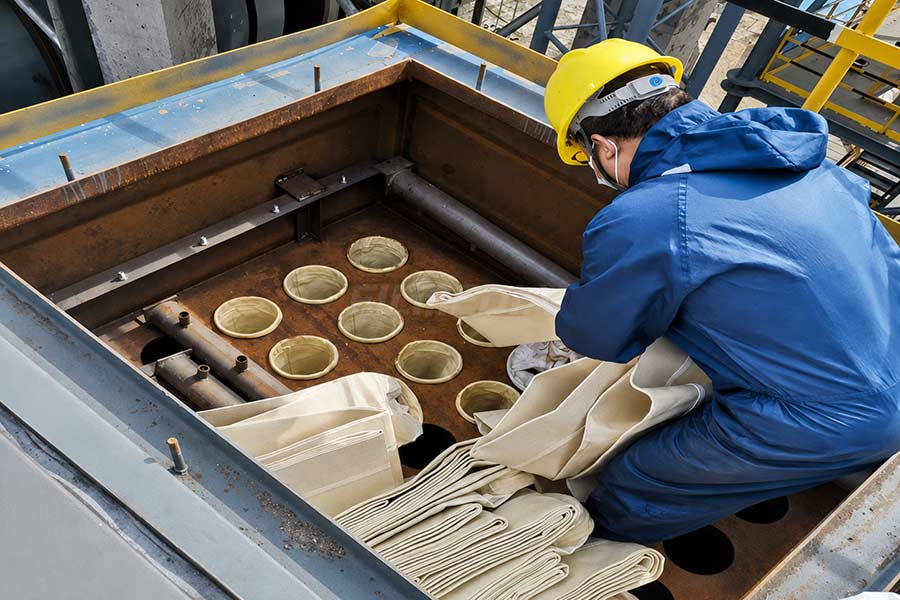
Common Filter Media for Asphalt Mixing Plants
Depending on operating temperatures, fuel types, and flue gas composition, the following filter media are most commonly used in asphalt plant dust collection systems.
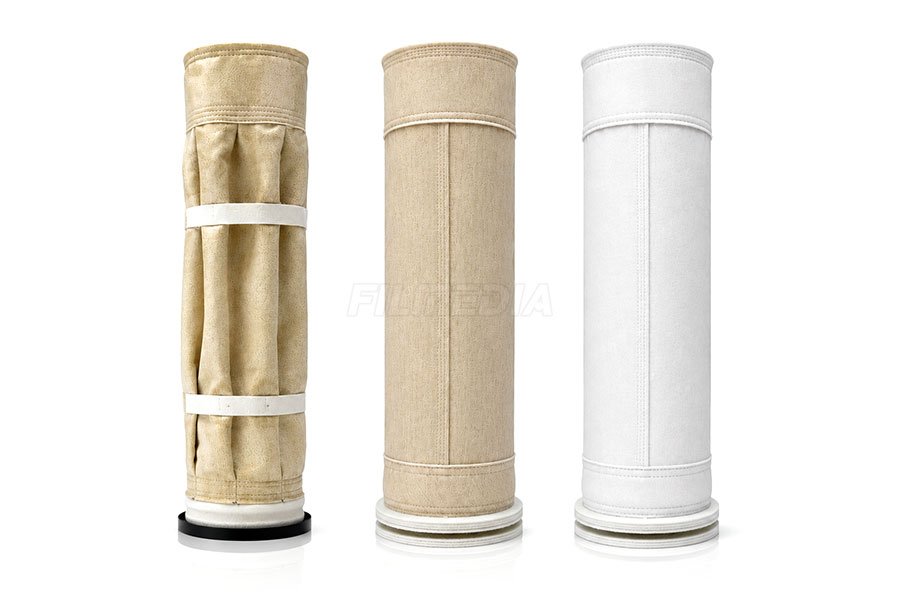
Nomex® needle felt is one of the most widely used filter materials in asphalt mixing applications and is particularly suitable for medium- to high-temperature filtration systems.
Features & Benefits
- Continuous operating temperature up to 200°C (392°F)
- Excellent thermal stability and heat resistance
- High mechanical strength and abrasion resistance
- Outstanding dimensional stability
- High filtration efficiency with low pressure drop
- Proven performance in most asphalt plant dust collectors
Recommended Applications
- Standard asphalt mixing plants
- Medium- and high-temperature dust collection systems
- Facilities with stringent emission requirements
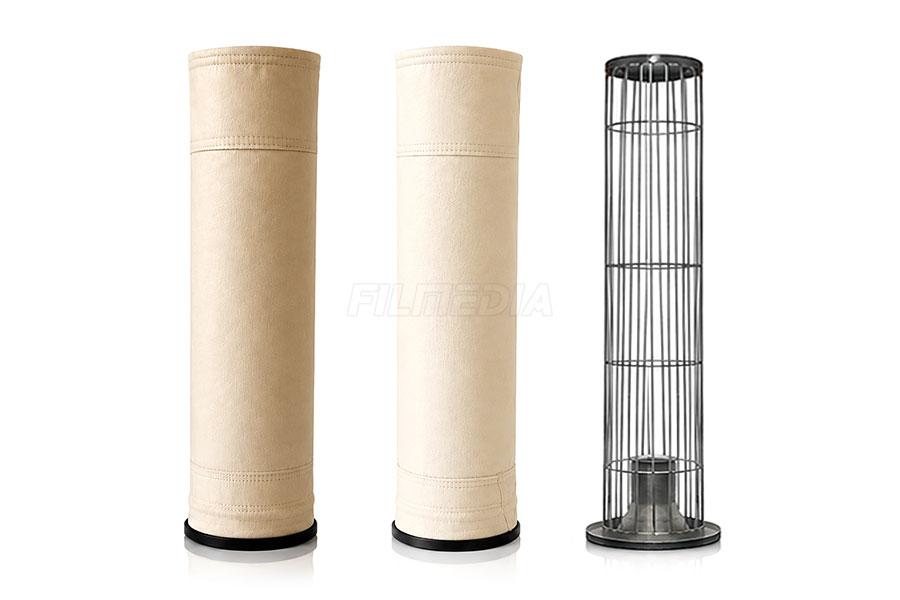
PPS filter bags provide exceptional resistance to acidic gases and chemical corrosion, making them ideal for asphalt plants operating with sulfur-containing fuels or corrosive flue gases.
Features & Benefits
- Continuous operating temperature up to 190°C (374°F)
- Excellent resistance to acids and chemical attack
- Superior hydrolysis resistance
- Suitable for high-humidity operating conditions
- Long service life and stable performance
- Excellent choice for sulfur-containing flue gas environments
Recommended Applications
- Asphalt plants using coal, heavy oil, or other sulfur-containing fuels
- Corrosive flue gas environments
- High-humidity operating conditions
Filmedia® Dust Filtration Solutions
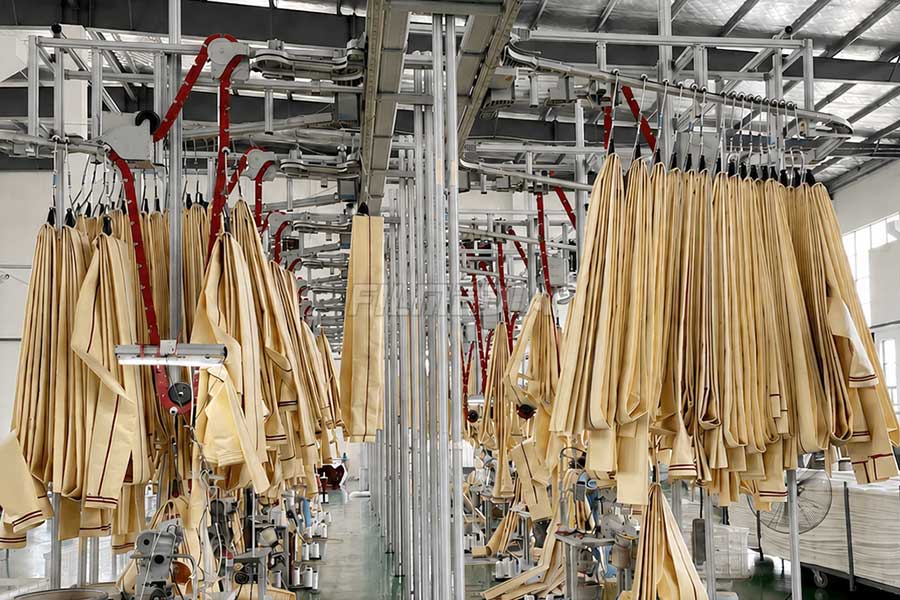
☑ High-Efficiency Filtration
Utilizing high-efficiency filtration materials and structural designs, these bags effectively capture and separate fine particles and dust generated during the asphalt mixing process.
☑ Corrosion Resistance
Given the corrosive nature of asphalt, these filter bags offer excellent chemical stability and corrosion resistance, ensuring an extended service life.
☑ High-Temperature Tolerance
The high-temperature environment inherent to asphalt mixing requires filter bags with superior heat resistance and thermal stability.
☑ Reliability and Durability
Through specialized treatments and optimized design, these filter bags deliver stable performance, reliable operation, and long-lasting durability.
Specialized Post-Treatment Technology for Filter Media
To meet operational requirements across diverse regions, fuel types, and climatic conditions, Filmedia® offers a range of functional post-treatments for filter media, thereby enhancing the overall performance and service life of the filter bags.
☑ Singeing & Calendering
Removes loose fibers from the filter media surface through high-temperature singeing and calendering processes, resulting in a smoother, more uniform surface.
☑ PTFE Impregnation
Fully impregnates the fibers—both internally and on the surface—with PTFE particles to form a protective layer.
☑ PTFE Membrane
Laminates a microporous PTFE membrane onto the filter media surface to achieve true surface filtration.
☑ Water & Oil Repellent Treatment
Utilizes special fluorocarbon resin treatment technology to enhance the filter media’s resistance to moisture and oil contamination.
☑ Anti-static Treatment
Incorporates conductive fibers or materials into the filter media to effectively dissipate static electricity.