
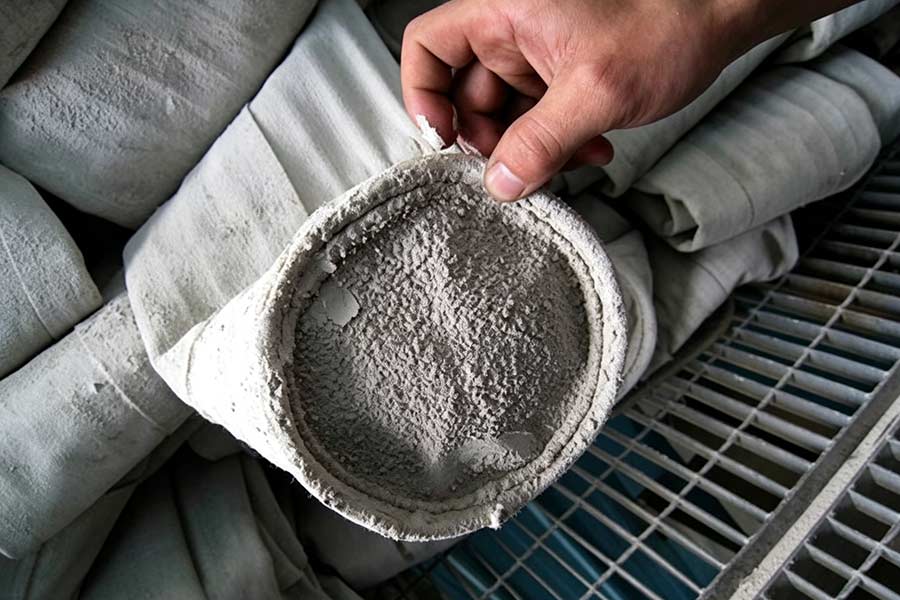
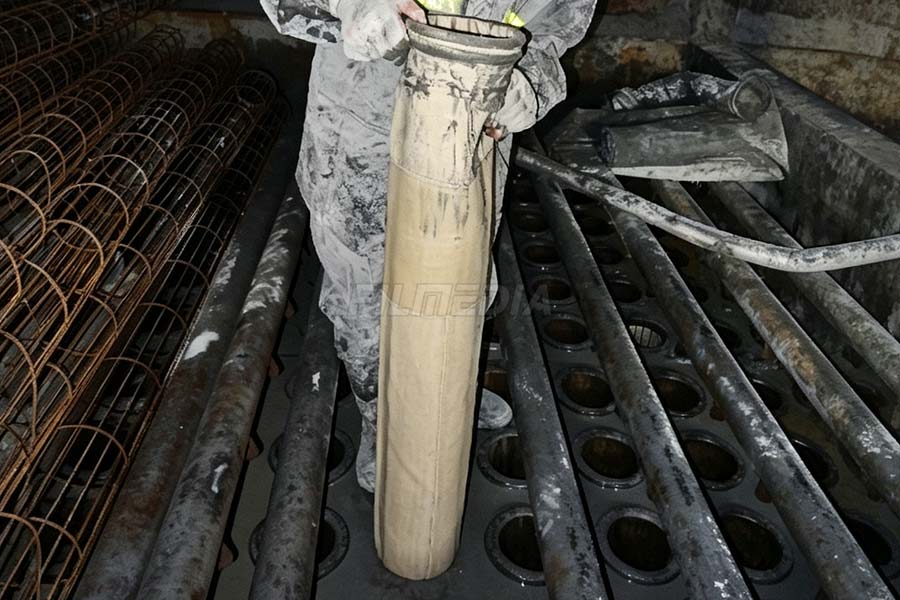
Filter bag clogging—typically caused by condensation, “bag blinding” (caking), excessive cleaning, or dust agglomeration—is one of the most common malfunctions in the operation of bag-type dust collectors. Once widespread clogging occurs, it can cause serious adverse effects on the entire production system and the dust collection equipment itself, as well as drive up operating costs.
1. Startup & Temperature Control
Avoid improper startup procedures, and do not start the dust collector when the differential pressure (resistance) is excessively high. Operating below the dew point can trigger condensation issues, while uneven inlet airflow distribution can cause localized corrosion of the housing. If a low-temperature startup is unavoidable, trace heating or insulation systems—such as steam or electric heating—must be utilized.
2. Filter Media & Sticky Dust Handling
Utilizing membrane-coated filter media or pre-coating the filter bags is highly recommended. For highly cohesive (sticky) dust, effective measures include reducing the filtration velocity (air-to-cloth ratio), increasing pulse cleaning pressure, or employing offline pulse cleaning. However, the most effective approach is to expand the filtration area, which naturally lowers the filtration velocity and extends the service life of the filter bags.
3. Cleaning Cycle Optimization
Excessive cleaning duration can strip away the primary dust cake from the filter bags, leading to a drop in filtration efficiency. Conversely, if the cleaning duration is too short, residual dust will remain, causing progressive dust accumulation and premature clogging once filtration resumes. The pulse controller settings should be fine-tuned based on performance data gathered during initial test runs.