Belt Filter Cloth
As the core filtration medium in belt filter presses, belt filter cloth plays a decisive role in dewatering performance, filtrate clarity, filter cake moisture, and overall equipment reliability. As industrial processes become more demanding, filtration media must deliver higher resistance to chemicals, abrasion, tension, and continuous operation. Selecting the appropriate belt filter cloth can significantly improve dewatering efficiency, reduce maintenance frequency, and extend service life.
Product Advantages
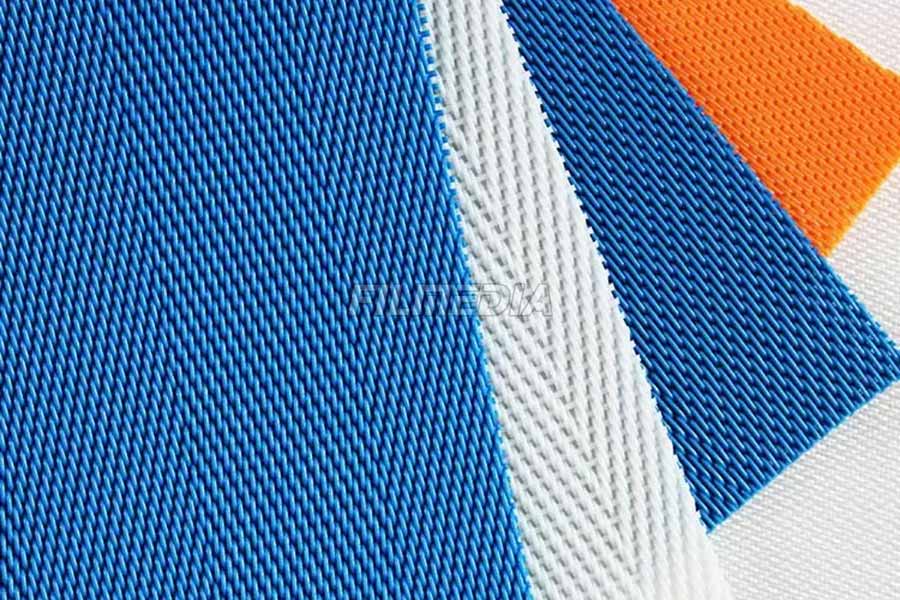
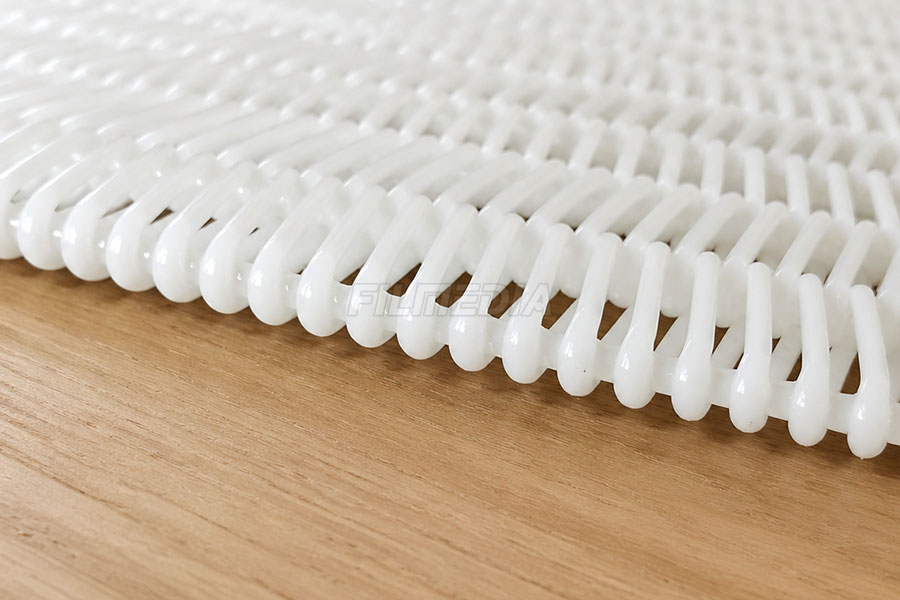
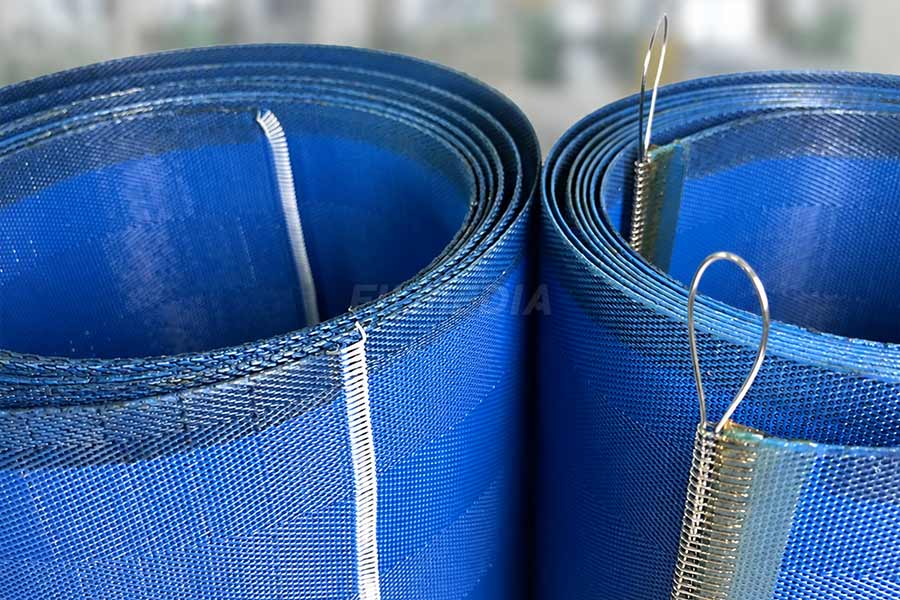
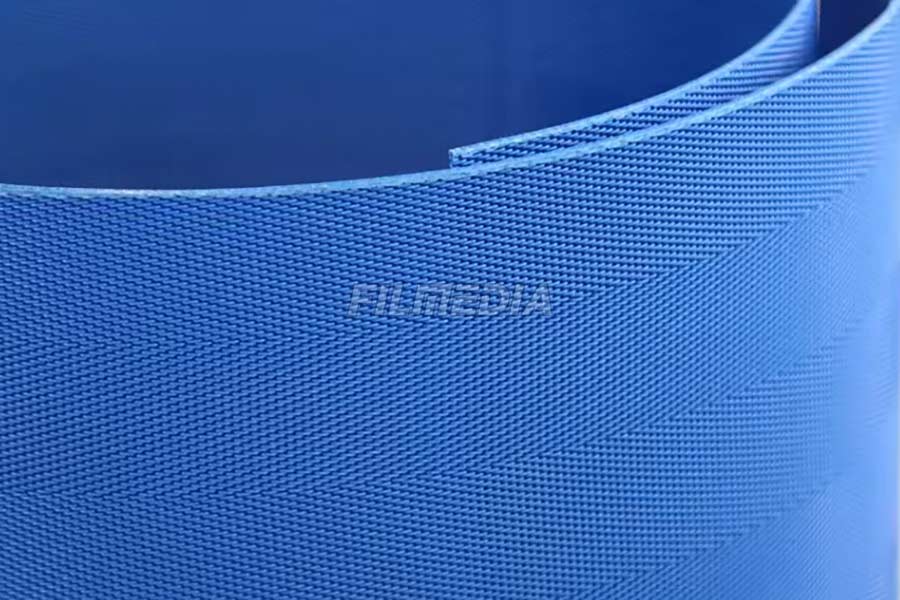
- Double-layer woven construction for superior filtration and drainage
- Smooth calendered surface for easy filter cake release
- Excellent drainage performance with low clogging tendency
- Filtration accuracy customizable from 7 μm to 150 μm
- Standard belt widths up to 3.6 m, custom widths available up to 6 m
- Reinforced glued edges for exceptional edge durability
- Thickened wear-resistant construction for extended service life
- Industrial-grade 316L stainless steel fasteners resistant to sulfuric acid, nitric acid, and other corrosive chemicals
Pore Size & Air Permeability Selection (Based on Particle Size)
We offer a broad customization range for filtration accuracy, spanning from 7 microns to 150 microns:
| Material Type | Particle Size Range | Recommended Pore Size | Recommended Air Permeability |
|---|---|---|---|
| Fine Particles | < 10 μm | 5–8 μm | 100–120 L/m²·s |
| Medium Particles | 10–50 μm | 8–12 μm | 120–140 L/m²·s |
| Coarse Particles | > 50 μm | 12–15 μm | 140–160 L/m²·s |
Applications
- Chemicals
Polymers, silicates, pigments, fertilizer, sulfuric acid, PTA, phosphoric acid, soda bicarbonate, zeolite, catalysts.
- Minerals
Phosphoric rock washing, rare earth, tailings, iron, zinc, coal, copper.
- Life science
Active pharmaceutical ingredients, nutraceuticals, agrochemicals, intermediates.
- Food
Caffeine, coffee, glutamate, citric acid, starch, gluten, lecithin, spirulina.
- Environmental
Flue gas desulfurization, fly ash, wastewater, coolant purification.
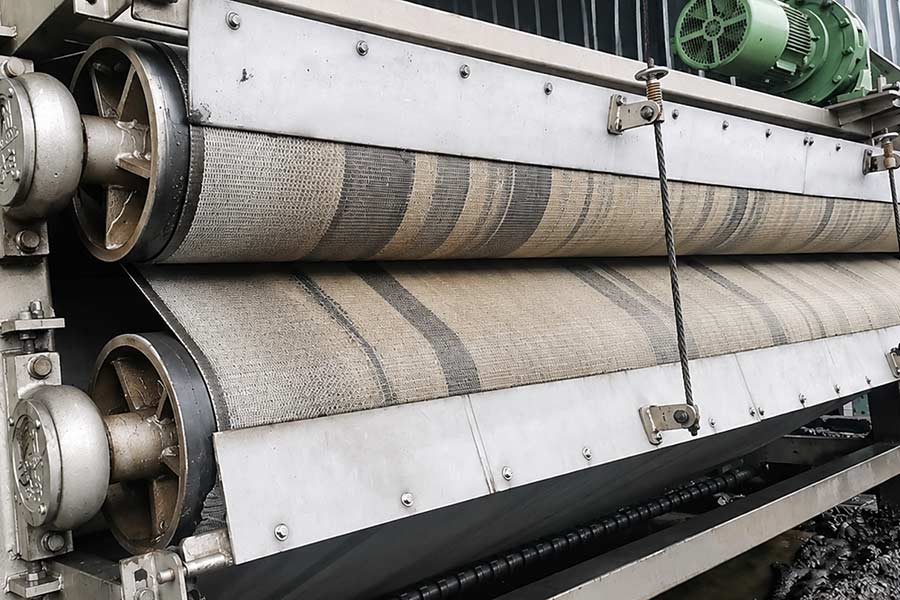
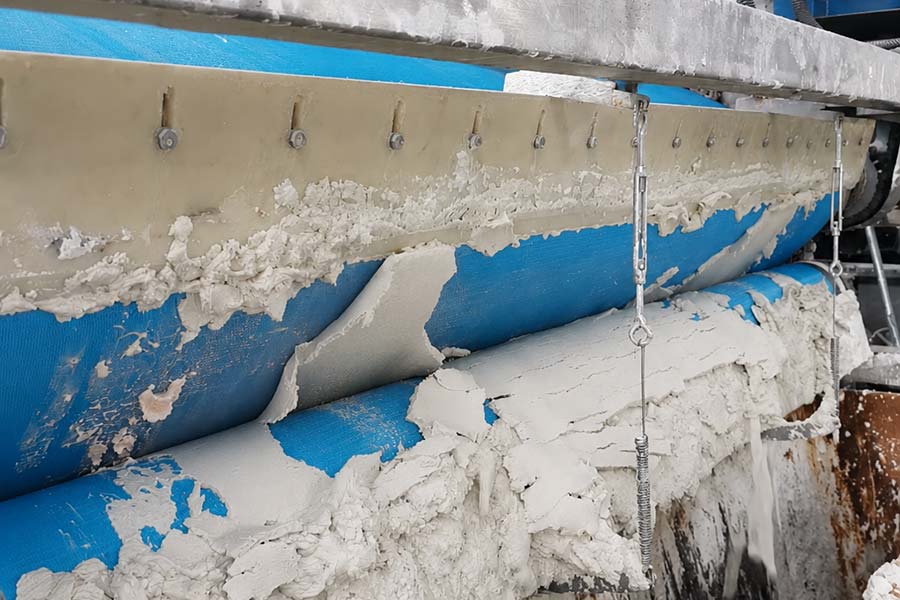
Filter Cloth Media
Polyester (PET) Filter Cloth
- It possesses extremely high mechanical strength and excellent dimensional stability. It exhibits strong resistance to inorganic acids (such as hydrochloric acid and sulfuric acid), but is highly susceptible to molecular chain hydrolysis and scission in high-temperature, strongly alkaline environments.
Polypropylene (PP) Filter Cloth
- It exhibits negligible water absorption and near-perfect chemical inertness, offering top-tier resistance to both acids and alkalis. Its critical weakness lies in its performance regarding temperature fluctuations; at temperatures exceeding 80°C, it is highly prone to softening and creep, leading to the deformation of filter cloth pores and failure due to stretching.
Technical Parameters
| Product Code | Material | Yarn Type | Weight (g/m²) | Thickness (mm) | Air Permeability
(L/m²/S @200pa) |
| ES-PDW-08 | PP | Mono/Mono | 630 | 1.1 | 40 |
| ES-PDW-20 | PP | Mono/Mono | 630 | 1.1 | 80 |
| ES-PDW-30 | PP | Mono/Mono | 550 | 1.1 | 200 |
| ES-PDW-50 | PP | Mono/Mono | 550 | 1.1 | 400 |
| ES-PDW-85 | PP | Mono/Mono | 550 | 1.13 | 600 |
| ES-PDW-120 | PP | Mono/Mono | 550 | 1.15 | 1200 |
| ES-PDW-150 | PP | Mono/Mono | 770 | 1.5 | 1500 |
| ES-EDW-30 | PE | Mono/Mono | 1000 | 1.15 | 200 |
| ES-EDW-40 | PE | Mono/Mono | 1000 | 1.15 | 300 |
| ES-EDW-50 | PE | Mono/Mono | 1000 | 1.15 | 400 |
| ES-EDW-85 | PE | Mono/Mono | 1000 | 1.15 | 600 |
| ES-EDW-120 | PE | Mono/Mono | 1000 | 1.2 | 1000 |
| ES-EDW-150 | PE | Mono/Mono | 1000 | 1.2 | 1200 |
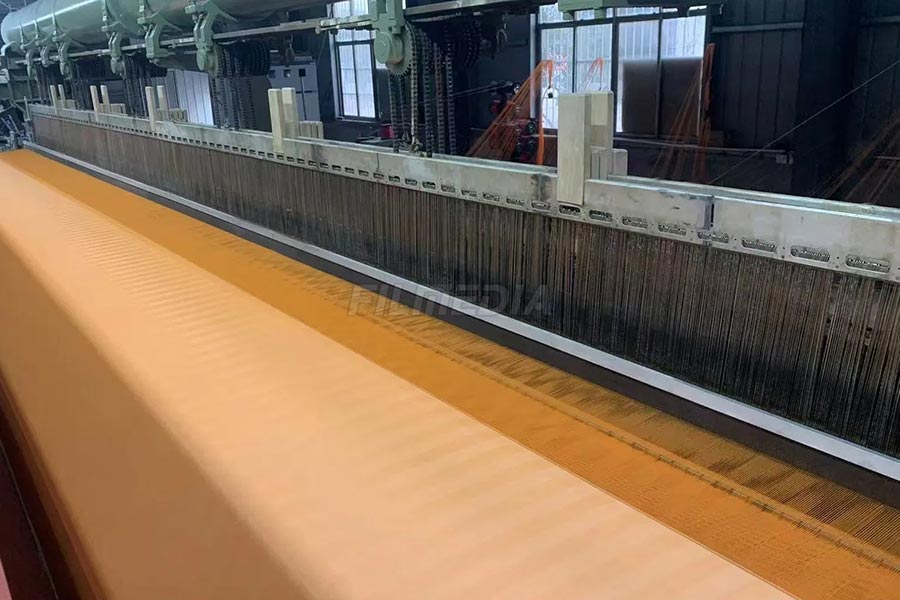
Customized Solutions
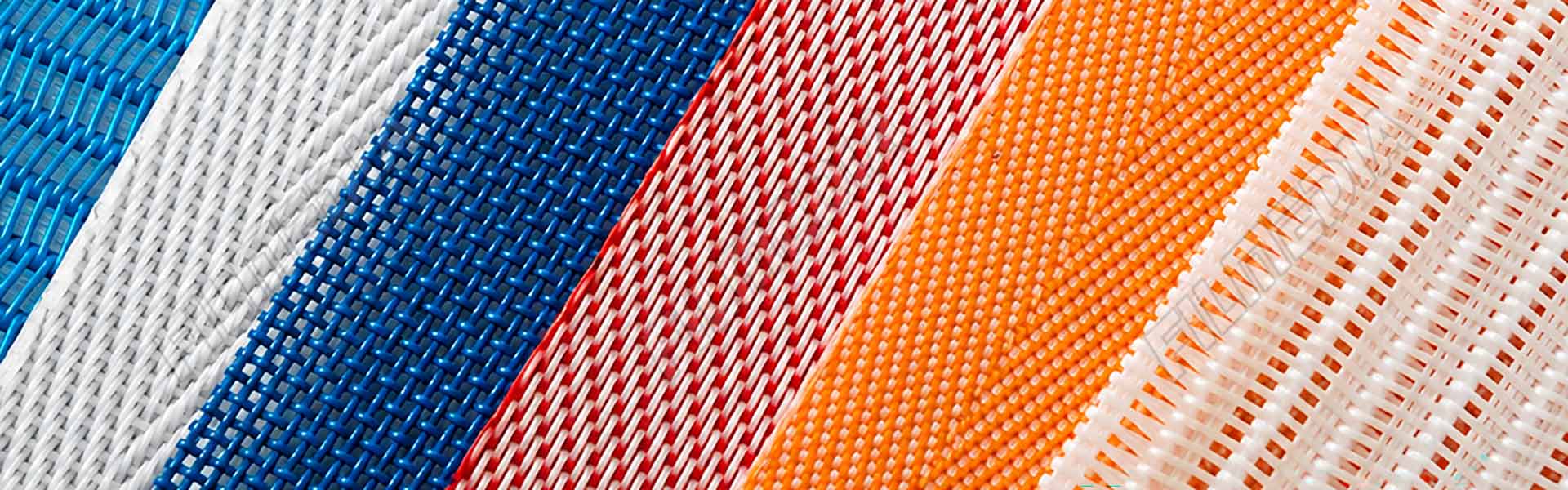
Filmedia® manufactures high-performance woven belt filter cloths using advanced weaving technology and premium synthetic fibers. Every filter belt is engineered to provide excellent filtration precision, rapid drainage, superior wear resistance, and long-term dimensional stability under continuous operation. With customizable weave patterns, materials, filtration ratings, widths, edge reinforcement, and joint types, Filmedia® delivers filtration solutions tailored to virtually every belt filter press application worldwide.
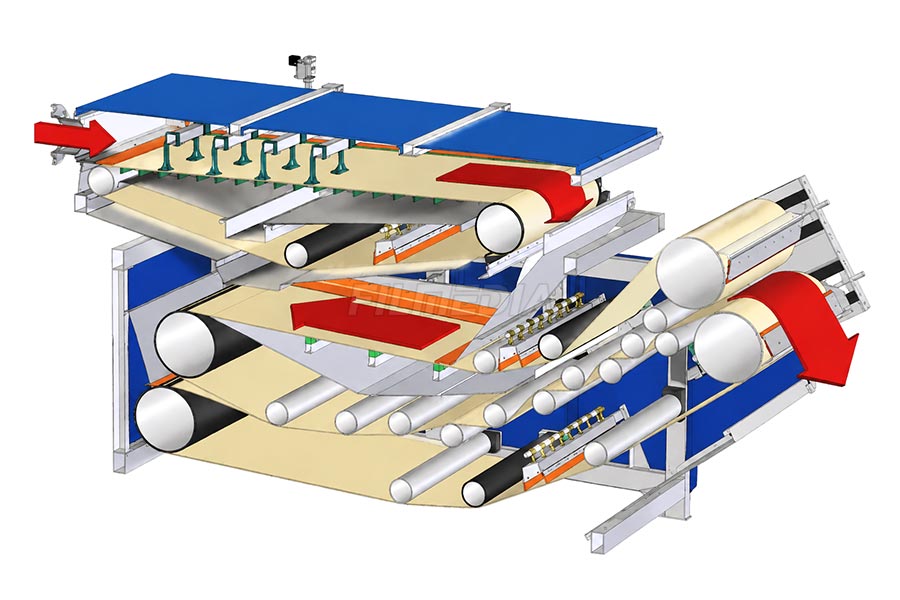
Working Principle of Belt Filter Press
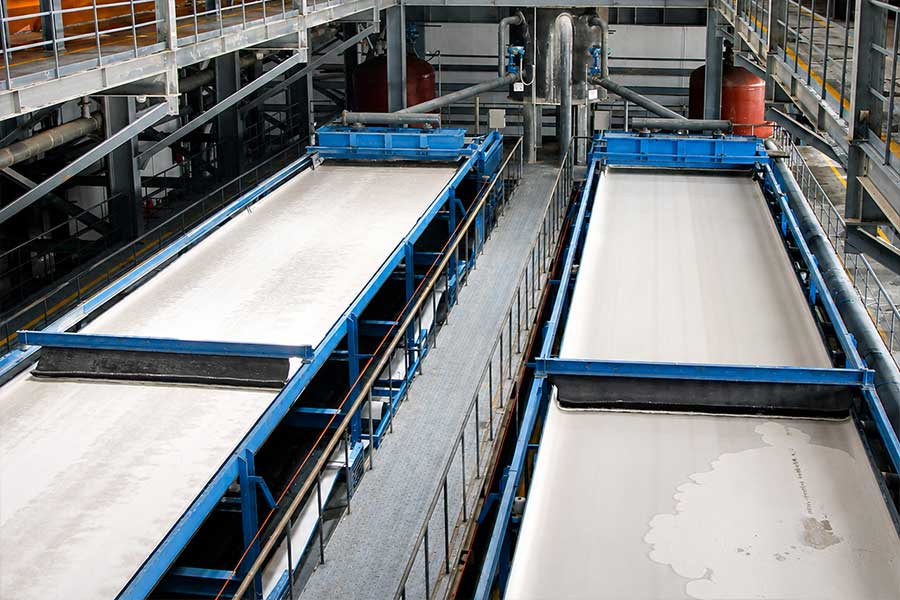
A belt filter press performs efficient solid-liquid separation through four continuous stages: flocculation conditioning, gravity dewatering, wedge-zone pre-pressing, and mechanical pressure dewatering.
The raw slurry typically has a low solids content, making direct dewatering inefficient. Concentrated sludge is first mixed with a polymer flocculant, allowing fine suspended particles to agglomerate into larger flocs. This improves dewatering performance, enhances filtration efficiency, and reduces the load on downstream dewatering processes.
The conditioned sludge is evenly distributed onto the moving filter belt. Under the force of gravity, free water drains through the filter cloth while the flocs are retained on the belt. This stage significantly reduces the moisture content and forms a stable sludge layer for subsequent mechanical dewatering.
After gravity dewatering, the sludge enters the wedge zone, where the gap between the upper and lower filter belts gradually narrows. As compression and shear forces increase progressively, additional water is removed and the sludge becomes more compact. By the end of this stage, the sludge has lost most of its fluidity, preventing material leakage during the high-pressure dewatering process.
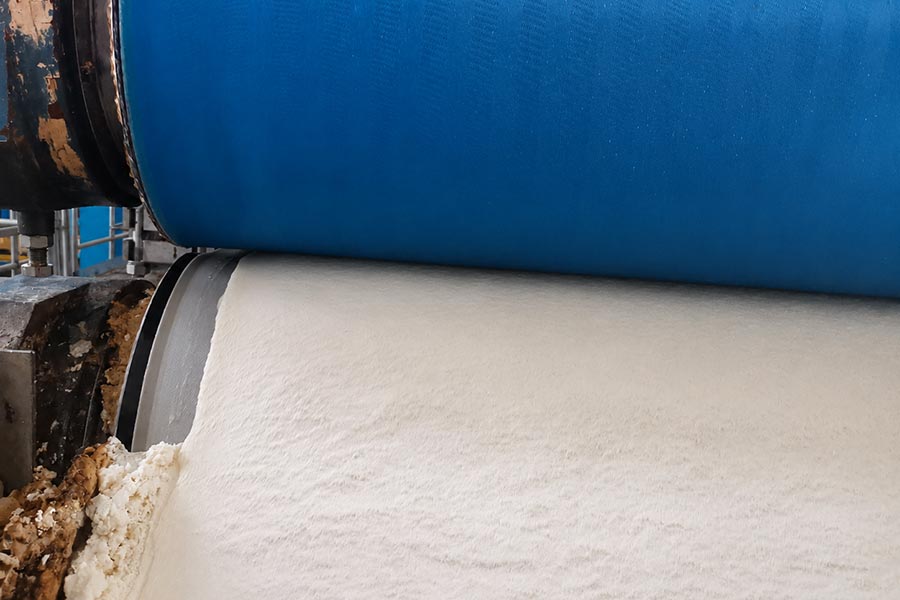
In the pressure dewatering zone, the sludge passes through a series of rollers with different diameters while being carried between two filter belts. Continuous compression, bending, and shear forces remove capillary water and a portion of the bound water, producing a filter cake with a significantly lower moisture content. The finished filter cake is automatically discharged by a scraper at the belt separation point, while the filter belts are thoroughly washed and returned for the next filtration cycle, enabling continuous and efficient solid-liquid separation.