
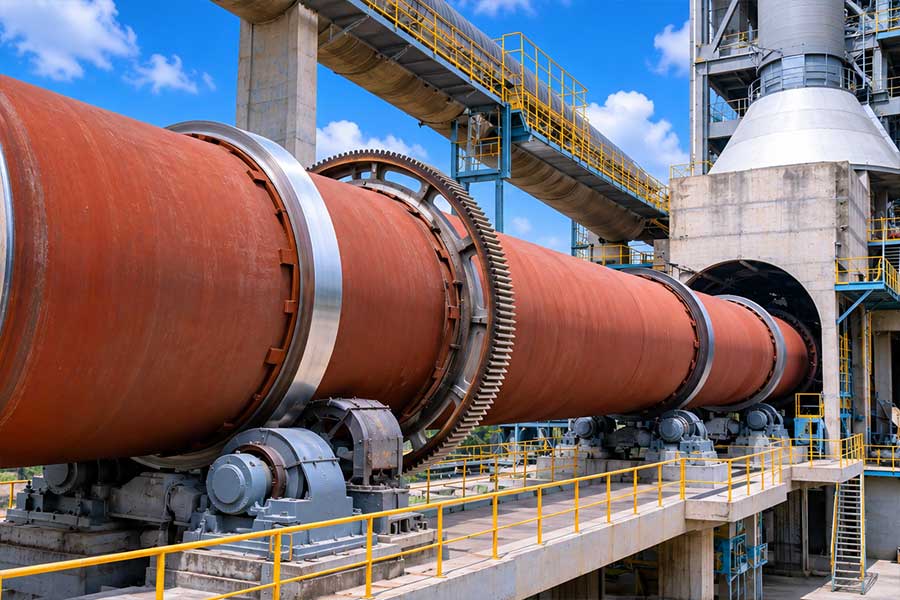
In the field of industrial dust removal, rotary kiln-specific baghouse dust collectors are key environmental protection equipment. The selection of filter cloth material plays a decisive role in ensuring dust removal efficiency, stable equipment operation, and compliance with increasingly stringent environmental standards. As the core working component of a baghouse dust collector for filtering dust-laden gas, the rational selection of its material requires in-depth consideration of multiple factors.
During operation, rotary kilns generate large amounts of high-temperature, high-humidity, and corrosive dust-laden gas. The complex and variable physical and chemical properties of these gases place extremely high demands on the performance of the filter cloth. Specifically, gas temperature may fluctuate within a wide range. High-temperature environments can cause thermal aging of the filter cloth material, reducing its strength and service life; high-humidity gases may cause condensation on the filter cloth, causing dust to adhere to the filter cloth surface, increasing filtration resistance and affecting dust removal efficiency; and corrosive components in the dust-laden gas, such as acidic or alkaline substances, can chemically erode the filter cloth fibers, damaging the structural integrity of the filter cloth.
Major Dust Collection Processes in Rotary Kiln Systems
- Kiln Exhaust Gas Dust Collection (Main Kiln Inlet & Kiln Outlet Ventilation System)
The kiln exhaust gas dust collection system is the most critical and challenging stage of dust control in rotary kiln operations. During the calcination process, raw materials such as cement meal, limestone, lime, alumina, and metal ores are heated inside the rotary kiln while high-temperature process gases flow in the opposite direction. These gases carry a large volume of fine particulate matter out of the kiln system, requiring highly efficient dust collection equipment.
- Clinker Discharge and Cooler System (Grate Cooler)
After calcination, hot clinker is discharged from the kiln outlet and enters a cooling system, typically a grate cooler, where large volumes of ambient air rapidly reduce the material temperature. During this cooling process, the airflow entrains significant quantities of fine clinker dust and carries them into the exhaust system.
- Raw Material Preparation and Coal Mill System
Raw material preparation involves crushing, drying, conveying, and grinding processes that generate substantial amounts of airborne dust. Dust collectors are commonly installed at crushers, raw mills, conveyors, and transfer points to maintain clean and efficient operation.
- Product Conveying, Storage Silos, and Packaging Systems
After the calcination process is completed, finished products are transported through belt conveyors, bucket elevators, storage silos, and packaging equipment. During material transfer, discharge, storage, and loading operations, secondary dust emissions are generated due to material impact, free-fall movement, and mechanical vibration.
Suitable Filter Media for Rotary Kiln Dust Collection
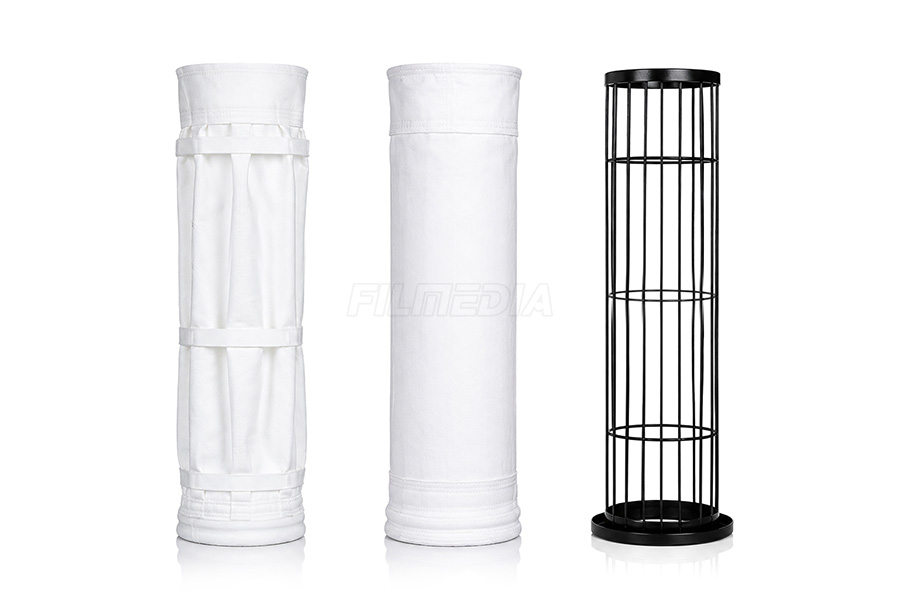
- Continuous operating temperature: ≤260℃
PTFE is regarded as the ultimate high-performance filter media for rotary kiln dust collection systems. With a continuous operating temperature of 240°C to 260°C, it offers exceptional resistance to acids, alkalis, oxidizing gases, and aggressive chemical environments. Its extremely low coefficient of friction enables outstanding dust cake release and significantly reduces the risk of bag blinding. PTFE filter bags are particularly suitable for hazardous waste incineration rotary kilns, metallurgical rotary kilns, and other highly corrosive applications. For projects requiring ultra-low emissions, PTFE membrane lamination is highly recommended.
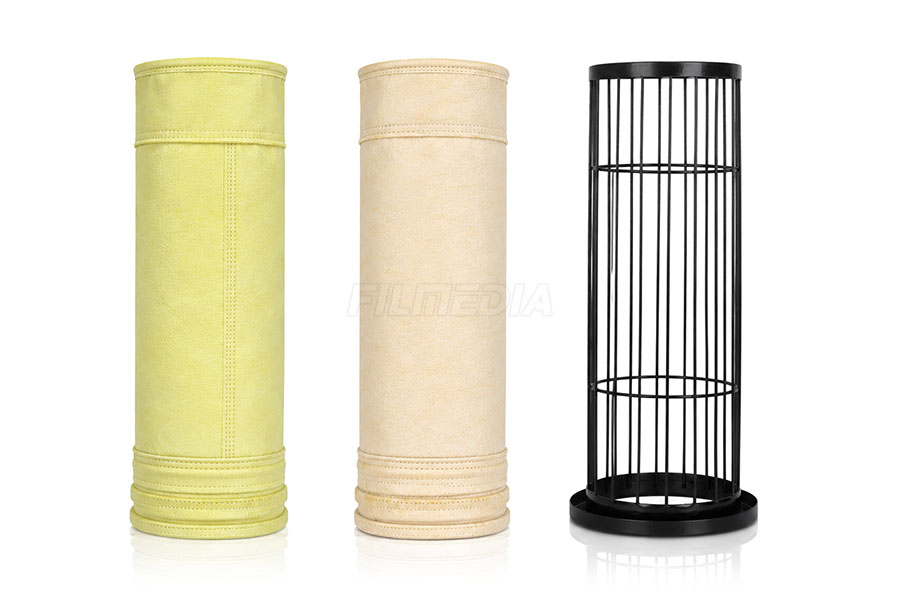
- Continuous operating temperature: ≤240℃
FMS is a cost-effective high-temperature composite filter media designed for demanding rotary kiln applications. Typically operating between 200°C and 240°C, it is manufactured by blending fiberglass with P84 or aramid fibers through a needle-punching process. This unique construction combines the excellent heat resistance and dimensional stability of fiberglass with improved abrasion resistance and flex durability. FMS filter bags are widely used in cement rotary kiln and lime kiln inlet dust collectors where high temperatures and heavy dust loads are common.
- Continuous operating temperature: ≤190℃
PPS is one of the most widely used filter media for rotary kiln dust collection due to its excellent balance of performance and cost. With a continuous operating temperature of 160°C to 190°C, PPS provides outstanding resistance to acids, alkalis, sulfur compounds, and hydrolysis. When kiln exhaust gas temperatures are reduced to approximately 170°C through cooling systems such as conditioning towers or heat exchangers, and oxygen concentration is maintained below 10%, PPS becomes an extremely economical and reliable solution. It is commonly used in cement kilns, coal-fired boilers, power plants, and other industrial processes containing sulfur-bearing flue gases.
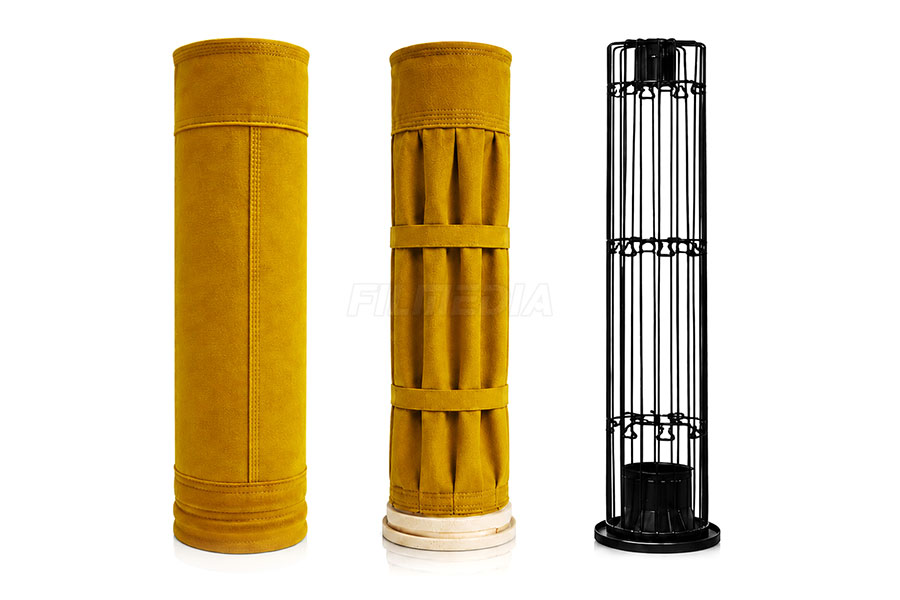
- Continuous operating temperature: ≤260℃
P84 filter media is engineered for high-temperature filtration applications with continuous operating temperatures ranging from 220°C to 240°C. Its unique trilobal fiber cross-section provides a significantly larger filtration surface area than conventional fibers, resulting in higher collection efficiency, lower emissions, and superior dust cake release performance. P84 is particularly suitable for dry, high-temperature processes that require excellent filtration efficiency. However, because it is sensitive to hydrolysis, it performs best in applications where moisture levels are carefully controlled.
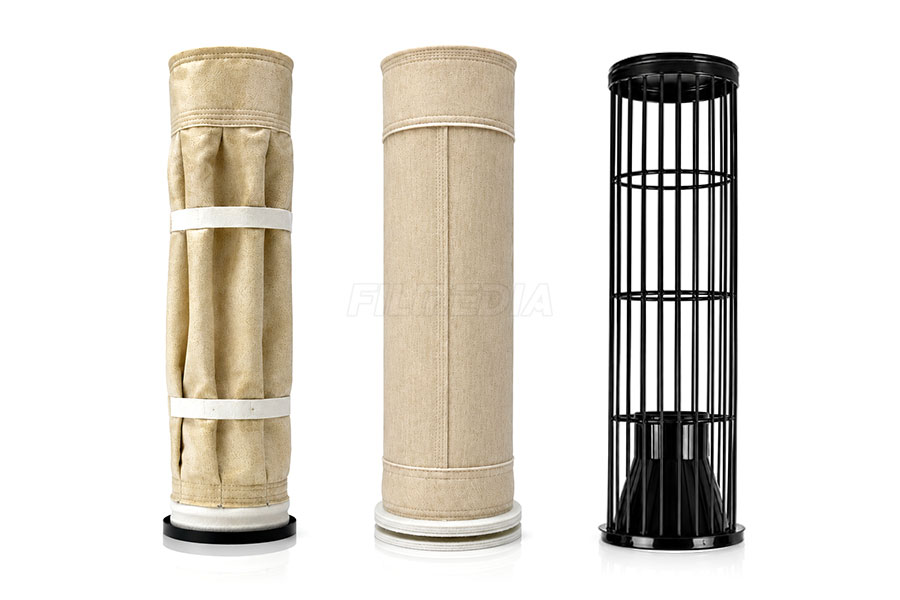
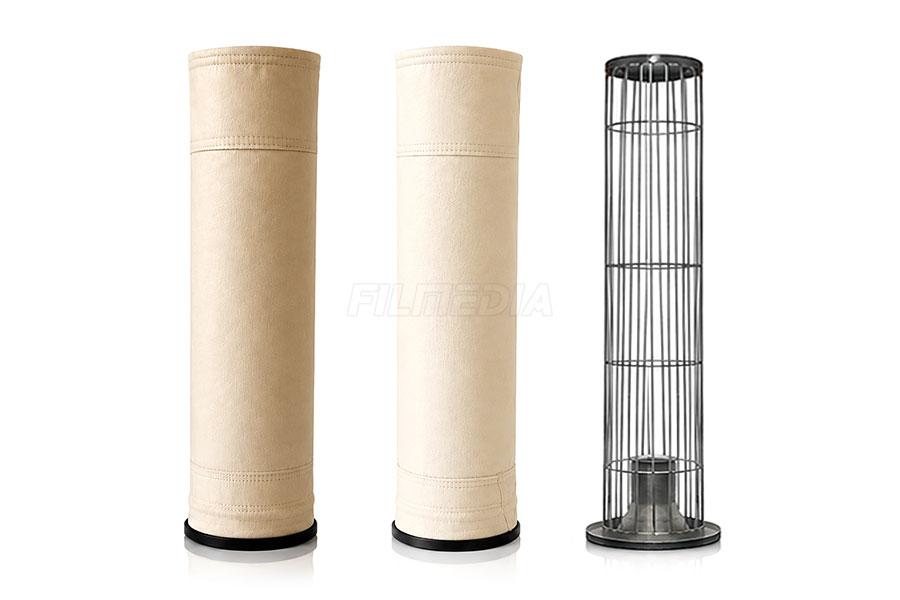
- Continuous operating temperature: ≤204℃
Nomex® (Aramid) Needle Felt is a premium high-temperature filtration material widely used in industrial dust collection applications. Constructed from aramid fibers through a needle-punching process, it provides an excellent combination of heat resistance, abrasion resistance, and mechanical strength. With a continuous operating temperature of up to 204°C, Nomex filter bags perform exceptionally well in environments with fluctuating temperatures and abrasive dust loads. They are commonly used in asphalt mixing plants, cement plants, lime production facilities, metallurgical processes, and biomass boilers. The material also offers good resistance to most organic solvents and moderate resistance to acidic environments, making it a reliable and economical choice for medium-to-high temperature filtration.
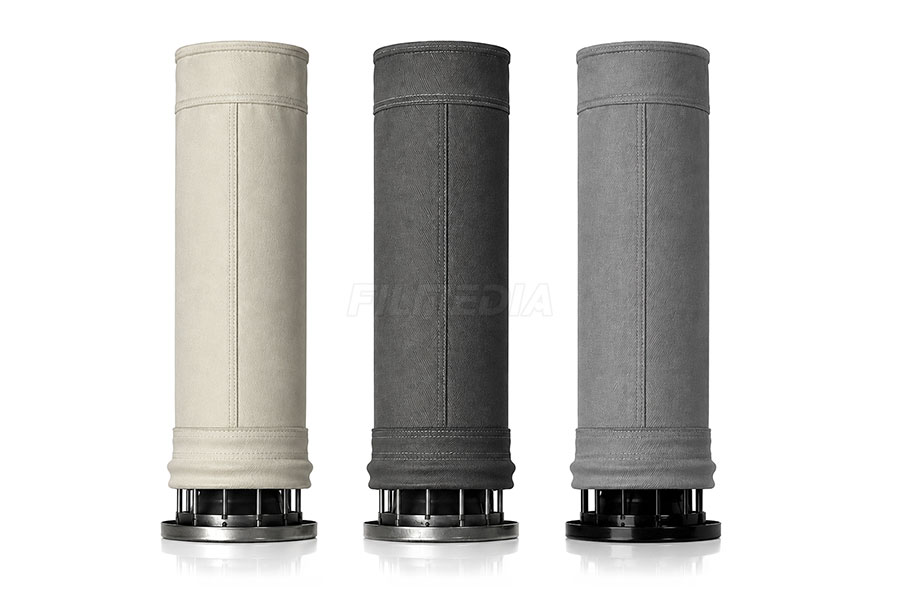
- Continuous operating temperature: ≤260℃
Fiberglass Woven Fabric with PTFE Membrane is one of the most widely used filter materials for high-temperature rotary kiln dust collection systems. Manufactured from high-strength E-glass fiberglass yarns and laminated with a microporous PTFE membrane, it combines the excellent heat resistance and dimensional stability of fiberglass with the superior filtration performance of PTFE. The membrane enables true surface filtration, preventing fine dust particles from penetrating the fabric structure while significantly improving dust cake release efficiency. This filter media offers excellent resistance to high temperatures, chemical corrosion, and abrasive dust, making it particularly suitable for cement kilns, lime kilns, metallurgical furnaces, and waste incineration systems. Continuous operating temperatures can reach 260°C, while ultra-low emissions below 10 mg/Nm³ can be achieved when properly designed and operated.