
Home » Dust Collector Filter Bags
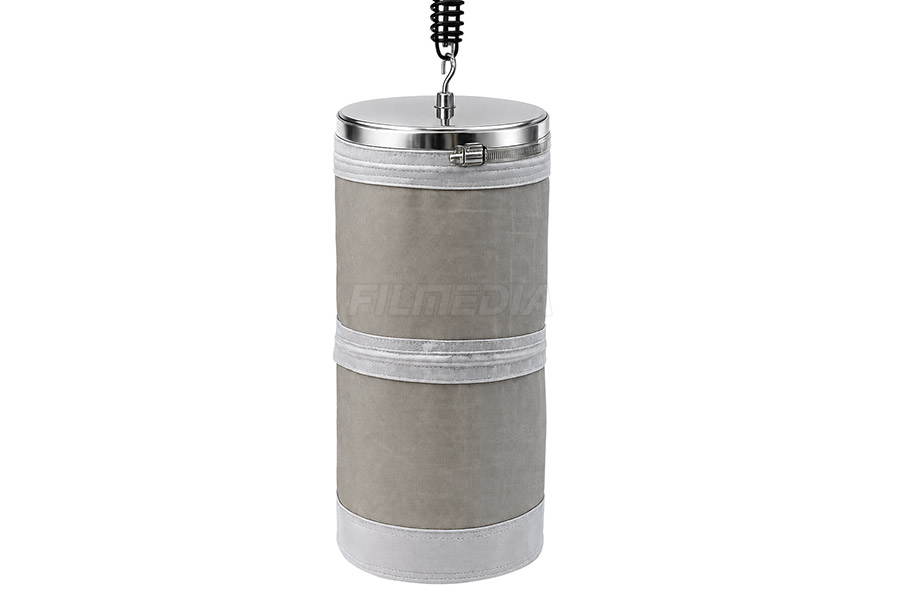
Filter Bags for Reverse Air Baghouse Dust Collectors
Filter bags are key filtration components in reverse air baghouse dust collector systems, widely used in high-flow-rate flue gas treatment processes in industries such as steel, cement, power generation, metallurgy, and chemicals. They employ a reverse-air cleaning mechanism, periodically introducing controlled reverse airflow to cause the filter bags to collapse and bend, effectively removing dust accumulated on their surface.
- High air volume
- High temperature resistance
- Continuous operation
- Long filter bag life
- Low maintenance
Description
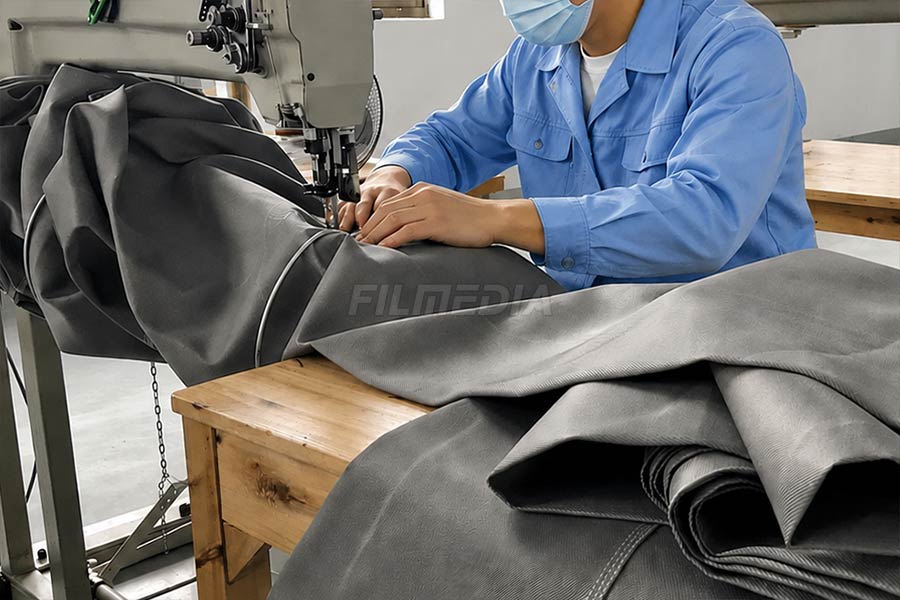
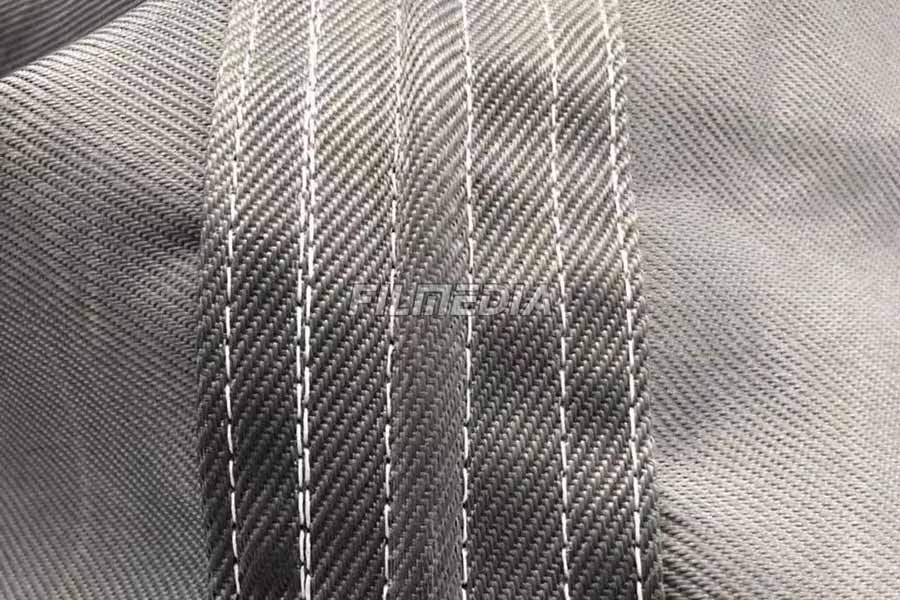
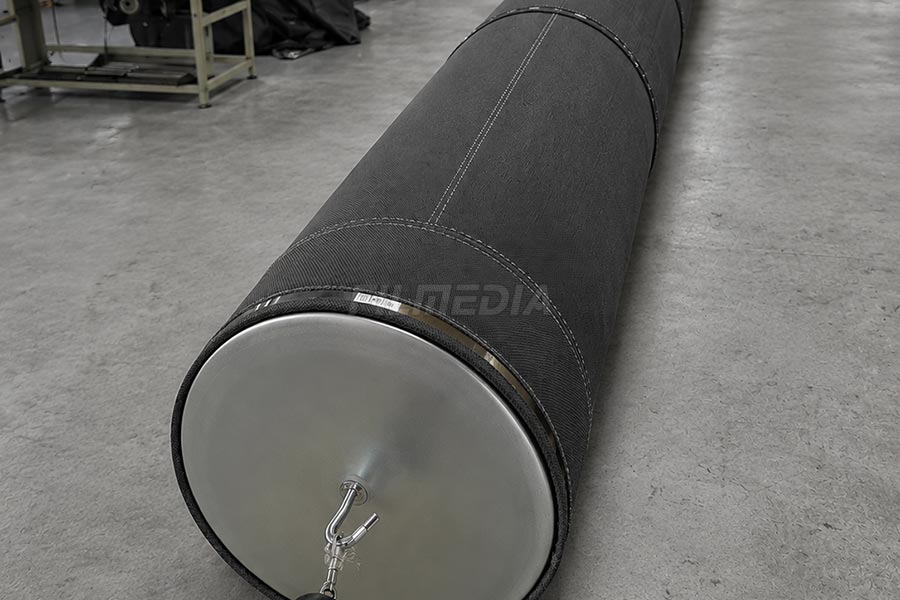
Filmedia® is a professional manufacturer of dust collection filter bags. We supply diversified material filter bags with customized sizes and surface treatments, serving industrial dust removal systems across global industries with reliable quality and full technical support.
Working Principle and Structural Features of Reverse Air Baghouse Dust Collectors
Compared with other cleaning methods, reverse-air cleaning is considerably gentler on the filter media, reducing mechanical stress, abrasion, and fatigue damage. This helps extend filter bag service life while maintaining stable filtration performance over long operating periods. In addition, reverse air filter bags can sustain low operating pressure drop and high collection efficiency, contributing to reduced energy consumption and improved reliability of the entire dust collection system.
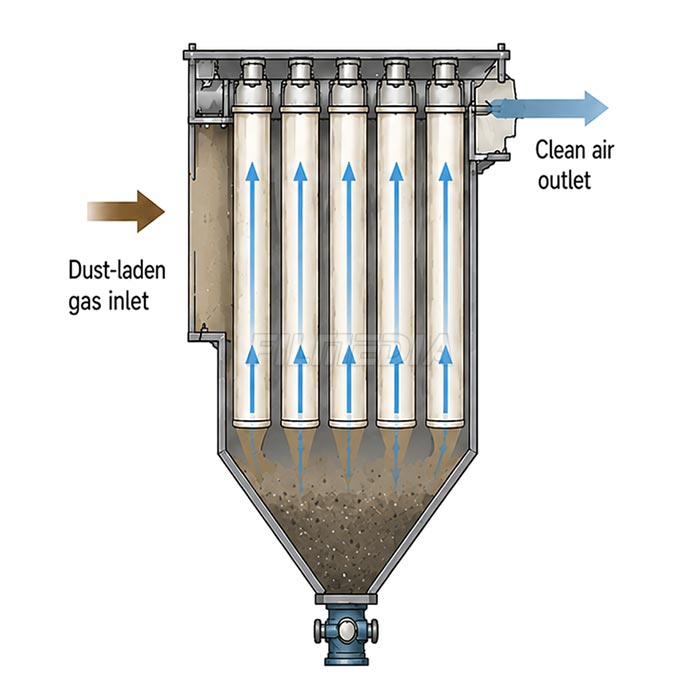
Filtration State
- Dust-laden gas enters the baghouse and is evenly distributed into the filtration chambers. As the gas passes through the filter bags from the outside to the inside, dust particles are captured on the inner surface of the filter bags, while the cleaned gas enters the clean-air chamber. The purified air then passes through the switching valve located at the top of the unit, flows into the exhaust manifold, is drawn by the induced draft fan, and is finally discharged into the atmosphere through the stack.
- As dust continuously accumulates on the filter bags, the filtration resistance gradually increases. When the pressure drop reaches the preset value, the cleaning cycle is automatically initiated. The dust collector adopts a single-compartment reverse-air cleaning system.
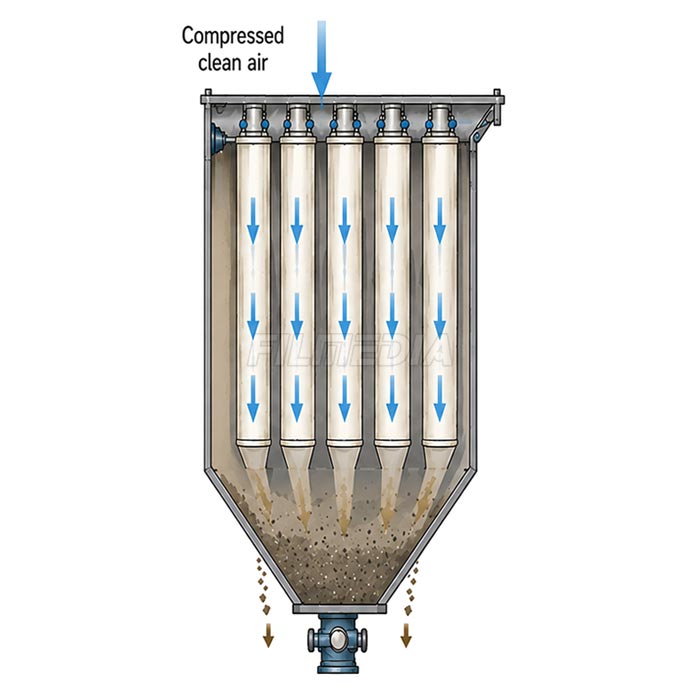
Cleaning State
- During the cleaning process, the reversing valve closes the exhaust duct of the selected compartment and simultaneously opens the reverse-air duct, temporarily isolating that chamber from the normal exhaust flow. Since the inlet ducts of all compartments remain interconnected and the adjacent chambers continue operating under negative pressure, airflow is drawn through the reverse-air duct into the compartment being cleaned.
- The reverse airflow passes through the filter bags from the clean-air side to the dirty-air side, causing the bags to collapse inward and generate a gentle shaking action. This deformation effectively dislodges the accumulated dust cake from the bag surface. The removed dust falls into the hopper below, where it is collected for disposal or recovery.
Filter Media – Woven Fiberglass Filter Cloth
Fiberglass filter fabric is one of the most widely used filter materials in reverse air baghouse (RABH) dust collectors. It is made from high-quality alkali-free or low-alkali glass fiber through processes such as drawing, spinning, weaving, heat setting, and surface treatment. This material possesses excellent dimensional stability, high-temperature resistance, and low elongation, making it particularly suitable for reverse air cleaning applications.
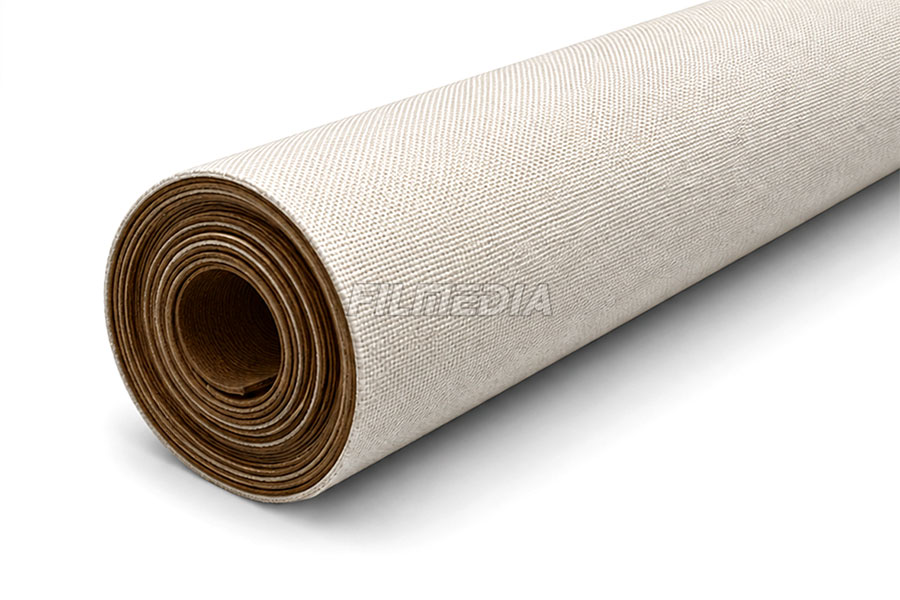
Technical parameters
| Item | Specification |
|---|---|
| Scrim Material | Medium Alkali Fiberglass |
| Weight (g/m²) | 630 |
| Thickness (mm) | 0.6 |
| Weave Structure | Plain Weave |
| Finish Treatment | Silicone Oil Treatment and Oil & Water Repellent Treatment |
| Air Permeability (dm³/m²/s) | 220–310 |
| Tensile Strength (N/5 × 20 cm) | Warp: ≥1720; Weft: ≥1850 |
| Tensile Elongation (%) | Warp: <5; Weft: <5 |
| Operating Temperature (°C) | Continuous: 260; Instantaneous: 280 |
Accessories for RABH Filter Bags
To ensure stable operation under reverse-air conditions, RABH filter bags must be fabricated with specific structural reinforcements.
Because of the inside-out filtration path, when the reverse air presses from the outside of the bag inward during cleaning, the bag tends to collapse. To prevent the bag from flattening completely—which would trap the dust and prevent it from settling down—metal anti-collapse rings must be stitched into the bag at fixed intervals (typically every 1.5 to 2 meters) along its entire length.
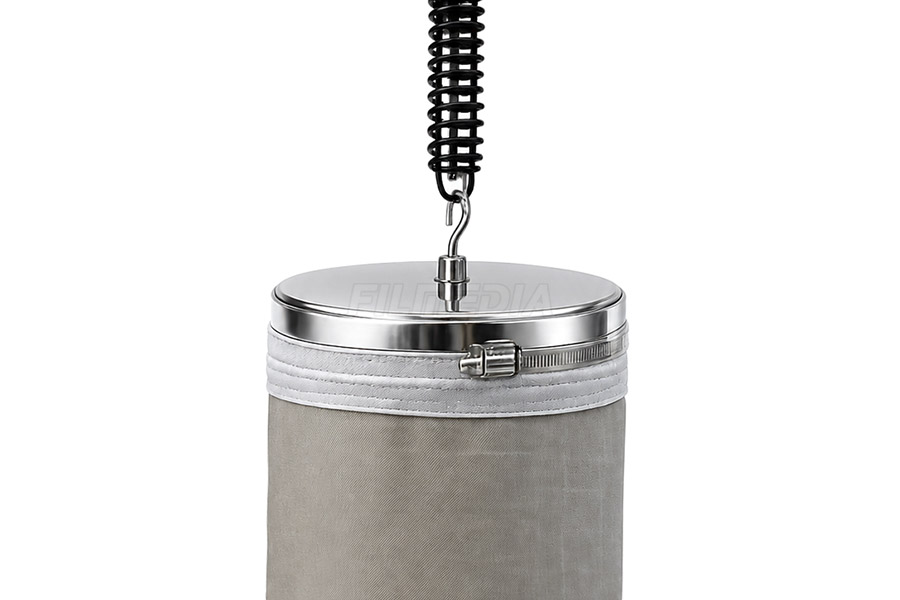
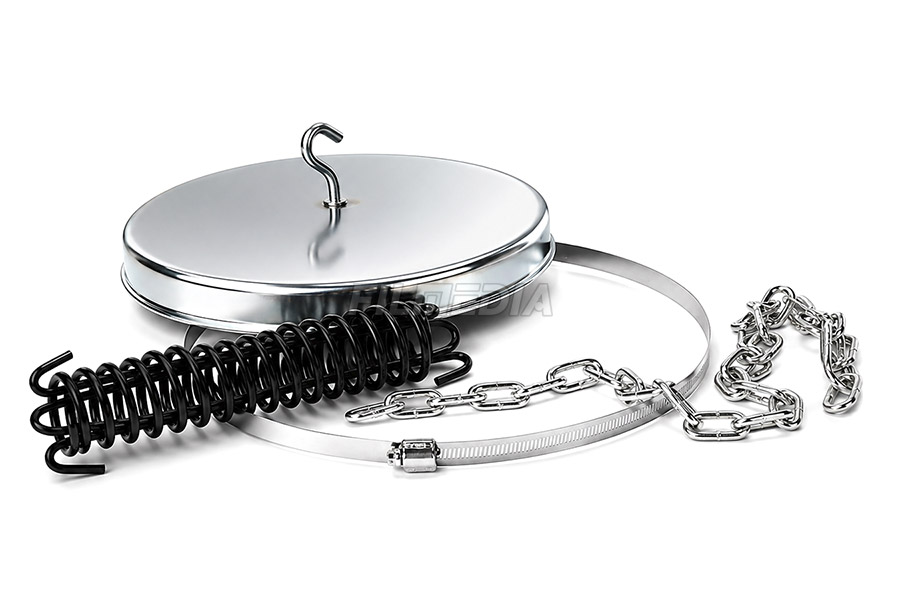
The top of the filter bag is typically fitted with a metal cap, which is suspended from the top structure of the baghouse via a spring tensioning assembly. Maintaining proper installation tension prevents the bags from excessive twisting or violent swaying during reverse-air cycles.