
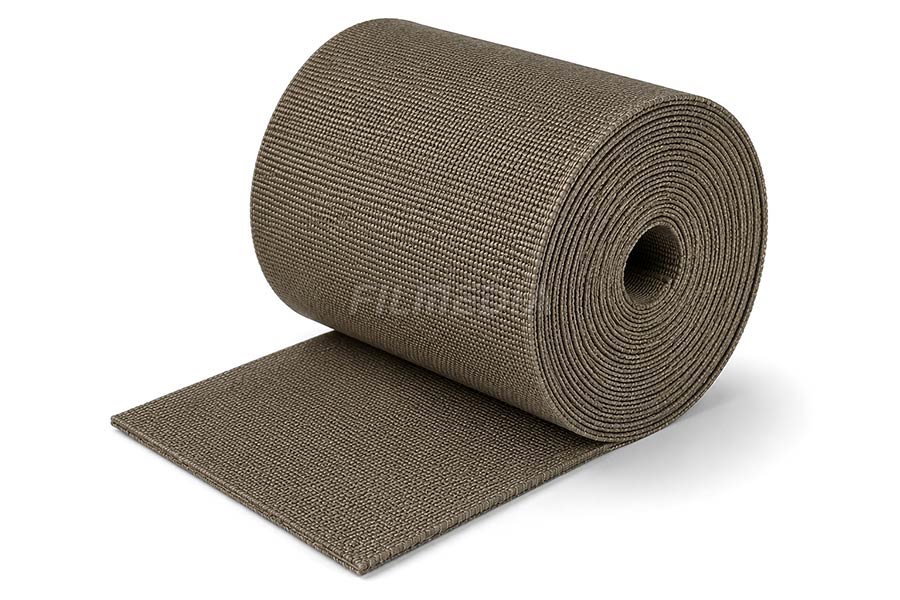
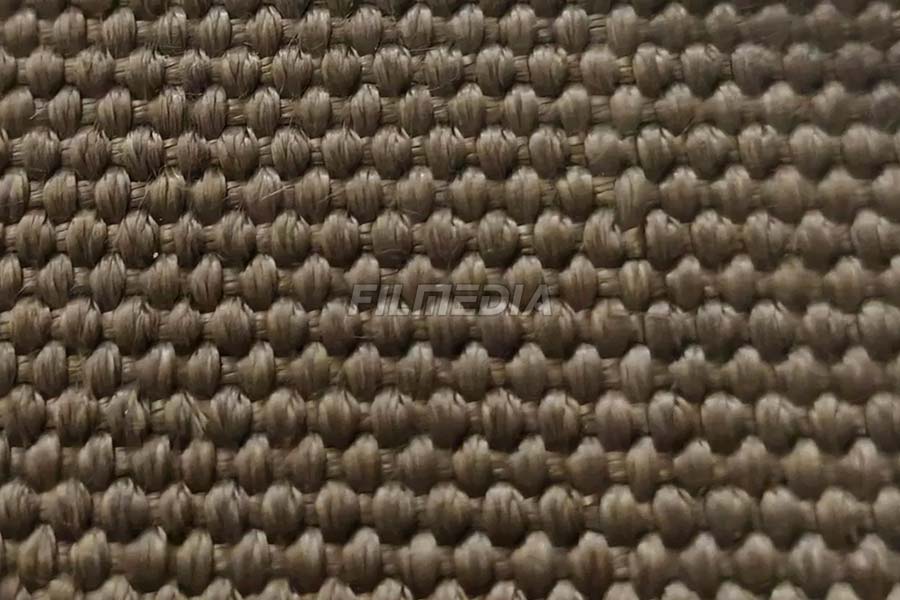
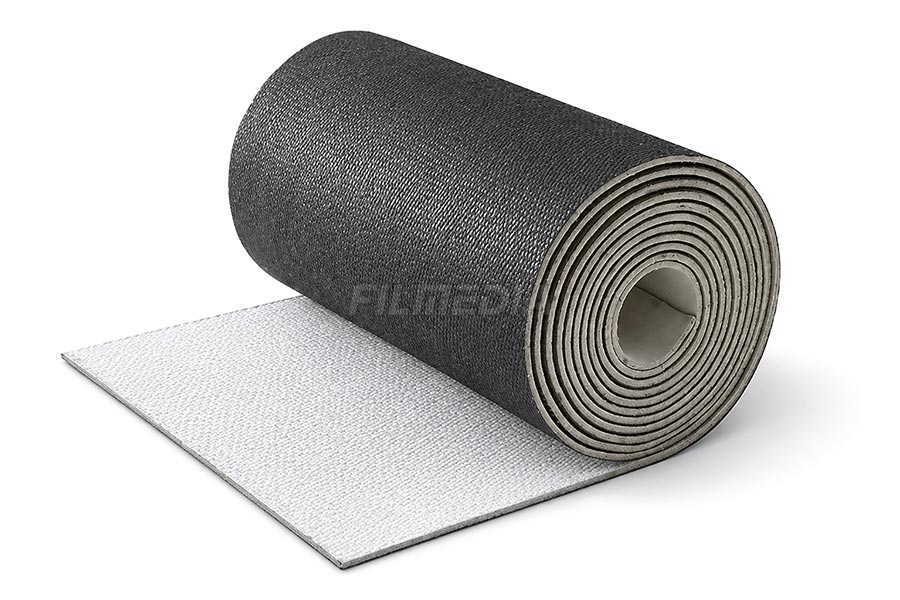
Basalt air slide fabric is a core material for pneumatic conveying, specifically designed for industrial environments characterized by extremely high temperatures and high abrasion. In air-gravity conveyors (air slides) used in sectors such as cement, metallurgy, and power generation, it serves as the “breathing layer” between the air chamber and the material bed. Unlike standard polyester fabrics, it is woven entirely from continuous basalt rock filaments, providing an irreplaceable fluidization solution for extreme operating conditions.
- The max. length per roll: 50 M.
- Max Width: 2.6 M.
- Thickness: 5.0 MM.
- Heat-resistant: ≤750℃.
Description
Outstanding Advantages
☑ Exceptional High-Temperature Resistance
This is its most distinctive feature. While standard polyester aeration fabrics typically operate within a range of 120°C to 150°C, basalt aeration fabrics can withstand continuous temperatures of 500°C to 650°C, with short-term peak resistance approaching 700°C. This capability allows for the direct transport of high-temperature materials—such as freshly discharged kiln clinker, fly ash, or hot metallurgical powders—straight from the source.
☑ Superior Abrasion Resistance
Basalt fiber possesses an inherent Mohs hardness of 5 to 9, providing exceptional resistance to mechanical wear. When conveying hard, sharp-edged industrial powders (such as cement clinker or slag powder), its service life far exceeds that of traditional fabrics.
☑ Uniform and Stable Air Permeability
Utilizing a specialized tight-weave process, the fabric features a highly uniform distribution of pores. Under airflow pressure, it ensures that fluidizing air penetrates the material layer steadily and evenly; this prevents issues such as “channeling” (air tunneling) or localized material accumulation, thereby guaranteeing efficient and smooth pneumatic conveying.
☑ Strong Chemical Stability
It is resistant to strong acids and alkalis and exhibits extremely low hygroscopicity (absorbing almost no water). Even in harsh environments—such as those with high humidity or corrosive flue gases—it does not suffer from hydrolysis or a drastic loss of strength.
Specifications
| Item | Specification |
|---|---|
| Basis Weight (kg/m²) | 8.0 |
| Thickness (mm) | 5.0 |
| Air Permeability (m³/m²·min) | 3.0 |
| Tensile Strength (kg/40mm) | > 600 |
| Operating Temperature | 300°C – 700°C |
How Does It Work?
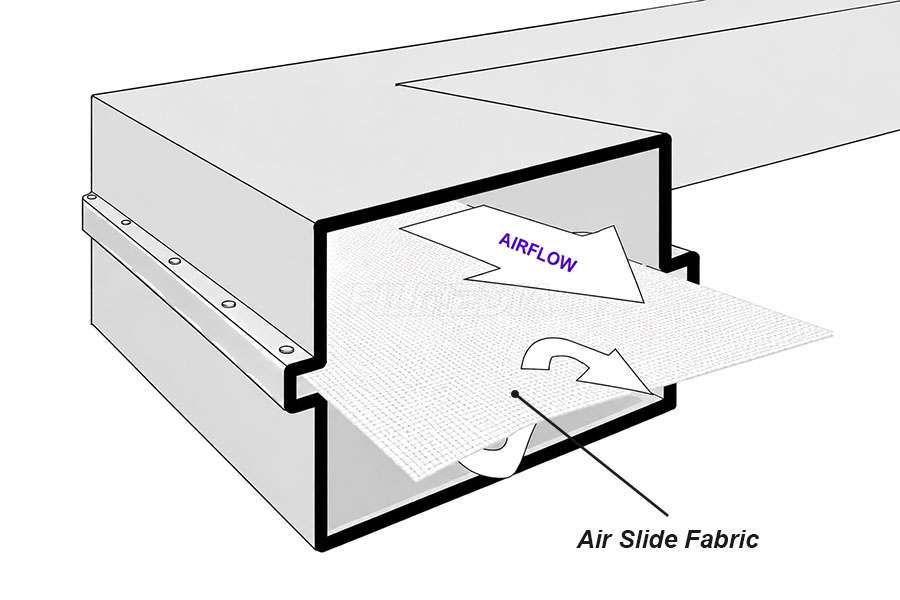
Air slide fabric is installed between the upper and lower channels of air slides to separate two cavities. High-pressure air fills the lower channel and penetrates evenly through the polyester air slide fabric into the upper channel. The dry powdery materials on top of the fabric are fluidized by uniform airflow, then flow smoothly relying on gravity to realize continuous pneumatic conveying.
Typical Applications
☑ Cement industry
Air slides for hot clinker, aeration boxes in homogenization silos, fluidization layers for bulk cement trucks and ships.
☑ Aluminum & metallurgical industry
High-temperature conveying slides and fluidized beds for alumina powder and aluminum hydroxide.
☑ Power plant environmental protection
Conveying of hot fly ash and desulfurized gypsum.
☑ Chemical industry
Silo fluidization for soda ash, carbon black, lime and high-temperature mineral powder.
☑ Building materials & mining
Conveyance of gypsum, mineral powder and refractory powder at high temperature.
☑ Grain & powder processing
Fluidization of high-temperature dried flour and mineral powder in storage silos.