
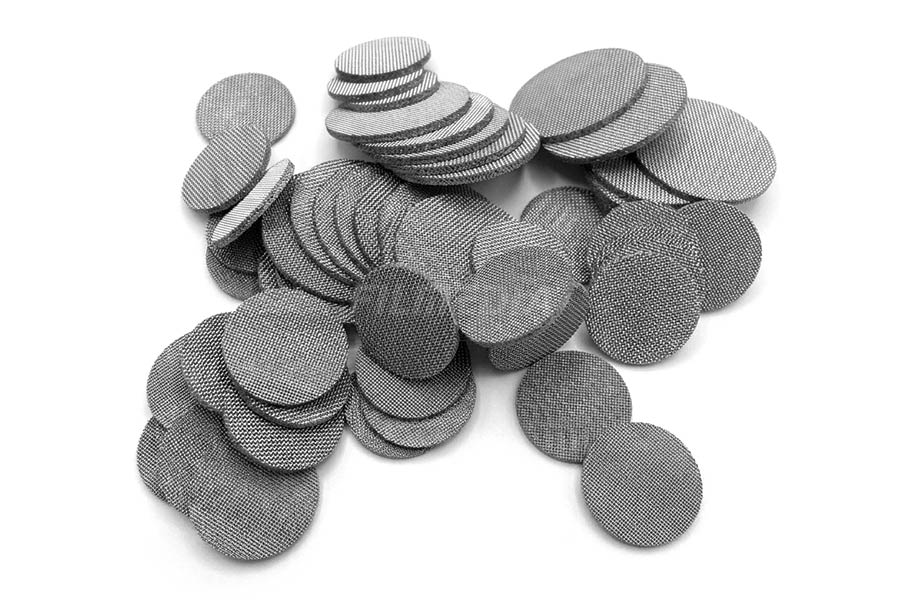

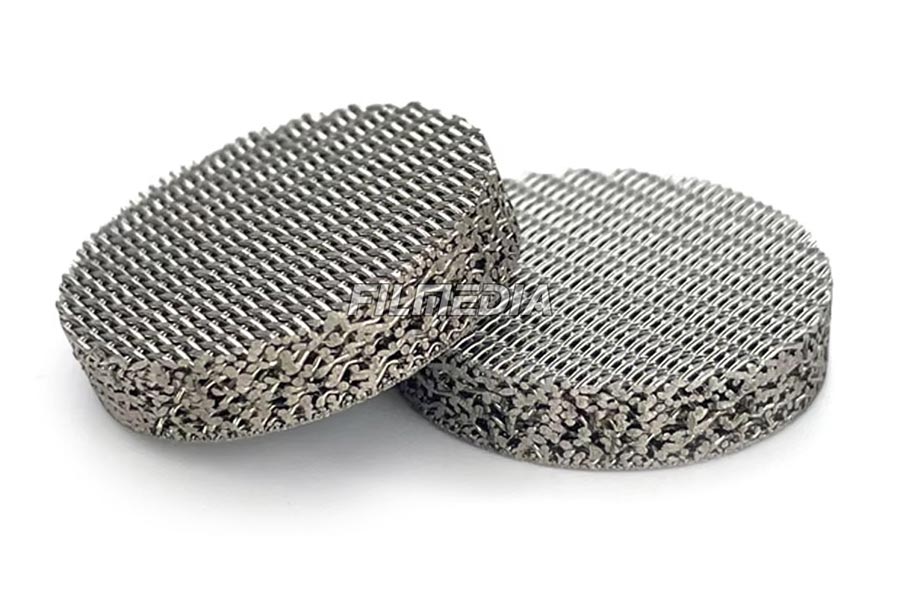
The sintered metal mesh is a high-strength, integrated porous filtration material fabricated by bonding multiple layers of woven wire mesh, metal fibers, or metal powders through a specialized vacuum sintering process (high-temperature and high-pressure heat treatment). In short, it permanently diffuses the contact points of overlapping metal meshes under high temperature to create a rigid, plate-like filtering medium that maintains highly precise and permeable micron-rated pores.
Description
Customizable Specifications
| Material | SUS304 / SUS316 / SUS316L Stainless Steel |
| Thickness | 0.6–25 mm |
| Filtration Rating | 1–1000 μm |
| Mesh Range | 8–10,000 mesh |
| Available Shapes | Discs, ovals, rings, squares, tubes, pleated elements, cones, and customized shapes |
Sintered Filter Mesh Structure
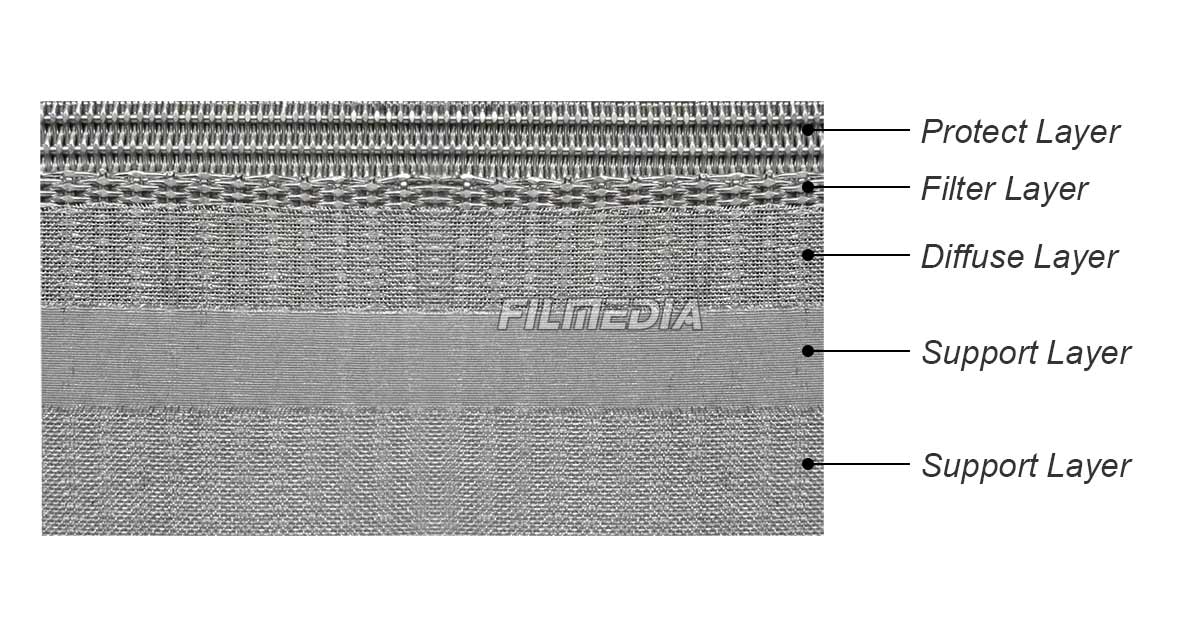
The classic five-layer structure combines precise filtration, mechanical strength, and excellent durability.
The outer protective layer shields the filtration medium, enhancing its resistance to abrasion, impact, and mechanical damage.
The core filtration layer determines filtration precision and separation efficiency. By controlling pore size, it captures fine particles, ensuring reliable contaminant removal while maintaining stable flow performance.
The diffusion layer evenly distributes the fluid before it reaches the filtration layer. It mitigates pressure fluctuations, prevents excessive localized loading, and improves the overall utilization of the filtration area.
The first support layer provides structural reinforcement for the filtration medium. It enhances pressure resistance and prevents the filtration layer from deforming during operation.
The second support layer provides additional mechanical strength and stability. Working in tandem with the first support layer, it ensures excellent rigidity, high pressure resistance, and long-term durability.
Common Ratings
Structure: Protective Layer + Filtration Layer + Diffusion Layer + Support Layer +
Support Layer
| Nominal Filter Rating (μm) | Structure | Thickness (mm) | Air Permeability (L/min/cm²) | Bubble Pressure (mm H₂O) | Weight (kg/m²) |
|---|---|---|---|---|---|
| 1 | 100 + 400 × 2800 + 100 + 12 × 64 + 64 × 12 | 1.7 | 1.81 | 360–600 | 8.4 |
| 2 | 100 + 325 × 2300 + 100 + 12 × 64 + 64 × 12 | 1.7 | 2.35 | 300–590 | 8.4 |
| 5 | 100 + 200 × 1400 + 100 + 12 × 64 + 64 × 12 | 1.7 | 2.42 | 260–550 | 8.4 |
| 10 | 100 + 165 × 1400 + 100 + 12 × 64 + 64 × 12 | 1.7 | 3.00 | 220–500 | 8.4 |
| 15 | 100 + 165 × 1200 + 100 + 12 × 64 + 64 × 12 | 1.7 | 3.41 | 200–480 | 8.4 |
| 20 | 100 + 165 × 800 + 100 + 12 × 64 + 64 × 12 | 1.7 | 4.50 | 170–450 | 8.4 |
| 25 | 100 + 165 × 600 + 100 + 12 × 64 + 64 × 12 | 1.7 | 6.12 | 150–410 | 8.4 |
| 30 | 100 + 450 + 100 + 12 × 64 + 64 × 12 | 1.7 | 6.70 | 120–390 | 8.4 |
| 40 | 100 + 325 + 100 + 12 × 64 + 64 × 12 | 1.7 | 6.86 | 100–350 | 8.4 |
| 50 | 100 + 250 + 100 + 12 × 64 + 64 × 12 | 1.7 | 8.41 | 90–300 | 8.4 |
| 75 | 100 + 200 + 100 + 12 × 64 + 64 × 12 | 1.7 | 8.70 | 80–250 | 8.4 |
| 100 | 100 + 150 + 100 + 12 × 64 + 64 × 12 | 1.7 | 9.10 | 70–190 | 8.4 |
| 150 | 50 + 100 + 50 + 30 × 30 + 100 × 50 | 2.0 | 25 | 50–150 | 8.4 |
| 200 | 40 + 80 + 40 + 20 × 40 + 80 × 40 | 2.0 | 26 | 50–150 | 8.4 |
Typical Applications
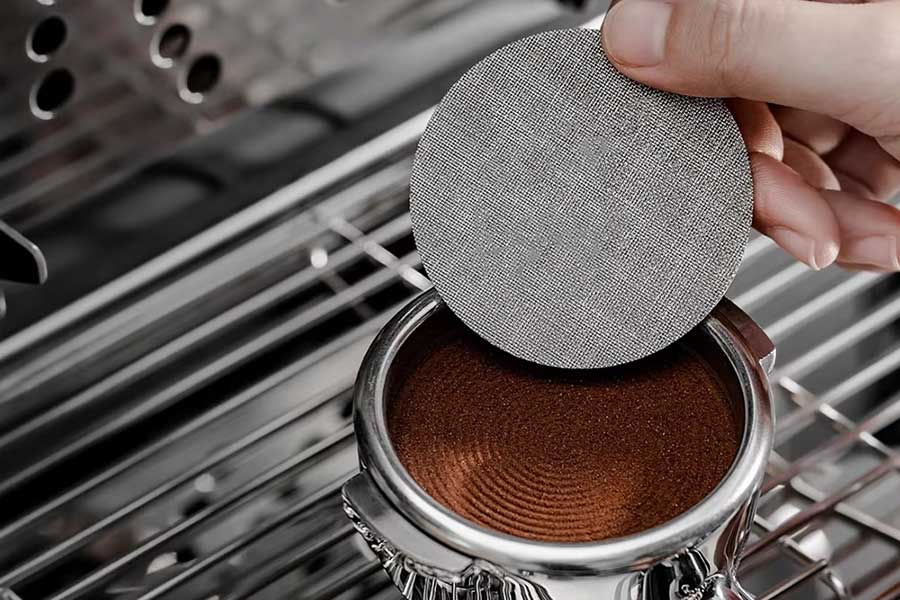
Catalyst recovery, filtration of highly corrosive acids and alkalis, oil-gas separation, and refining of crude oil derivatives.
Filtration of Active Pharmaceutical Ingredients (APIs), decarbonization filtration, medical gas purification, and fluid-bed drying.
Carbon dioxide purification, steam filtration, edible oil filtration, and solid-liquid separation in beverages (fruit juice, beer, wine).
Hydraulic fluid filtration, fuel system filtration, airbag inflator diffusers, and noise reduction in pneumatic systems.
Polymer melt filtration, synthetic fiber spinning (polyester, nylon), and plastic recycling extrusion.
High-temperature flue gas dust removal, cooling tower water treatment, gas turbine protection, and moisture protection for power electronics.