
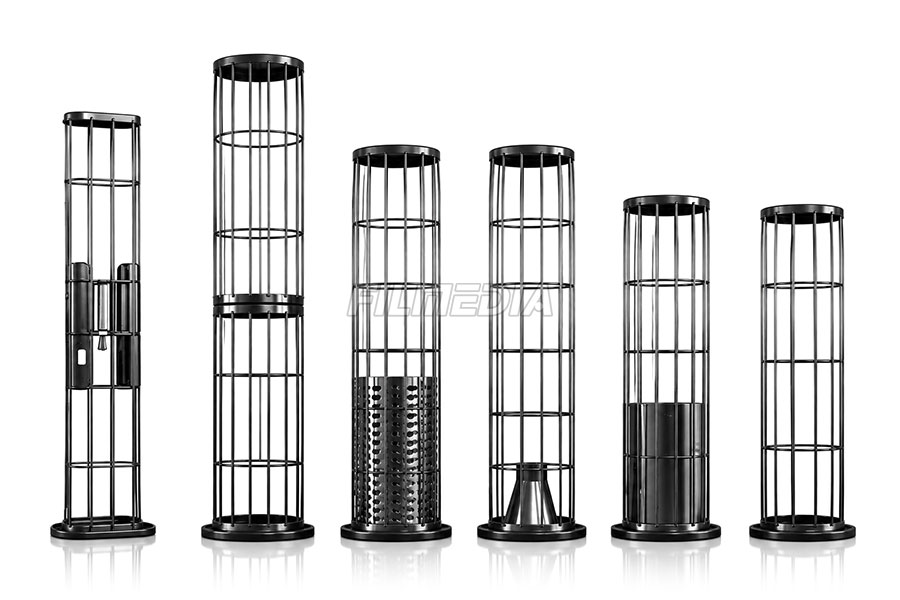
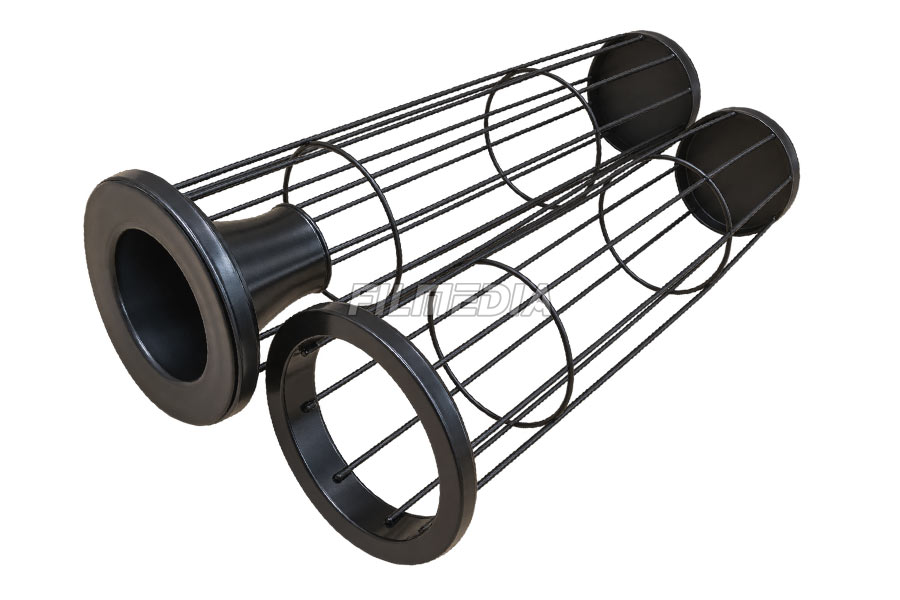
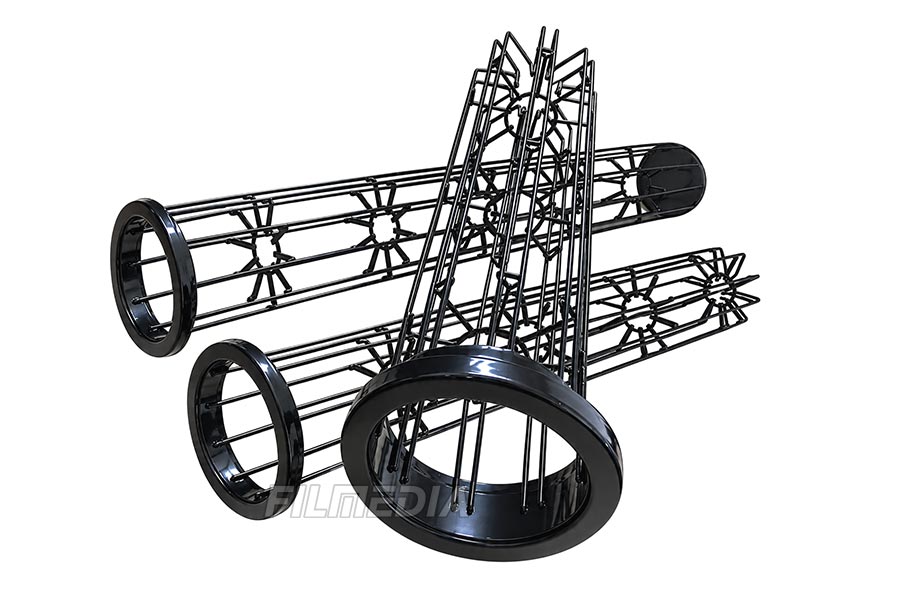
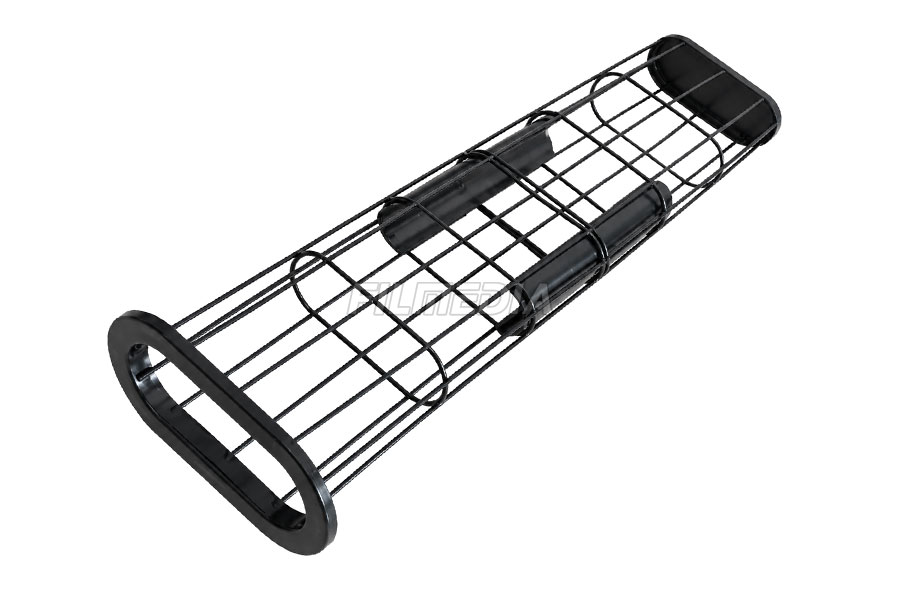
In operating conditions where flue gas corrosivity is mild, carbon steel filter cages coated with silicone can serve as an alternative to stainless steel, reducing costs by 30%–50% while offering an estimated service life of 5–8 years.
Description
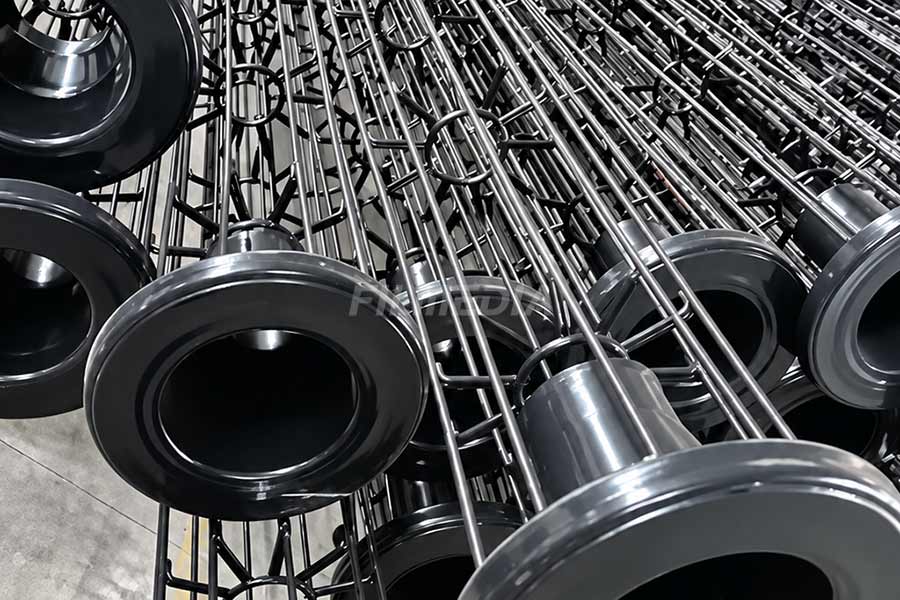
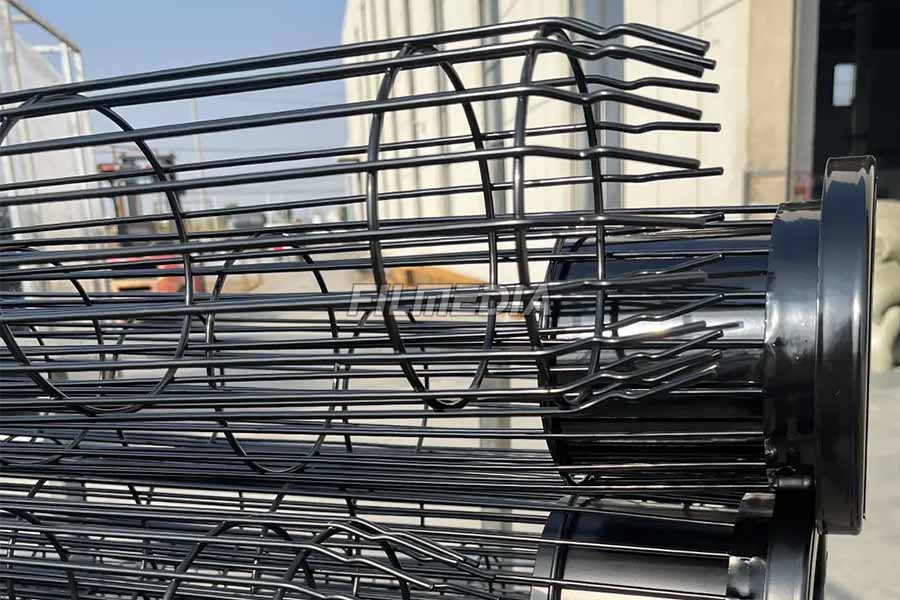

As a vital metallic material, carbon steel is renowned for its high strength, excellent plasticity, and superior mechanical properties. Its inherent toughness and ductility allow it to undergo plastic deformation under external force, thereby absorbing energy and protecting other structural components from damage. However, the primary drawback of carbon steel filter cages is their poor corrosion resistance; in humid, acidic, or alkaline environments, they are prone to rusting, which can trigger a cascade of issues, including damage to filter bags and structural deformation.
Surface Treatment for Carbon Steel: Silicone Coating
By combining carbon steel with silicone, a silicone-coated carbon steel filter cage is created. This composite product retains the high strength and robust mechanical properties of carbon steel while incorporating the high-temperature resistance, corrosion resistance, and wear resistance characteristic of silicone. Consequently, these silicone-coated carbon steel cages hold broad application potential across various industrial sectors.
- High-Temperature Resistance
Silicone is a synthetic polymer material with exceptional performance. It exhibits outstanding high-temperature resistance, maintaining stable properties even under intense heat or extreme conditions.
- Chemical Corrosion Resistance
Silicone also offers excellent resistance to chemical corrosion, effectively withstanding the erosive effects of various acids, bases, and other chemical substances.
- Electrical Insulation
Silicone materials possess strong electrical insulating properties. When formulated appropriately and applied as a complete, intact coating, they can provide a degree of electrical insulation for the surface of carbon steel.
Naturally, there are certain considerations when using silicone-coated carbon steel filter cages. For instance, they require regular cleaning and inspection during use, so that any damage or wear can be identified and addressed promptly.
Common Type and Specifications
01. Round Filter Bag Cage
| Cage Diameter (mm) | Bag Diameter (mm) | Length (mm) |
|---|---|---|
| 110 | 120 | 2000, 2400, 2800, 3200, 3600, 4000, 4400, 4800, 5200, 5600, 6000, 7000 |
| 120 | 135 | 2000, 3000, 4000, 5000, 6000 |
| 145 | 150 | 2000, 3000, 4000, 5000, 6000 |
| 190 | 200 | 2000, 3000, 4000, 5000, 6000 |
02. Flat Filter Bag Cage
| Cage Perimeter (mm) | Bag Perimeter (mm) | Length (mm) |
|---|---|---|
| 800 | 800 | 2000, 2400, 2800, 3200, 3600, 4000, 4400, 4800, 5200, 5600, 6000, 7000 |
| 900 | 900 | 2000, 3000, 4000, 5000, 6000 |
03. Envelope Filter Bag Cage
| Cage Dimensions (L × W × T) | Bag Dimensions (L × W × T) |
|---|---|
| 1500 × 750 × 25 mm | 1500 × 750 × 25 mm |
Typical Applications
- Cement Industry
Dust collection in processes such as cement kiln exhaust, clinker production, grinding, and material handling.
- Iron, Steel, and Metallurgy Industry
Flue gas and dust control during sintering, smelting, casting, and metal processing.
- Power Generation Industry
Flue gas dust removal systems for coal-fired boilers, biomass boilers, and other industrial boilers.
- Chemical Industry
Dust filtration environments where the temperature and the nature of corrosive media are compatible with the properties of the filter media coatings.
- Waste Incineration Industry
Flue gas purification equipment, provided that the specific operating conditions have been assessed to ensure the requirements for temperature and corrosion resistance are met.
- Construction Materials and Mineral Processing Industry
Dust collection systems for mineral powders, construction materials, and other industrial dusts.