
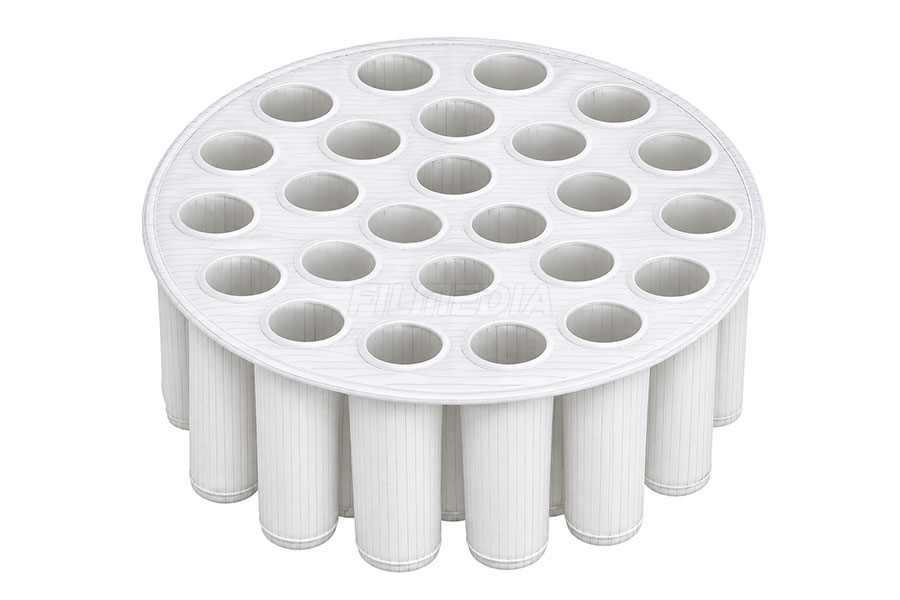
Filter bags are essential filtration components in industrial drying equipment, primarily used to capture dust and particulate matter generated during the drying process. The performance of these filter bags directly influences both drying efficiency and product quality. In sectors such as the chemical, food, and pharmaceutical industries, dryer filter bags not only help protect the environment but also prevent dust from entering downstream equipment, thereby extending the service life of the machinery.
Typical Industries
- Pharmaceutical Industry: Pharmaceutical granules, traditional Chinese medicine (TCM) granules, pharmaceutical excipients
- Food Industry: Grains, sugar, salt, food granules
- Chemical Industry: Chemical crystals, inorganic salts, fertilizer granules
- Plastics Industry: Plastic resins, polymer granules
- Minerals Industry: Mineral granules, inorganic powders
Description
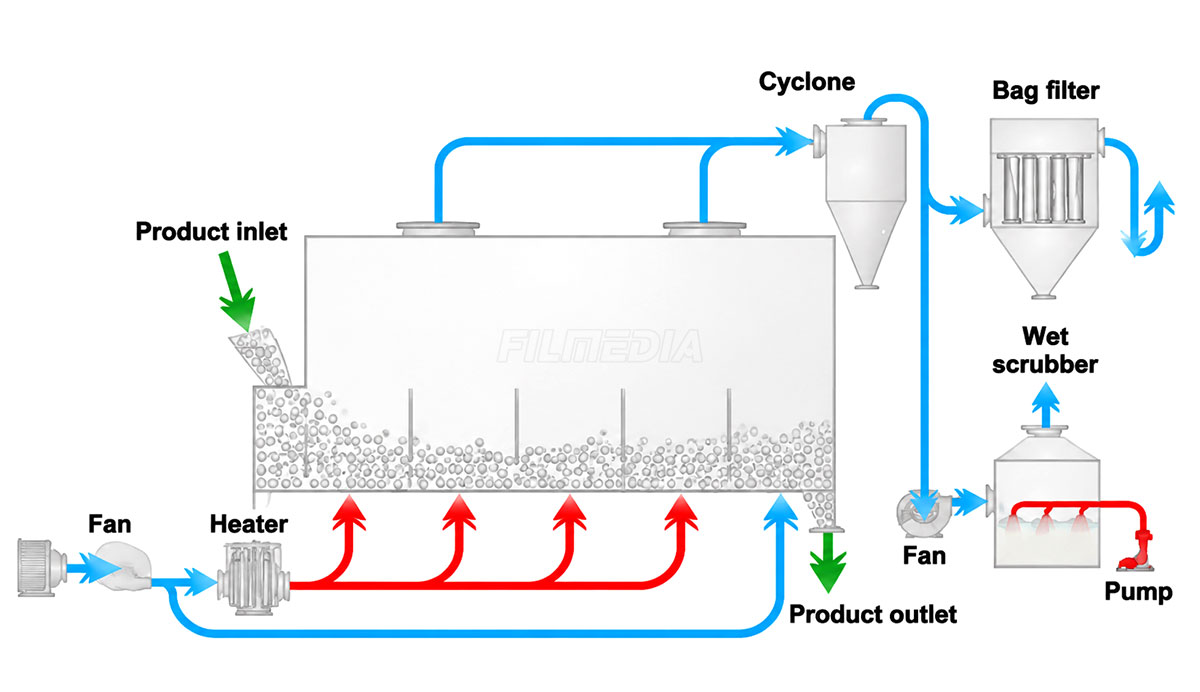
Fluidized-bed Drying Technology
Fluidized-bed drying is an advanced drying technology in which granular material is placed on a perforated plate. A gas is introduced from below, causing the particles to move across the distribution plate and remain suspended within the gas stream. This creates a fluidized layer—a mixture of solid particles and gas—that behaves much like a boiling liquid. Within a fluidized-bed dryer, the particles in this layer come into intimate contact with the gas, facilitating the transfer of both heat and moisture between the material and the gas.
Filmedia® offers filter bags in various sizes, tailored to client requirements and original equipment manufacturer (OEM) standards.
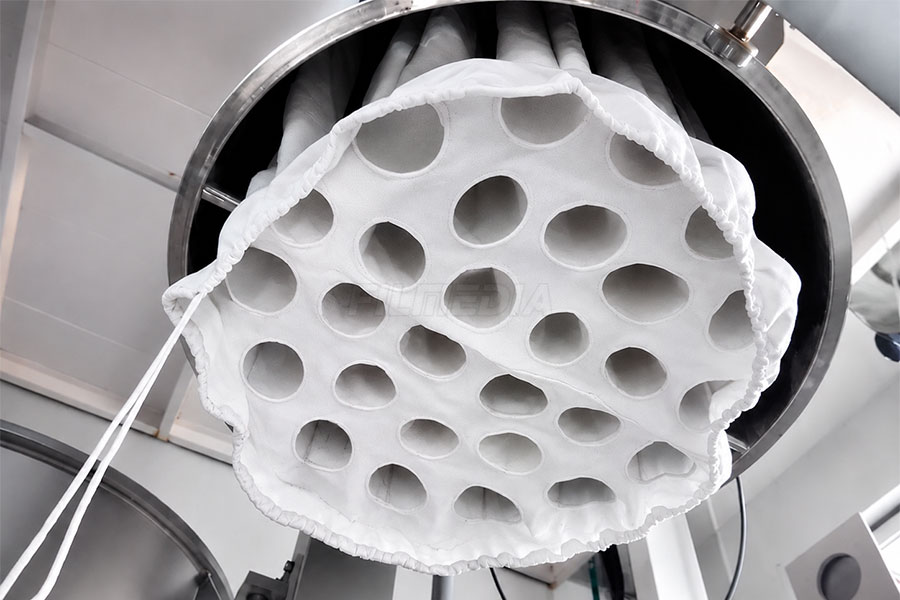
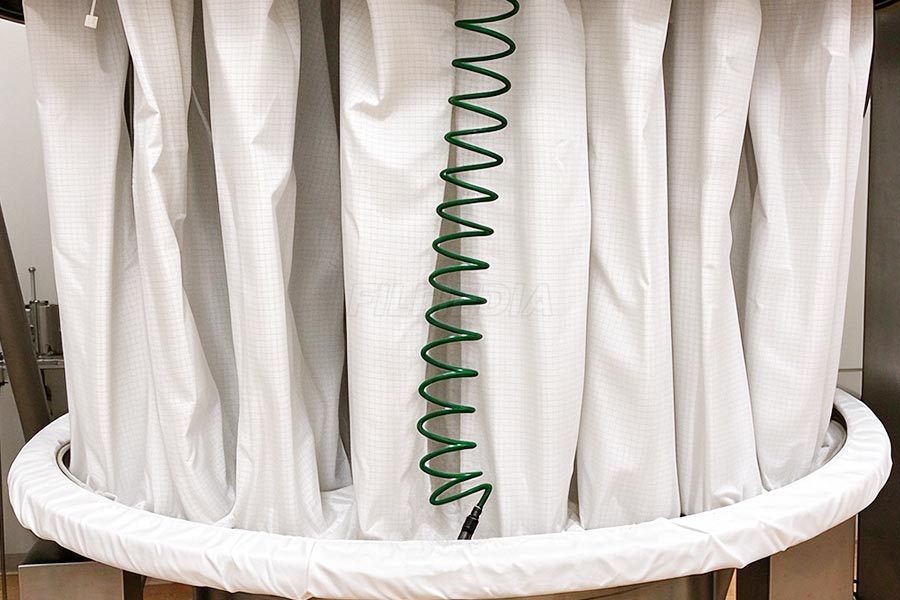
- Technical experts assist in selecting the appropriate materials and precision specifications.
- Years of industry experience help you steer clear of common pitfalls.
- Seams are reinforced with meticulous attention to detail.
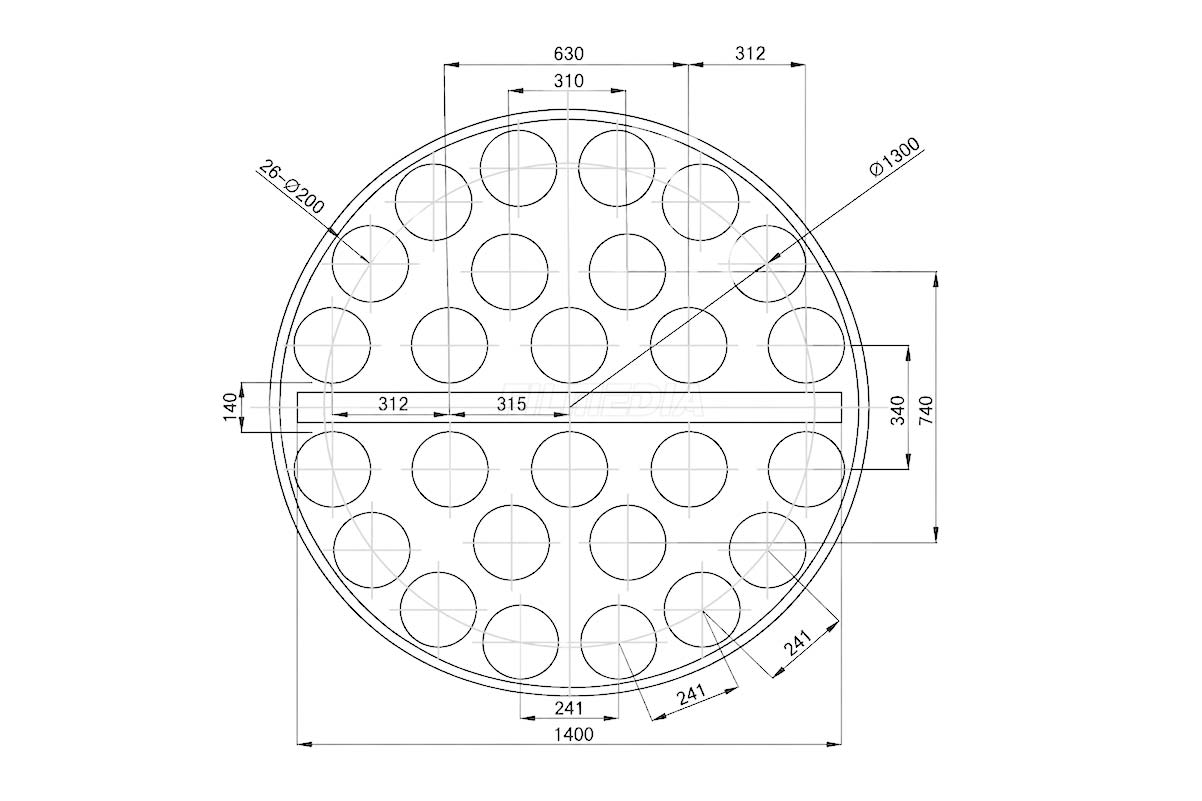
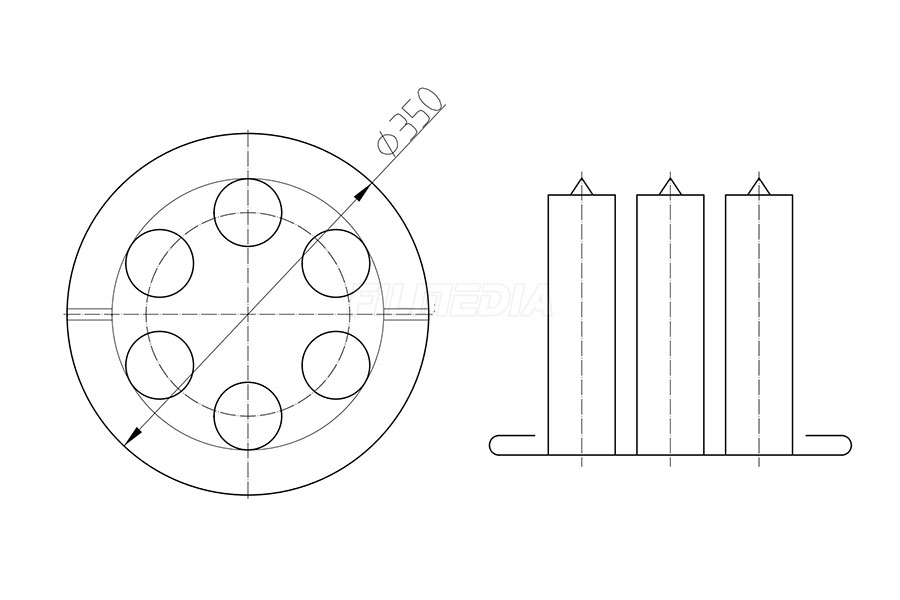
Specifications
| Number of Sleeves | 16, 22 , 32, 44, 56, etc |
| Filter Materials | Polyester, Nylon, Polypropylene (PP), Vinylon (PVA) |
| Weaving Type | Plain Weave, Twill Weave, etc. |
Product Features
- Designed with a nominal filtration precision of 1–30 microns.
- Ensures more thorough capture; the filtration surface utilizes seamless (stitch-free) bonding technology, preventing material leakage during the filtration process.
- Offers faster filtration rates, reducing the strain on the equipment caused by clogging from particulate matter.
- Fiber-free; the surface of the filter medium is treated with an optical thermal-pressing process, resulting in a smooth, even finish.
- Incorporates anti-static standards combined with a three-dimensional integrated filtration technology.
- Features high wear resistance; the collection bags are reinforced with anti-abrasion technology for enhanced durability.
- No cleaning required after use; the filter surface is treated with an anti-adhesion (non-stick) finish, allowing the collected material to detach automatically.
- High temperature tolerance; suitable for continuous operation within a range of -20°C to 130°C.
- Excellent chemical resistance (pH tolerance); suitable for filtering acidic or alkaline materials, with properties including anti-static, acid resistance, alkali resistance, and tolerance to both low and high temperatures.
Comparison of Material Properties
| Properties | Polyester | Nylon | Polypropylene | Vinylon |
|---|---|---|---|---|
| Acid Resistance | Strong | Relatively Poor | Good | Not Resistant |
| Alkali Resistance | Resistant to Caustic Alkali | Good | Strong | Resistant to Strong Alkali |
| Electrical Conductivity | Very Poor | Fairly Good | Good | Average |
| Elongation at Break | 30%–40% | 18%–45% | Higher than Polyester | 12%–25% |
| Elastic Recovery | Very Good | Good | Slightly Better than Polyester | Relatively Poor |
| Abrasion Resistance | Very Good | Very Good | Good | Fairly Good |
| Heat Resistance | 170°C | Slight Shrinkage at 170°C | Slight Shrinkage at 90°C | Slight Shrinkage at 100°C |
| Softening Point | 230°C–240°C | 180°C | 140°C–150°C | 200°C |
| Melting Point | 255°C–265°C | 210°C–215°C | 165°C–170°C | 220°C |