
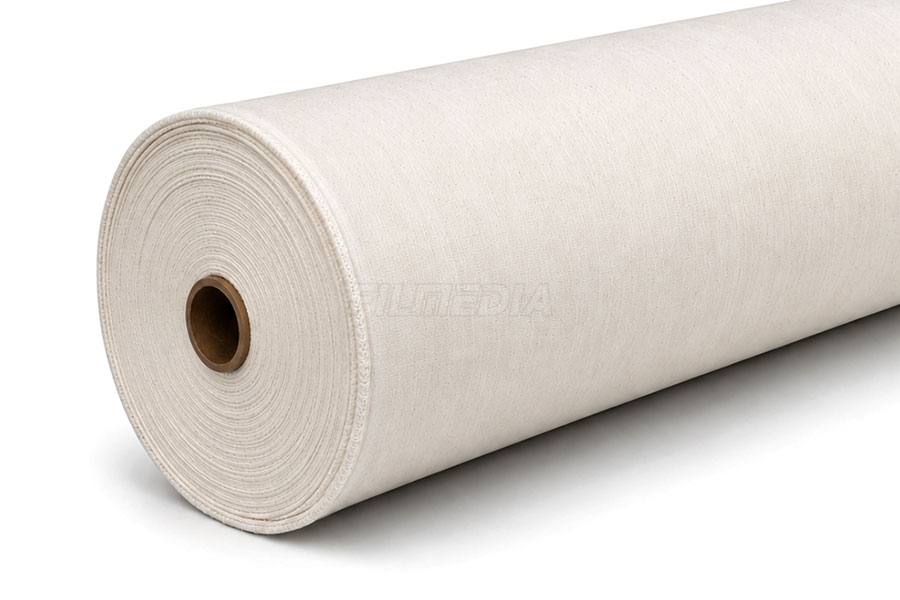
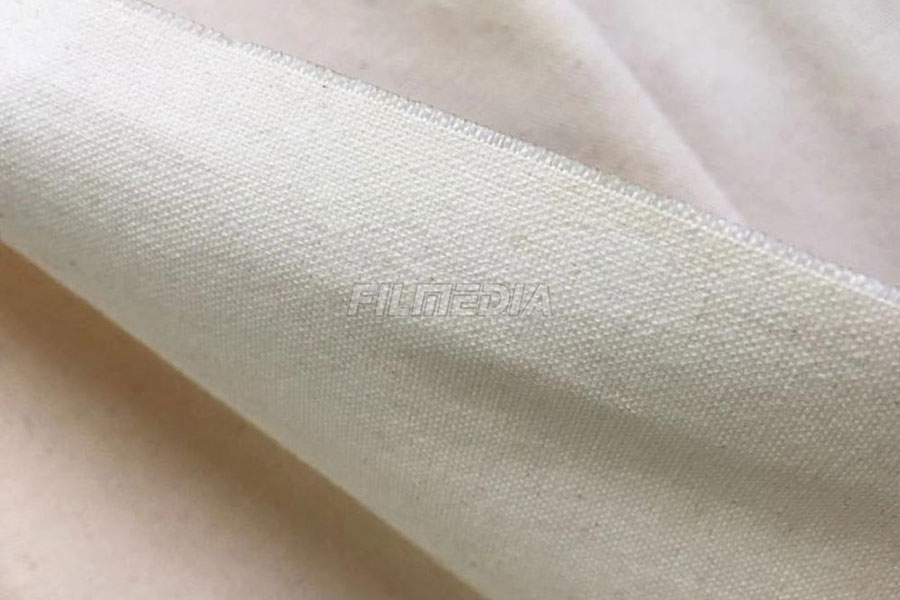
Cotton filter cloth is a natural, eco-friendly, and cost-effective filtration material. Widely used in sectors such as food processing, pharmaceuticals, chemicals, water treatment, and industrial solid-liquid separation, it serves as an ideal filtration medium for applications involving ambient temperatures and low-corrosivity conditions. Through varied weaving structures and specifications, it meets diverse filtration requirements, providing stable and reliable solutions for a wide range of industrial filtration systems.
- By designing various weaving structures and yarn specifications, the material can meet a wide range of filtration requirements—from coarse to fine—to suit diverse process conditions.
- Thickness, basis weight, width, and filtration precision can be customized to meet specific customer needs, and the material can be fabricated into various forms such as filter bags, filter discs, filter cartridges, and filter press cloths.
Description
☑ Excellent Moisture Absorption
Natural cotton fibers have strong water absorption capability, allowing liquids to be quickly absorbed and transferred through the filter media.
☑ Good Air Permeability
The naturally porous structure of cotton fibers provides excellent breathability, reducing filtration resistance while maintaining effective filtration performance.
☑ Soft and Gentle on Filtered Materials
The soft texture of cotton filter cloth minimizes damage to fragile particles, crystals, and sensitive materials, making it ideal for processes where product integrity is critical.
☑ Environmentally Friendly
Manufactured from renewable natural fibers, cotton filter cloth is biodegradable and does not generate microplastic pollution, supporting sustainable manufacturing practices.
Specifications
| Property | Value |
|---|---|
| Material | 100% Cotton |
| Construction | Staple Fiber / Staple Fiber |
| Weave Type | Plain / Twill / Satin |
| Thickness | 1.00 – 2.50 mm |
| Weight | 300 – 1600 g/m² |
| Width | 600 – 2200 mm |
| Air Permeability | 20 – 100 L/m²·s @ 200 Pa |
| Filtration Rating | 0.5 – 100 μm |
| Elongation / Shrinkage | Warp: 3% Weft: 1.5% |
| Color | Raw (Natural White) |
| Roll Length | 50 – 100 m |
| Maximum Operating Temperature | ≤130°C |
| Package | 50 – 100 Meters per Roll |
Application of Cotton Filter Cloth
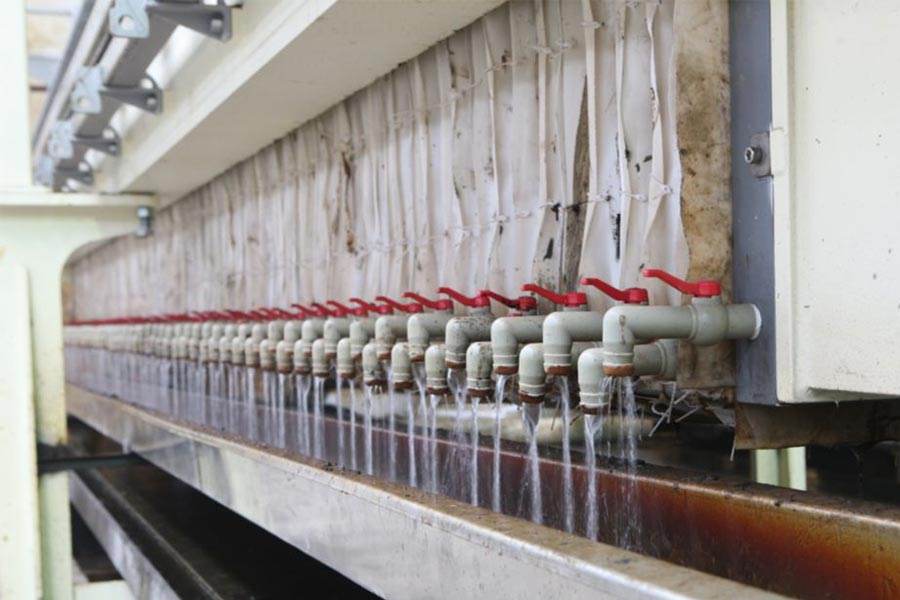
Industrial Solid-Liquid Separation
Cotton filter cloth is commonly used in mining, chemical processing, pigments, ceramics, and fine chemical industries to separate solids from liquids, improving product purity and production efficiency.
- Suitable Equipment
- Filter Press
- Plate and Frame Filter Press
- Vacuum Filter
- Centrifuge
- Leaf Filter
- Belt Filter Press
- Water Treatment
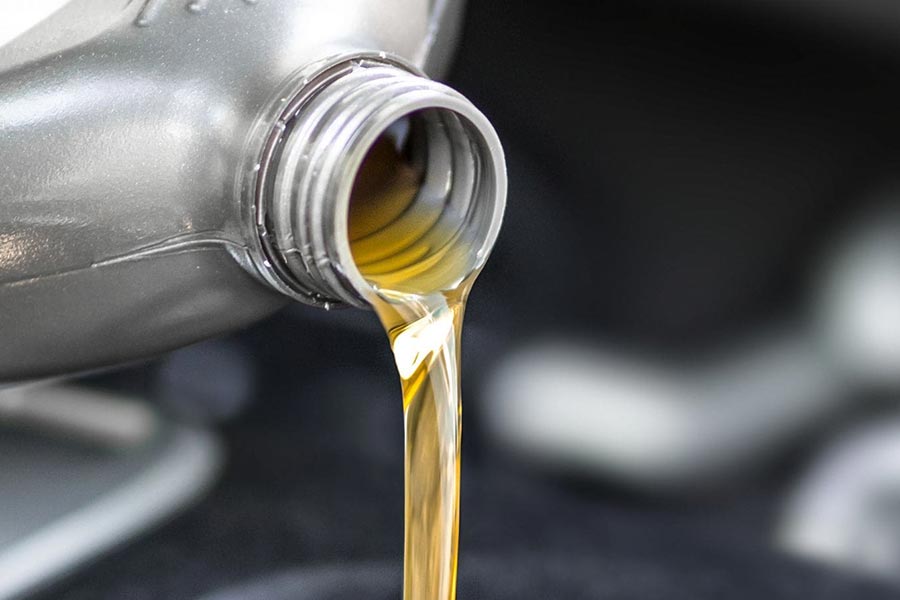
Oil and Gas Industry
Cotton filter cloth is used for filtering lubricating oils, hydraulic oils, fuel oils, and certain petrochemical fluids, helping remove particulate contaminants and protect downstream equipment.

Food and Beverage Processing
Due to its natural and contamination-free properties, cotton filter cloth is widely used for:
- Juice Filtration
- Wine Filtration
- Beer Brewing
- Edible Oil Filtration
- Syrup Filtration
- Starch Filtration
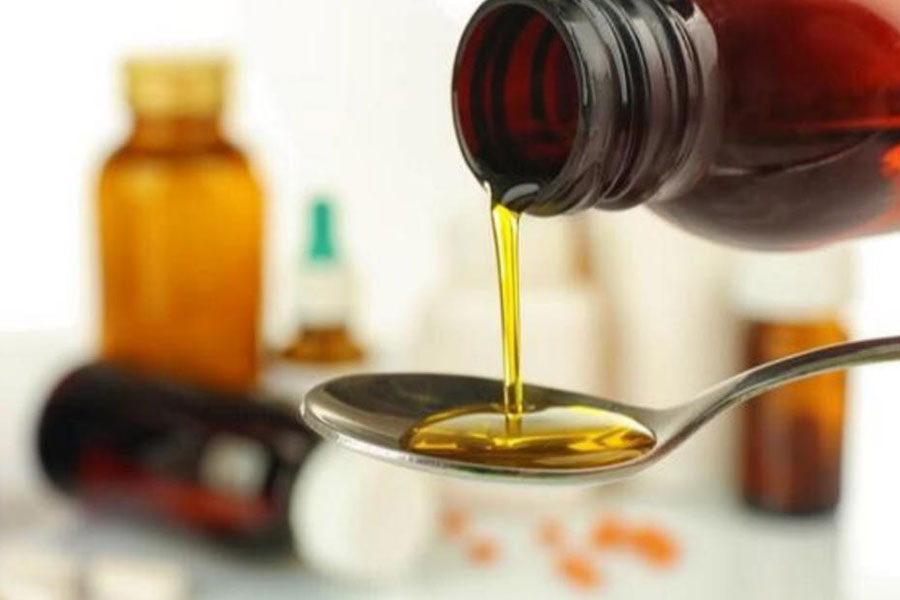
Pharmaceutical Industry
In pharmaceutical manufacturing and extraction processes, cotton filter cloth can be used for:
- Pharmaceutical Solution Filtration
- Herbal Extract Filtration
- Fermentation Broth Filtration
- Solvent Filtration
Notes
Cotton filter cloth is a natural fiber filtration material; its abrasion resistance, chemical corrosion resistance, and high-temperature resistance are inferior to those of synthetic fiber materials such as polyester (PET), polypropylene (PP), and nylon (PA).
Therefore, long-term use is not recommended in the following conditions:
❌️ Environments with strong acids or strong alkalis
❌️ Operating conditions involving strong oxidizing agents
❌️ Continuous high-temperature filtration
❌️ Conditions involving high abrasion or high-impact loads
For high-temperature or highly corrosive environments, it is recommended to select polyester, polypropylene, nylon, or PTFE filtration materials.