
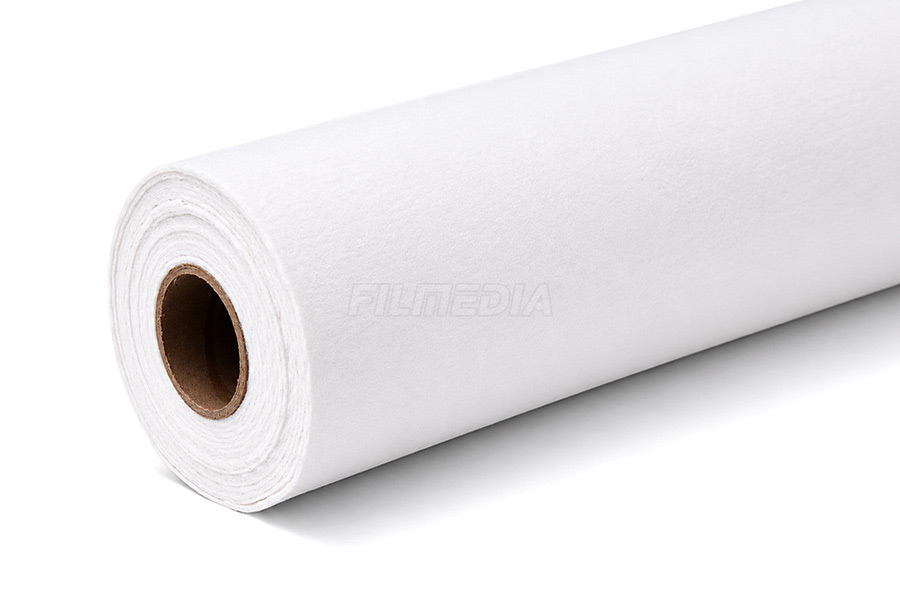
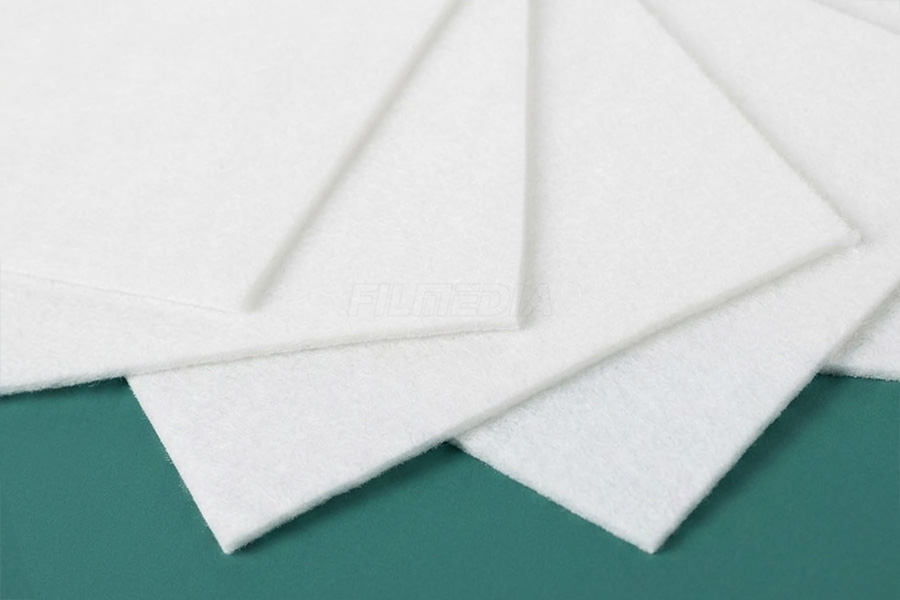
Polypropylene (PP) Needle Felt Filter Fabric
Polypropylene fibers exhibit outstanding resistance to most acids, alkalis, and chemical solutions. The material performs reliably in aggressive chemical environments without corrosion or degradation, making it highly suitable for chemical processing industries.
Unlike some synthetic fibers that deteriorate in humid conditions, polypropylene offers exceptional hydrolysis stability, allowing it to maintain performance in wet and high-humidity environments.
With an extremely low water absorption rate, polypropylene needle felt maintains stable filtration efficiency and dimensional integrity even under moist operating conditions.
Polypropylene fibers provide excellent wear resistance, helping the filter media maintain long-term performance and extending service life in demanding filtration applications.
The material exhibits low sensitivity to temperature and humidity fluctuations, ensuring consistent filtration performance and stable dimensions during operation.
Its smooth fiber surface reduces contamination buildup, making filter cleaning easier and improving filter regeneration efficiency.
Description
Polypropylene (PP) needle felt is a highly cost-effective and widely used industrial non-woven filtration material. It is produced by mechanically interlocking and entangling polypropylene staple fibers through a needle-punching process. Although its temperature resistance is inferior to that of high-temperature filter media such as PPS, aramid, P84, or PTFE, polypropylene needle-punched felt remains one of the most cost-effective and valuable solutions for low-temperature filtration applications.
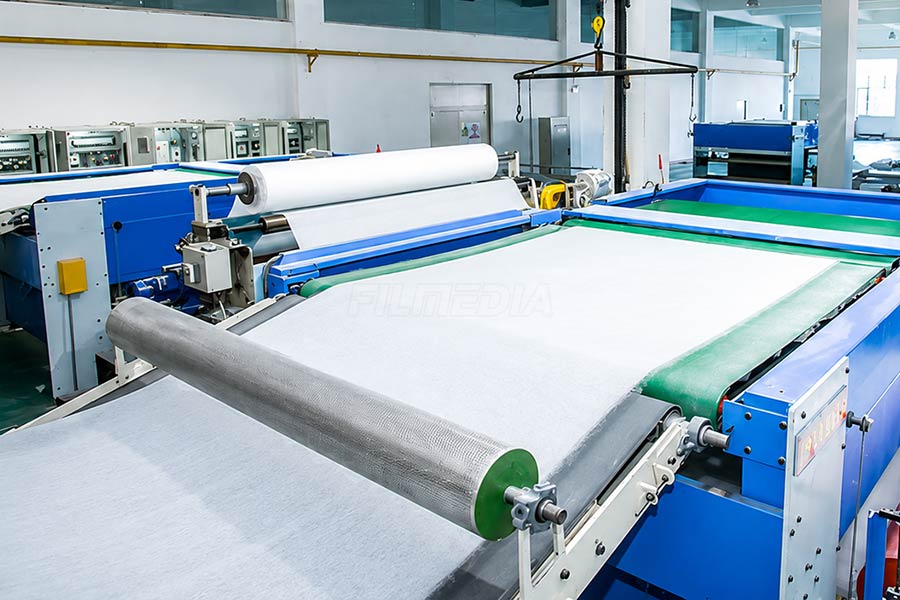
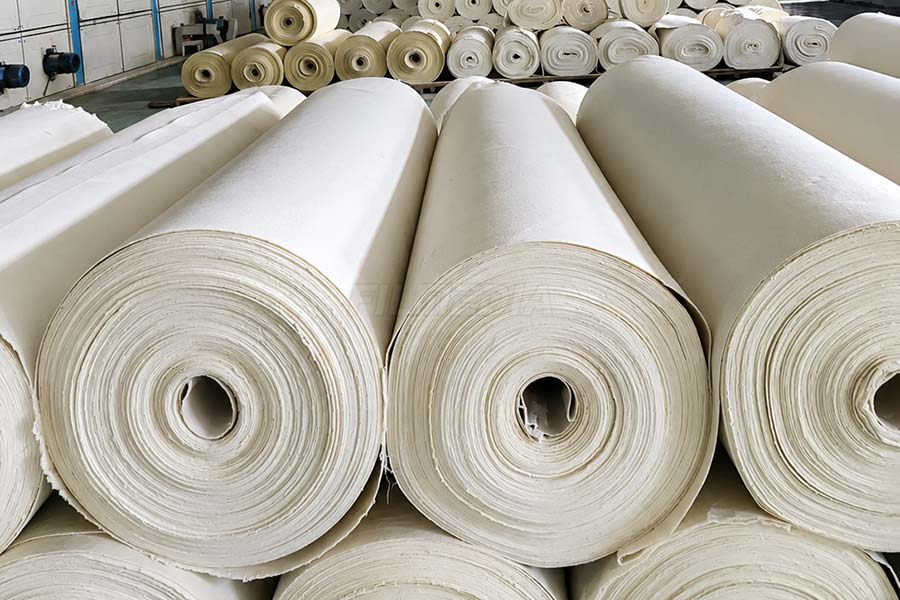
As a manufacturer of premium needle-felt filtration materials, Filmedia® leverages extensive industry experience and a team of technical experts to gain a deep understanding of filtration requirements across diverse operating conditions. We provide scientifically sound, practical, and reliable filtration solutions tailored to our customers’ specific applications. Our comprehensive technical support—encompassing material selection, product design, and process optimization—aims to enhance filtration efficiency, extend product service life, and reduce overall operating costs.
Physical and Chemical Characteristics Of Polypropylene Needle Felt:
| Weight(gs m) | 500 | |
| Thickness(mm) | 2 | |
| Width(m) | ≤2.2 | |
| Finish treatment | Singeing, Calendering, Heat setting | |
| Air permeability(L/m2.s) | 150-200 | |
| Tensile strength(N/5 cm) | warp | ≥1700 |
| weft | ≥2200 | |
| Tensile elongation(%) | warp | ≤20 |
| weft | ≤30 | |
| Heat shrinkage(%) | warp | ≤1.5 |
| weft | ≤1.0 | |
| Temperature(°C/°F) | Continue | 90 /194 |
| Instant | 120 /248 | |
| Anti-acid | Excellent | |
| Anti-alkali | Excellent | |
| Anti-abrasion | Good | |
| hydrolysis stability | Excellent | |
Note:
- Temperature Limitations
Polypropylene has a relatively low softening point; its continuous operating temperature should not exceed 90°C (with a peak or limit temperature typically around 93°C).
- Photosensitivity (Poor UV Resistance)
Polypropylene is highly photosensitive and prone to degradation and aging upon prolonged exposure to sunlight. Therefore, it must be used in relatively enclosed environments protected from direct sunlight.
Post-Treatment Processes
According to specific operating conditions and filtration requirements, the polypropylene needle-punched filter media may undergo one or more of the following post-treatment processes to optimize its surface characteristics and filtration performance.
☑ Singing & Calendering
Surface fibers and fuzz are removed through high-temperature singeing, followed by calendering to create a smoother surface. This significantly improves dust cake release and cleaning efficiency.
☑ Heat Setting
The filter media is heat-treated to eliminate internal stresses, ensuring excellent dimensional stability and preventing shrinkage or deformation during operation.
☑ Water & Oil Repellent Treatment
A special surface treatment reduces surface energy and helps prevent moisture, oil, and sticky particles from adhering to the filter media, minimizing the risk of filter bag blinding and clogging.
☑ PTFE Membrane Lamination
A microporous PTFE membrane is laminated onto the filter media surface, enabling true surface filtration. This greatly enhances the capture efficiency of fine and ultrafine particles while improving dust release performance and extending service life.
Application Industries
Due to its unique physicochemical properties, polypropylene needle-punched felt plays a significant role in both liquid-solid separation (liquid filtration) and gas-solid separation (air/dust filtration).
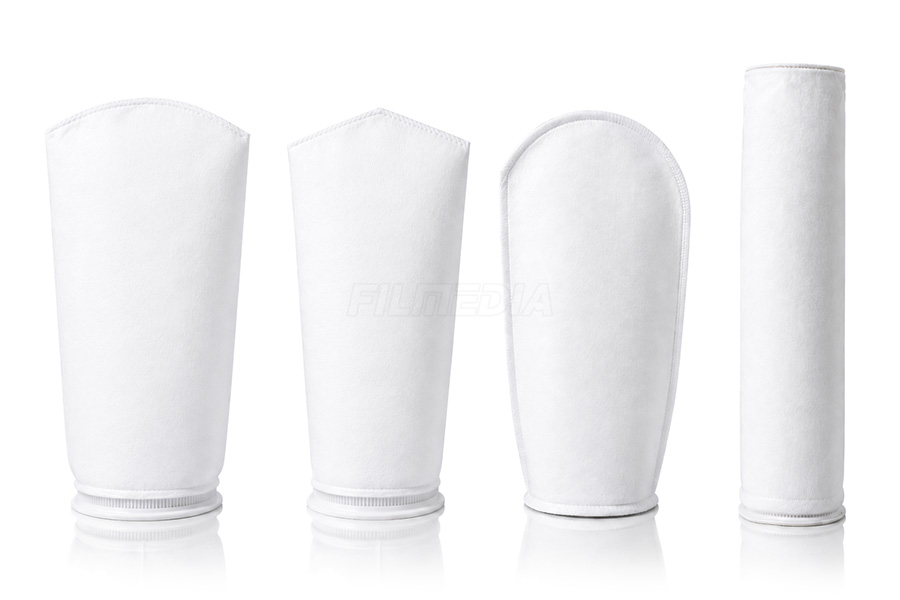
Liquid Filtration
Polypropylene needle-punched felt is suitable for liquid filtration in sectors such as water treatment, chemical manufacturing, and food and beverage production. It effectively removes suspended solids, microorganisms, and bacteria, ensuring the purity of the liquid.
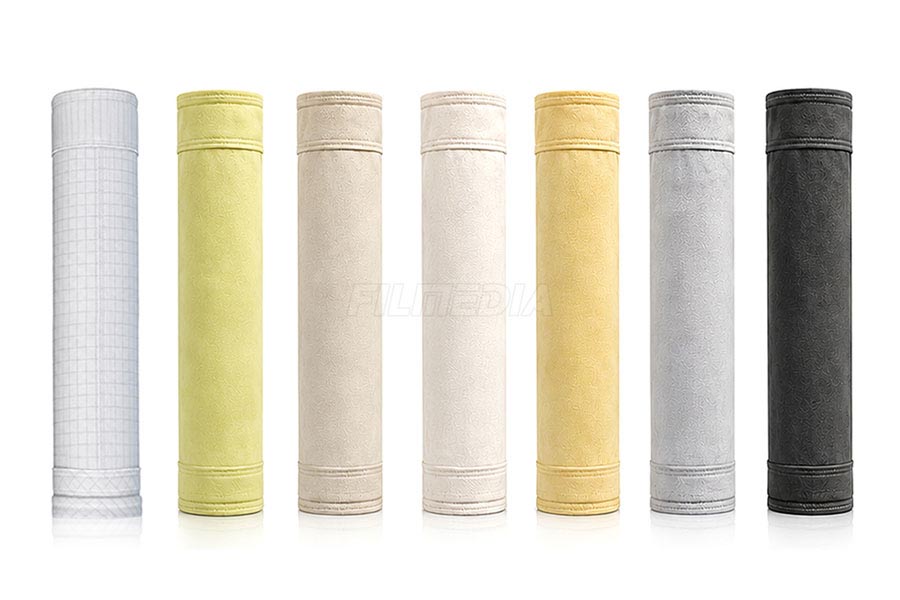
Dust Collection
Many industrial processes—such as mining, metallurgy, and wood processing—generate significant amounts of dust. Dust collection filter bags made from polypropylene needle-punched felt effectively capture this dust, preventing environmental harm and other hazards.