
Home » Industrial RO Membranes
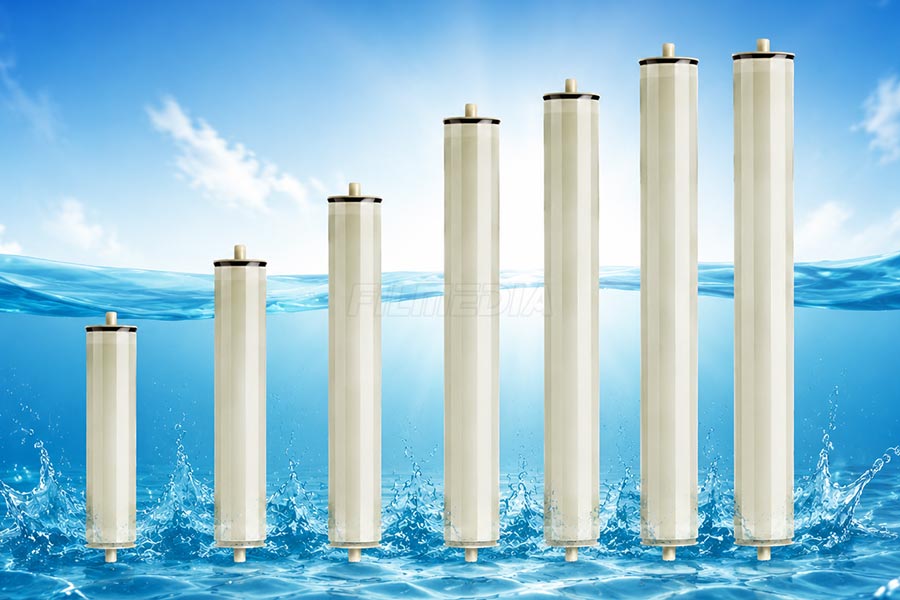
Filmedia® nano-seawater reverse osmosis membranes deliver superior water quality while reducing desalination costs. They maintain an exceptionally high salt rejection rate, making them particularly suitable for high-salinity seawater applications. During long-term operation, they significantly lower system operating pressure and extend service life, making them an ideal choice for achieving low-energy, highly stable seawater desalination.
- Achieves a salt rejection rate of up to 99.8%, delivering stable, reliable, and high-quality permeate.
- Maintains excellent flux and salt rejection performance under high-pressure operation.
- Effectively removes dissolved salts and various harmful contaminants.
- Low-energy design significantly reduces seawater desalination operating costs.
- Superior fouling resistance reduces cleaning frequency and extends membrane lifespan.
- Stable and reliable operation with low maintenance costs ensures better lifecycle economics.
Description
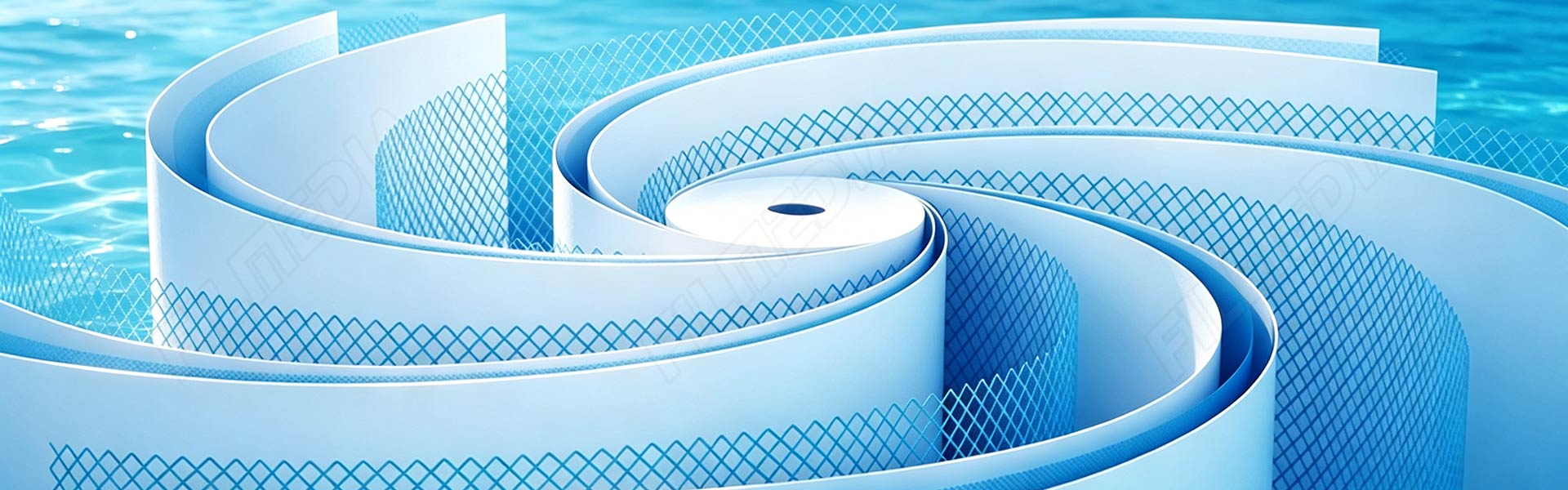
The Contribution of Reverse Osmosis Technology to Seawater Desalination
Seawater reverse osmosis (SWRO) membranes are core components of modern seawater desalination systems. Thanks to their ultra-fine pore size and a salt rejection rate exceeding 99%, they have become a key technology for obtaining drinking water and industrial-grade pure water from the vast ocean. One of the core advantages of seawater desalination using reverse osmosis (RO) membranes is the technology’s exceptionally high salt rejection rate and its ability to guarantee superior water quality. It effectively removes microorganisms—such as organic matter, bacteria, and viruses—from seawater, ensuring water safety. Compared to traditional distillation methods, reverse osmosis technology significantly reduces energy consumption, offering savings of approximately 40% to 60%.
Working Principle and Design Features
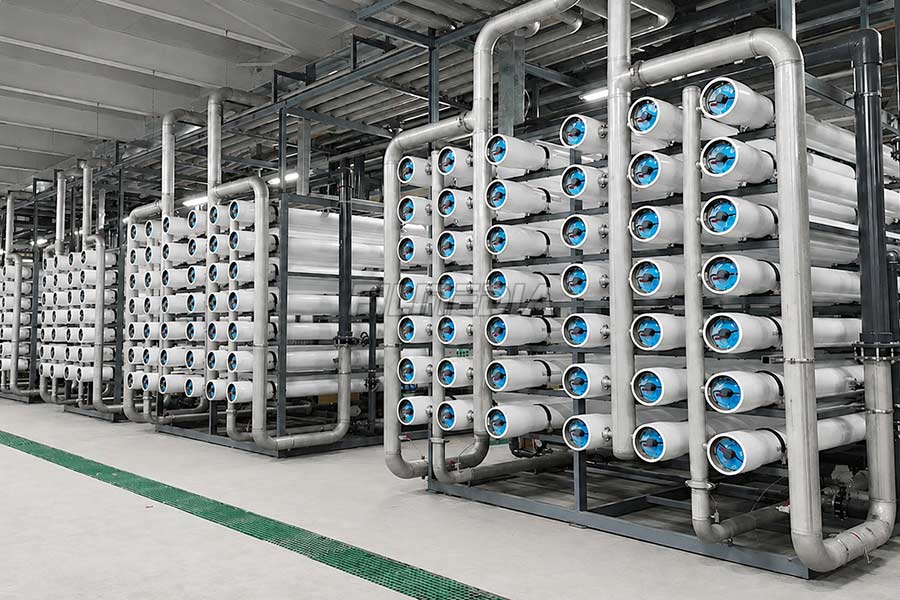
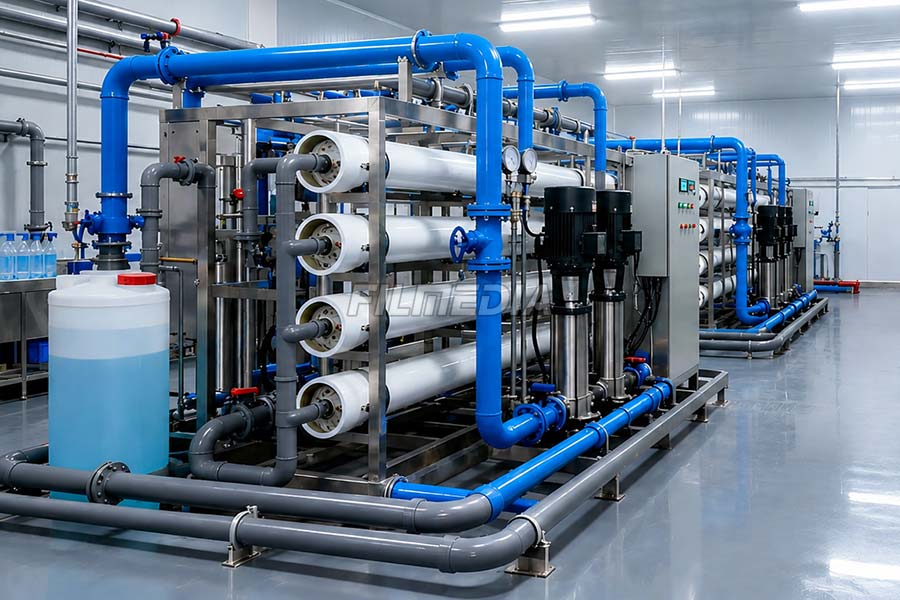
High pressure is applied to force water molecules through the RO membrane, while salts and other impurities are retained. Pressurized seawater enters the RO membrane module; driven by the pressure differential, water molecules pass through the membrane to form fresh water, while salts and other impurities are left behind on the concentrate side.
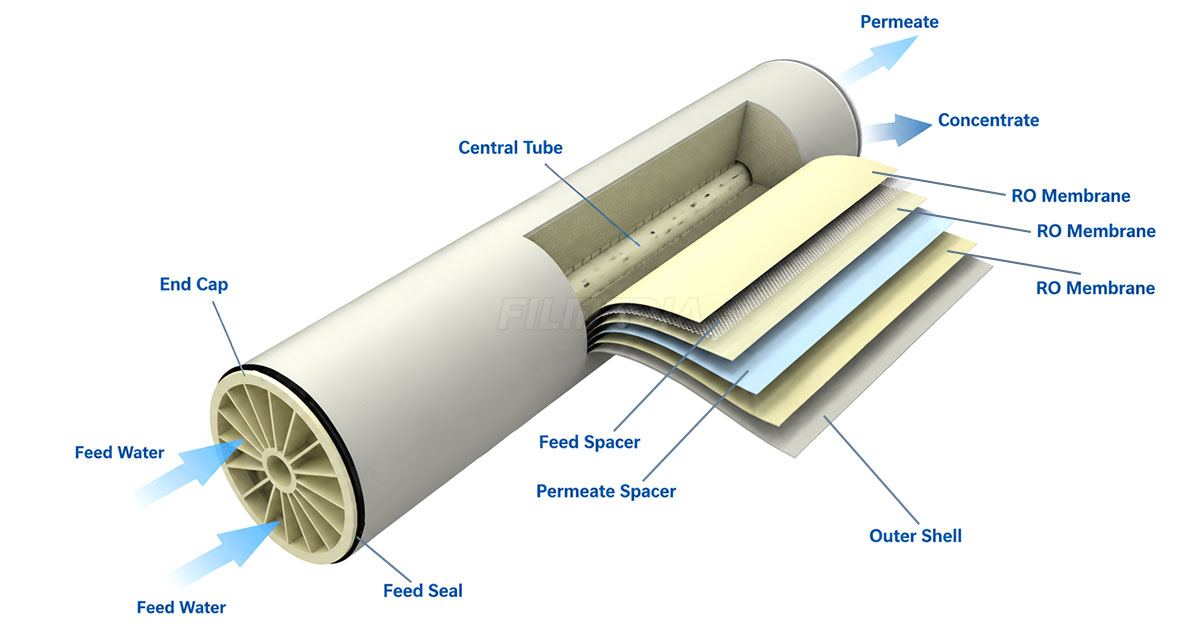
- They are designed with a thick-walled structure that offers high pressure resistance and a defect-free surface, delivering exceptional wear and chemical corrosion resistance.
- The reverse osmosis membranes boast a wide pH tolerance range and excellent cleaning recovery capabilities. When dealing with complex seawater fouling, standard acids and alkalis can be used for intensive cleaning.
- The membrane elements operate at low pressures, effectively reducing the energy consumption of high-pressure pumps.
Performance Parameters of Seawater RO Membrane
| Model | Effective Membrane area ft² (m²) | Feed spacer thickness (mil) | Flow Rate¹ ², gpd (m³/d) | Stable Salt Rejection¹ (%) | Minimum Salt Rejection¹ (%) |
| SW-2521 | 13(1.2) | 34 | 300(1.1) | 99.85 | 99.7 |
| SW-2540 | 28(2.6) | 34 | 700(2.7) | 99.85 | 99.7 |
| SW-4021 | 33(3.1) | 34 | 800(3.0) | 99.85 | 99.7 |
| SW-4040 | 90(8.4) | 34 | 2300(8.7) | 99.85 | 99.7 |
| SW-8040 | 400(37) | 32 | 9000(34) | 99.85 | 99.7 |
| SW-8040 | 440(40) | 28 | 11000(41.5) | 99.85 | 99.7 |
| SW-8040 | 400(37) | 28 | 12000(45.9) | 99.80 | 99.7 |
Dimensions
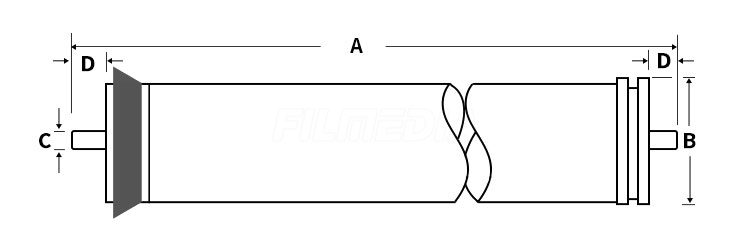
2514, 2540, 4021, 4040
| Model | A/mm (inch) | B/mm (inch) | C/mm (inch) | D/mm (inch) | E/mm (inch) |
|---|---|---|---|---|---|
| 2521 | 533.4 (21) | 63.5 (2.5) | 19.1 (0.75) | 26.7 (1.05) | 480 (18.9) |
| 2540 | 1016 (40) | 63.5 (2.5) | 19.1 (0.75) | 26.7 (1.05) | 962.6 (37.9) |
| 4021 | 533.4 (21) | 101.6 (4.0) | 19.1 (0.75) | 26.7 (1.05) | 480 (18.9) |
| 4040 | 1016 (40) | 101.6 (4.0) | 19.1 (0.75) | 26.7 (1.05) | 962.6 (37.9) |
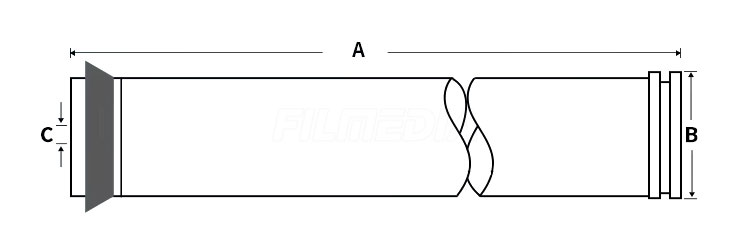
8040
| Model | A/mm (inch) | B/mm (inch) | C/mm (inch) |
|---|---|---|---|
| 8040 | 1016 (40) | 203.2 (8.0) | 29.1 (1.15) |
Filmedia® – Industrial Reverse Osmosis Membrane Manufacturer
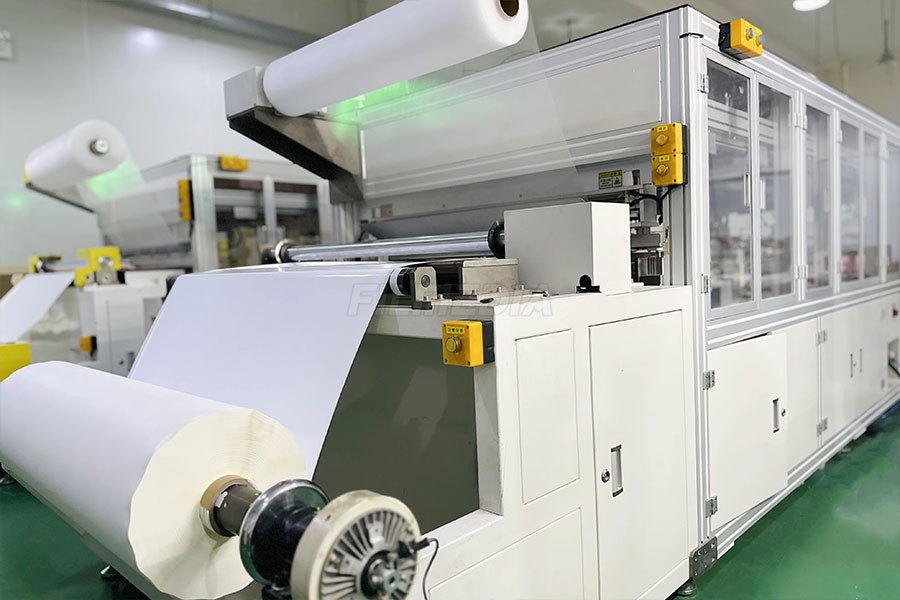
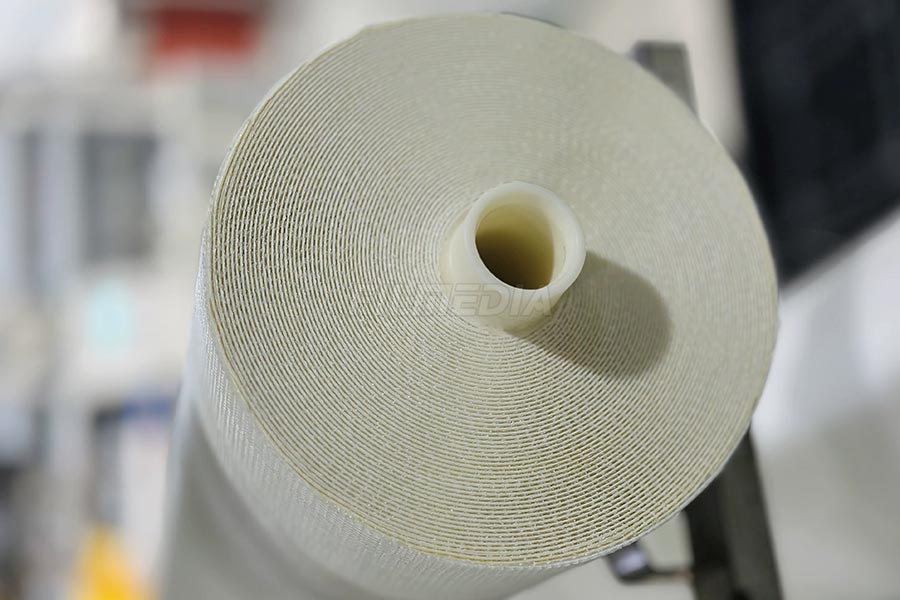
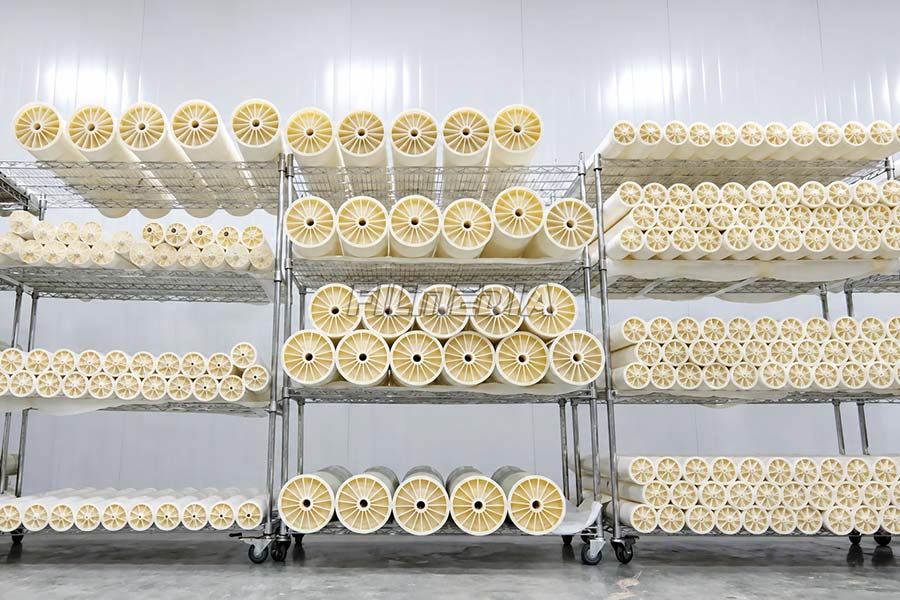
By optimizing the formulations and manufacturing processes for base membranes and composite membranes, we produce a range of reverse osmosis (RO) products—including SWRO (seawater desalination), BWRO (brackish water), and STRO (high fouling-resistant) series—to meet diverse application needs such as seawater desalination, municipal water supply, industrial pure water production, and wastewater reclamation.