
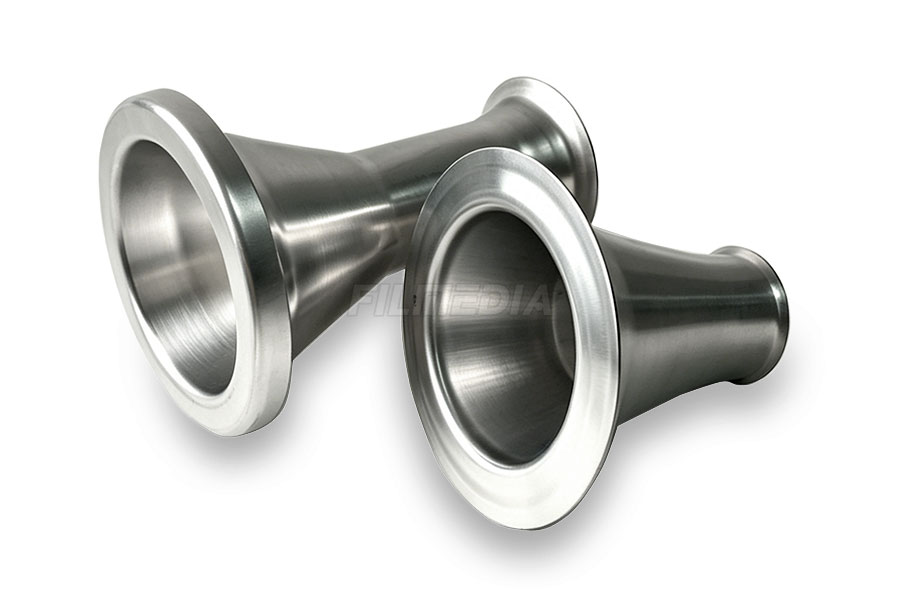
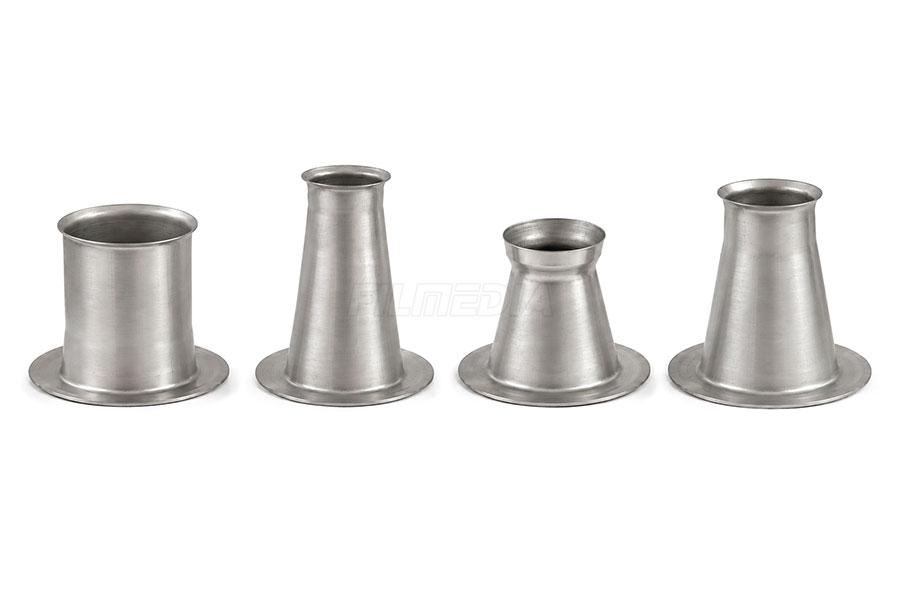
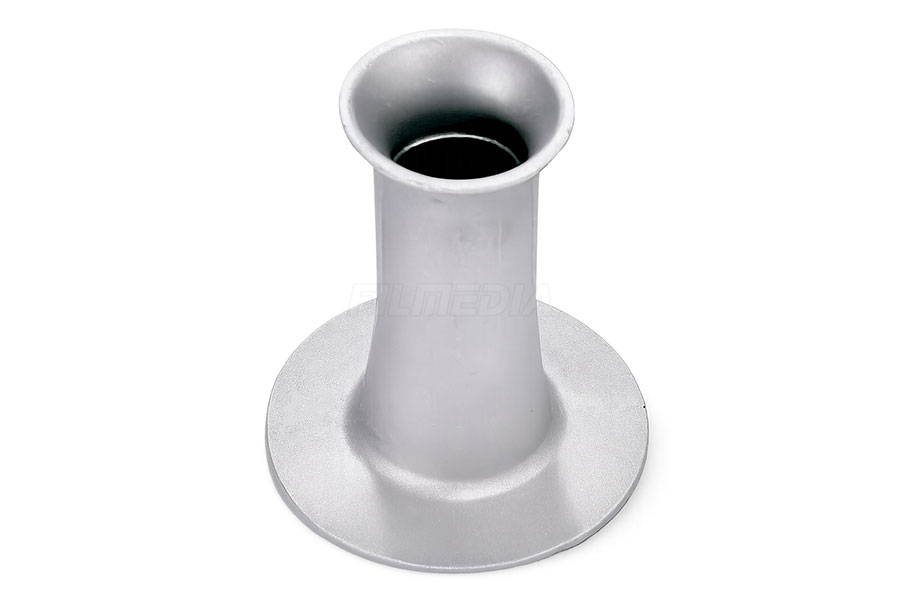
The venturi tube is based on the fluid dynamics principle of a converging–diverging structure. As airflow passes through, it is accelerated in the throat section, generating a localized negative pressure at the outlet. This creates a strong entrainment effect. During pulse-jet cleaning, the structure induces secondary air into the filter bag, causing rapid bag expansion and enhancing dust dislodging from the surface.
It significantly amplifies the pulse-jet energy to ensure the complete removal of high-concentration and ultra-fine dust particles.
By leveraging the induced secondary airflow, it delivers superior cleaning results while significantly reducing compressed air consumption.
It optimizes airflow distribution and cushions the filter bag from localized high-pressure air impacts, thereby reducing wear and tear, lowering maintenance costs, and extending bag service life.
Description
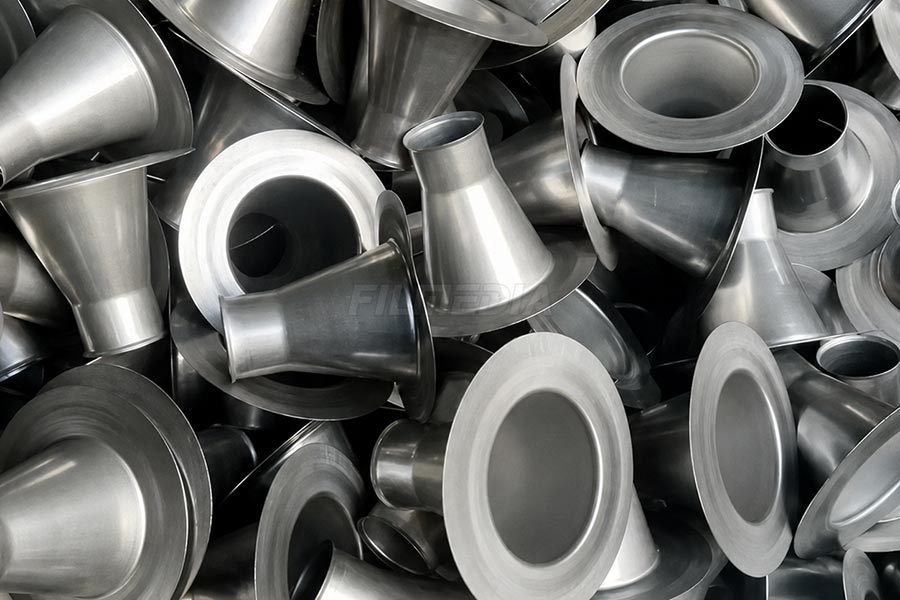
Filmedia® optimizes venturi tube structural design and combines high-performance materials to achieve a balance between filtration efficiency and energy consumption, delivering a highly efficient, energy-saving, and reliable solution for industrial dust control systems.
- Materials: Stainless steel, carbon steel, galvanized steel, aluminum
- Thickness: 0.50 mm to 4.00 mm
- Outer diameter: 20.00 mm to 1000 mm
- Types: Open, closed, perforated, non-perforated, or customized.
Specifications
| Types | D1 (mm) | D2 (mm) | D3 (mm) | H (mm) | T (mm) | Materials |
|---|---|---|---|---|---|---|
| Ø105 | Ø105 | Ø165 | Ø60 | 155 | 1.4 | Stainless steel |
| Ø105 | Ø105 | Ø145 | Ø60 | 155 | 1.4 | Stainless steel |
| Ø95 | Ø95 | Ø190 | Ø75 | 180 | 1.4 | Stainless steel |
| Ø105 | Ø105 | Ø165 | Ø80 | 128 | 1.2 | Galvanized sheet, Carbon steel |
| Ø105 | Ø105 | Ø165 | Ø57 | 150 | 1.2 | Galvanized sheet, Carbon steel |
| Ø105 | Ø105 | Ø145 | Ø80 | 128 | 1.2 | Galvanized sheet, Carbon steel |
| Ø105 | Ø105 | Ø145 | Ø57 | 155 | 1.2 | Galvanized sheet, Carbon steel |
| Ø180×Ø100 | Ø180 | Ø100 | — | 190 | 4.5 | Aluminum |
| Ø180×Ø90 | Ø180 | Ø90 | — | 160 | 4.0 | Aluminum |
| Ø155×Ø95 | Ø155 | Ø95 | — | 190 | 4.0 | Aluminum |
| Ø150×Ø90 | Ø150 | Ø90 | — | 160 | 4.0 | Aluminum |
| Ø153×Ø87 | Ø153 | Ø87 | Ø130 | 190 | 4.0 | Aluminum |
| Ø150×Ø80 | Ø150 | Ø80 | Ø110 | 165 | 4.0 | Aluminum |
| Ø150×Ø95 | Ø150 | Ø95 | Ø110 | 190 | 4.0 | Aluminum |
| Ø105 | Ø105 | Ø145 | Ø77 | 135 | 1.2 | Galvanized sheet, Carbon steel |
| Ø140 | Ø140 | Ø185 | Ø100 | 155 | 1.2 | Galvanized sheet, Carbon steel |
| Ø144 | Ø144 | Ø190 | Ø130 | 135 | 1.2 | Galvanized sheet, Carbon steel |
| Ø144 | Ø144 | Ø190 | Ø120 | 135 | 1.2 | Galvanized sheet, Carbon steel |
| Ø144 | Ø144 | Ø190 | Ø100 | 155 | 1.2 | Galvanized sheet, Carbon steel |
| Ø144 | Ø144 | Ø185 | Ø100 | 160 | 1.2 | Galvanized sheet, Carbon steel |
| Ø150 | Ø150 | Ø200 | Ø120 | 155 | 1.2 | Galvanized sheet, Carbon steel |
| Ø175×Ø125 | Ø125 | Ø175 | — | 300 | 1.2 | Galvanized sheet, Carbon steel |
| Ø175×Ø130 | Ø130 | Ø175 | — | 200 | 1.2 | Galvanized sheet, Carbon steel |
The Shape of the Venturi Tube
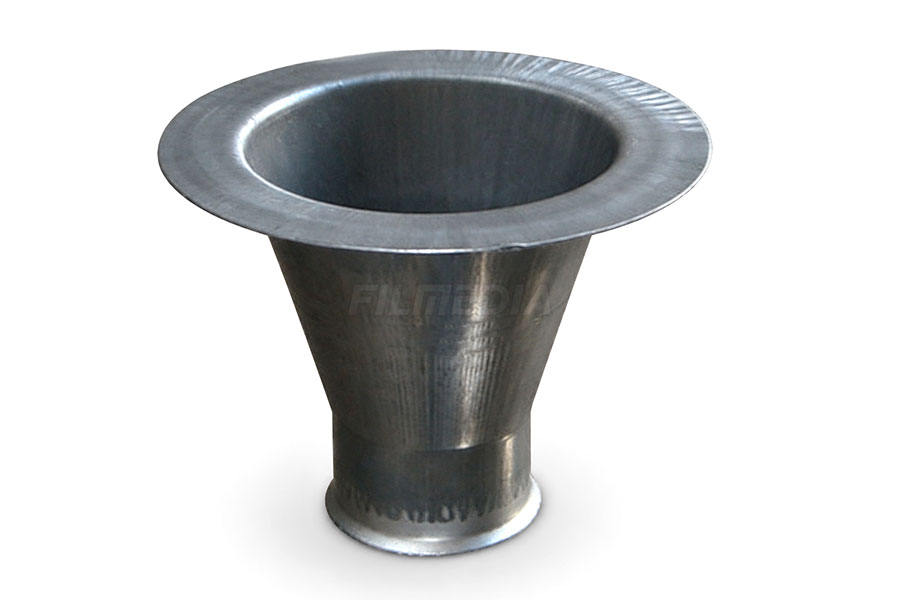
Conventional Venturi
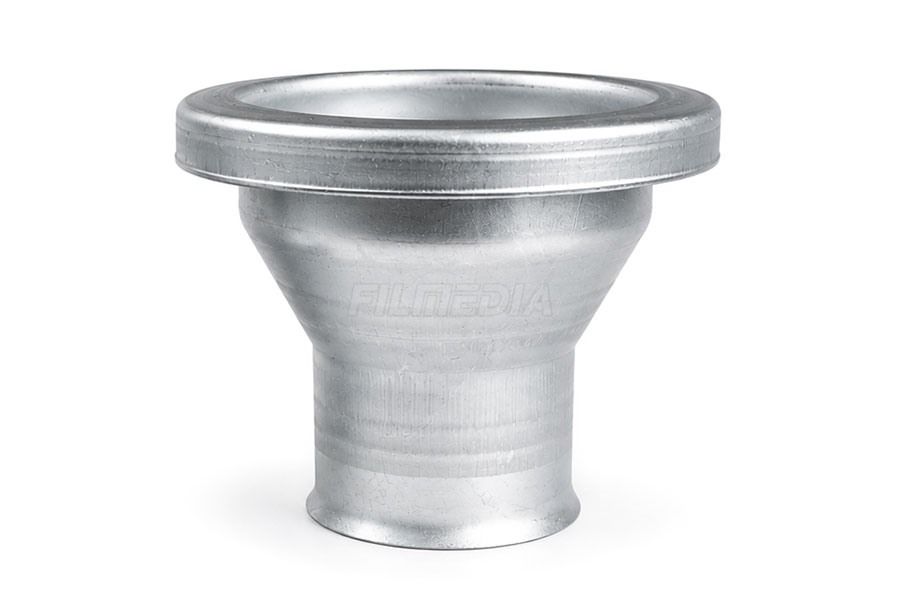
The conventional venturi features a classic converging–throat–diverging design, offering a simple structure, stable performance, cost-effective manufacturing, and wide application across various dust collection systems.
Conjoined venturi
A conjoined Venturi, also known as a dual Venturi, is an advanced fluid-dynamic device developed from the conventional single-stage Venturi tube. By combining two or more Venturi stages in a series, nested, or concentric configuration, it can generate a significantly higher vacuum level, improve suction and entrainment efficiency, and provide a wider operating range compared with a conventional single-stage venturi.
Louvered venturi
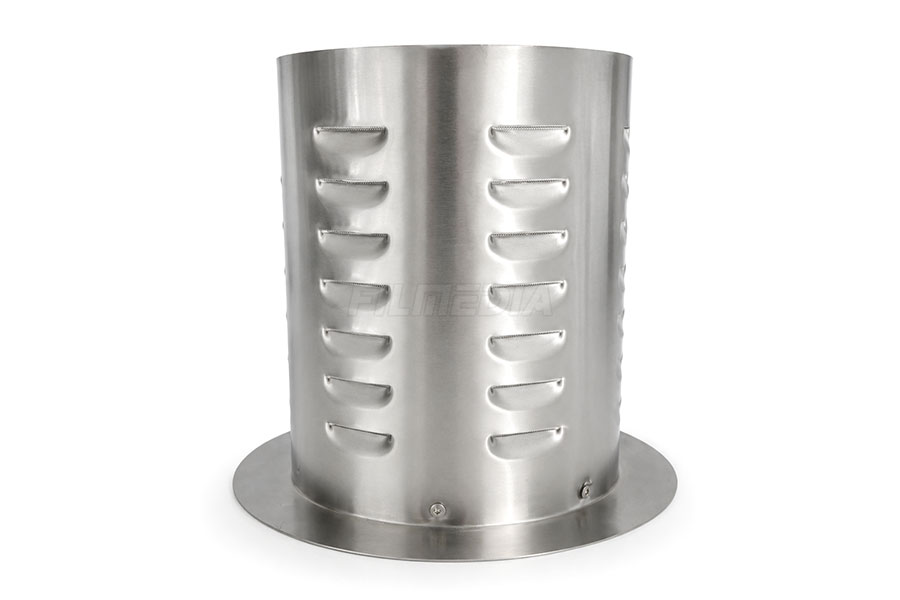
A louvered venturi features engineered slots, slats, or vents along its convergent or divergent cones. Instead of being a solid, smooth metal cone, it is partially open to the surrounding environment. With a louvered venturi, the clean air doesn’t just have to squeeze through the narrow throat; it can also escape through the louvers. This drastically reduces the systemic resistance (differential pressure) during normal operation, saving fan energy.
Venturi Tube Materials
Stainless Steel
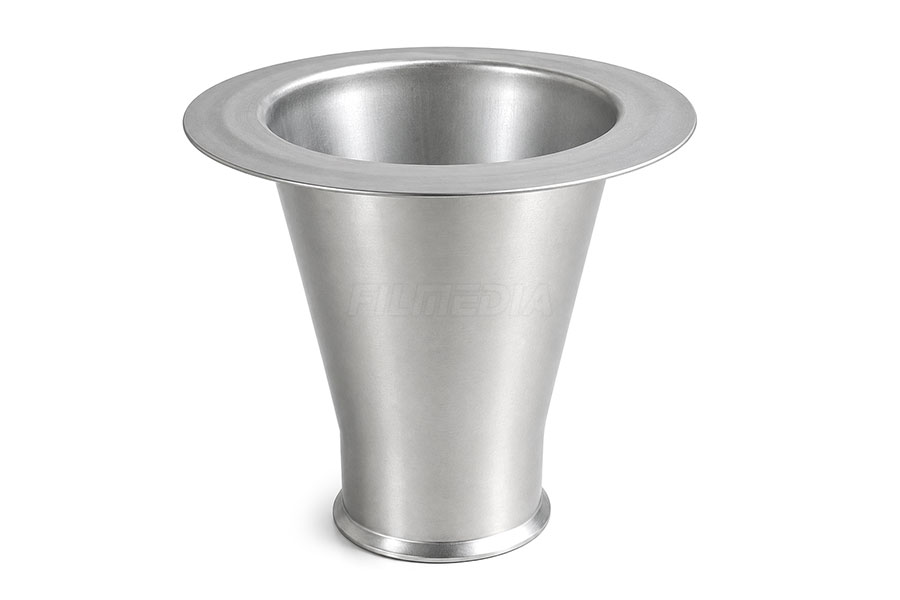
Stainless steel offers excellent corrosion resistance and is suitable for demanding operating conditions.
- Advantages
High corrosion resistance, excellent heat resistance, high strength, long service life
- Common grades
304 / 316L (316L provides superior corrosion resistance)
Carbon Steel
Carbon steel is the most widely used basic material with a good cost-performance ratio.
- Advantages
High strength, low cost, easy to fabricate
- Disadvantages
Prone to corrosion, requires surface treatment (e.g., coating or painting)
Galvanized Steel
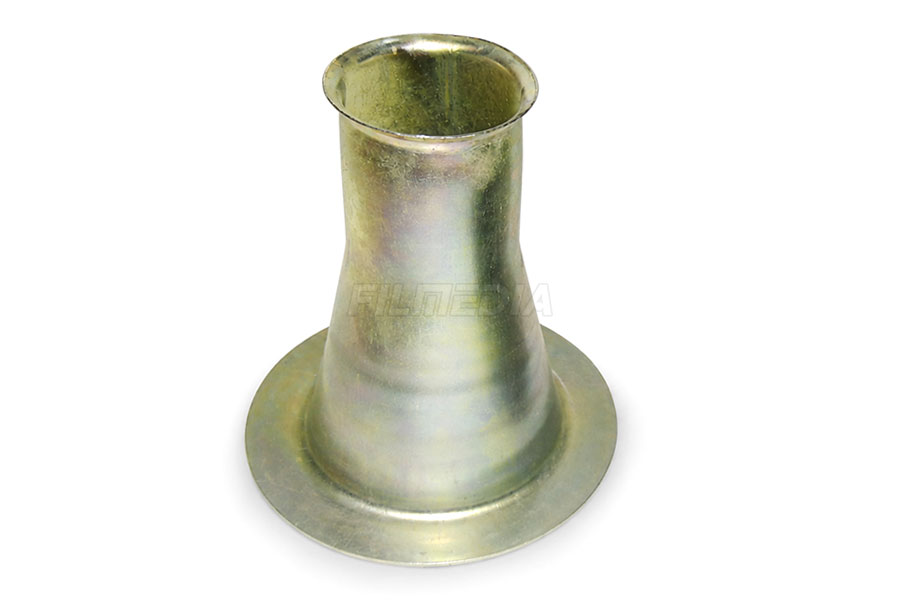
Based on carbon steel with a zinc coating for improved corrosion resistance.
- Advantages
Better corrosion resistance than carbon steel, moderate cost
- Disadvantages
Zinc layer may degrade under high temperature or strong acidic/alkaline conditions
Aluminum
A lightweight material suitable for specific applications.
- Advantages
Lightweight, naturally corrosion-resistant in mild environments, does not rust
- Disadvantages
Lower strength, poor high-temperature and wear resistance
Surface Treatments
- Epoxy Powder Coating
Electrostatic epoxy powder coating provides excellent resistance to acids and alkalis. It is suitable for many industrial applications but is less resistant to prolonged high temperatures and humid conditions.
- Organic Silicone Coating
Organic silicone coating offers excellent resistance to high temperatures, acids, and alkalis. It is widely used in high-temperature dust collection systems, although coating quality and adhesion are critical to long-term performance.
- Silicone Impregnation
Silicone-impregnated cages provide additional protection against corrosion and moisture while maintaining smooth cage surfaces that reduce wear on filter bags.