
Containerized Seawater Desalination Equipment
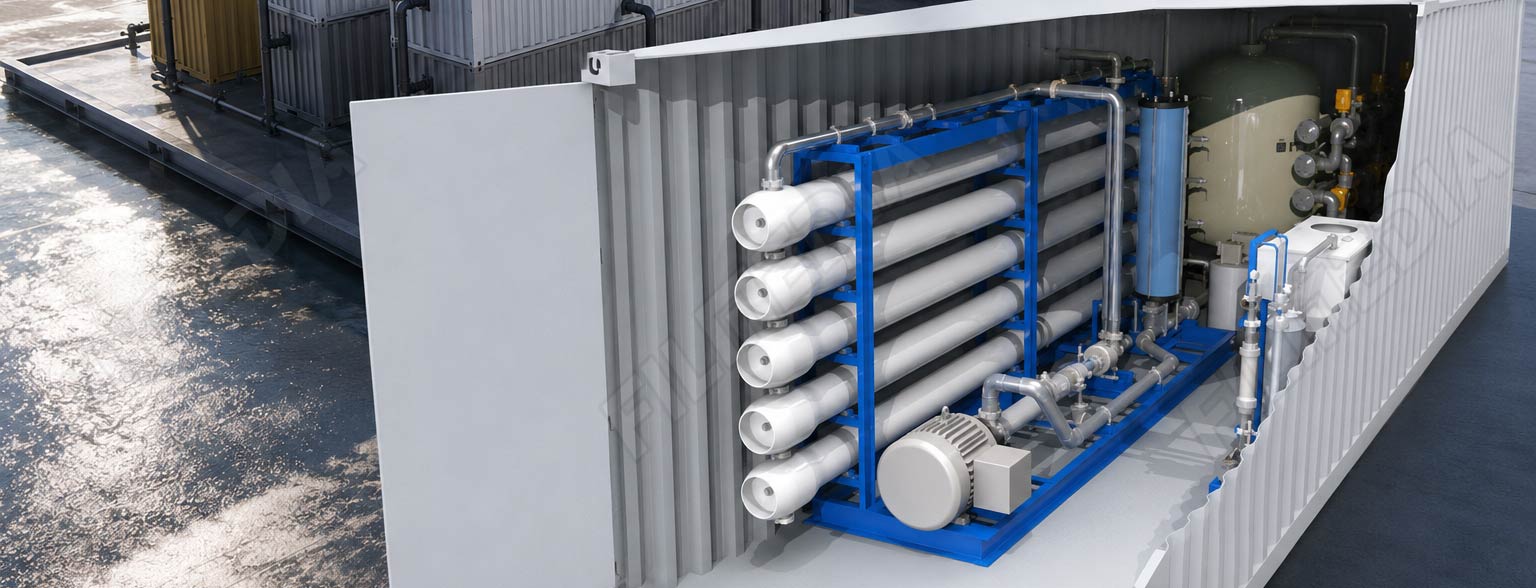
Filmedia® containerized seawater desalination equipment solutions provide a compact, modular, and deployable approach to seawater desalination, integrating water intake, pretreatment, reverse osmosis desalination, post-treatment, and control systems into a standardized containerized configuration.
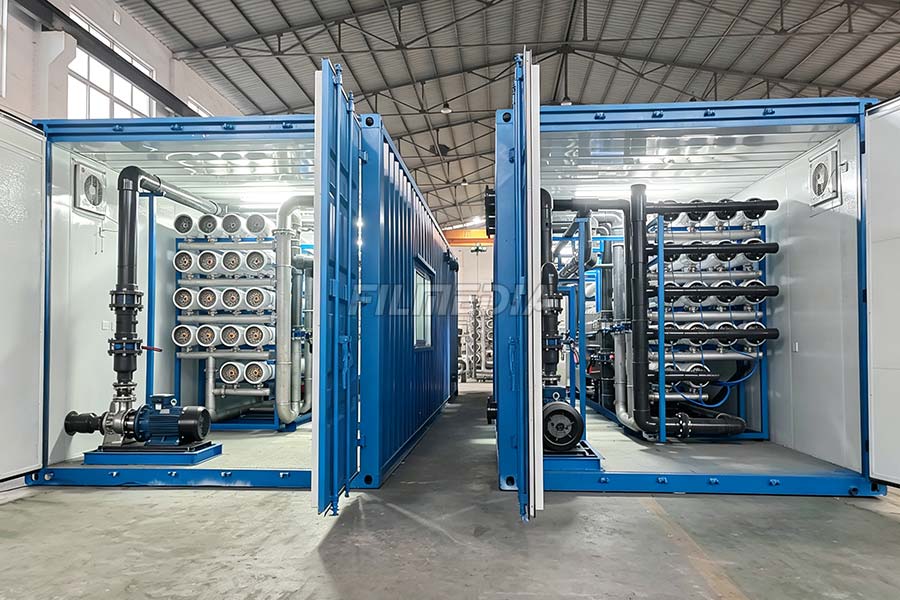
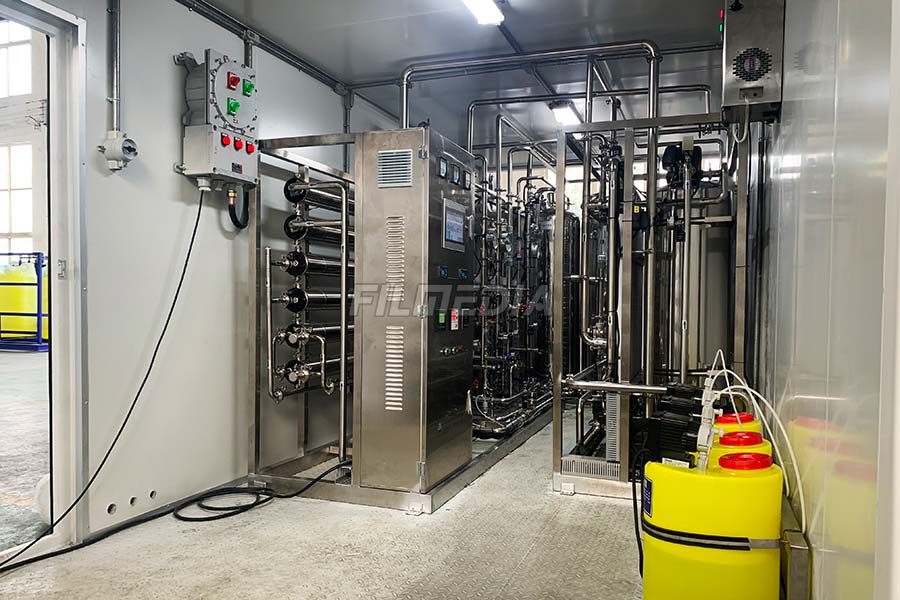
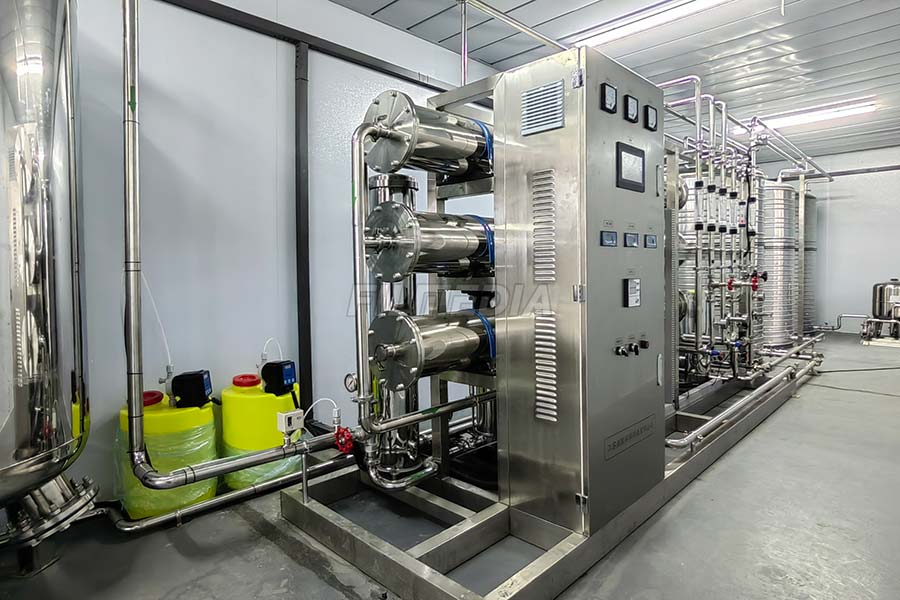
- Designed for remote locations, coastal communities, islands, offshore facilities, emergency water supply, industrial sites, and decentralized water projects, the containerized system minimizes installation requirements while enabling rapid transportation, deployment, and commissioning.
- The system typically uses Seawater Reverse Osmosis (SWRO) as the core desalination technology. Seawater is first treated through a multi-stage pretreatment process to reduce suspended solids, turbidity, and other contaminants before entering the RO system. High-pressure pumps then drive seawater through RO membranes, separating dissolved salts and impurities from the water to produce fresh water.
Specifications
| Product name | 40ft container RO plant for seawater desalination |
| Material | Stainless Steel 304 |
| Function | Water Purification Plant |
| Keywords | Reverse Osmosis Water Filtration |
| Capacity | 0.3-200T/H |
| Processing | Pre-treatment System+ Ro System |
| Type | Pure Water Treatment System |
| Usage | Environmental Protection |
| Power | 1.5-30kw |
Advantages of Seawater Desalination Equipment
A containerized seawater desalination system integrates a complete seawater reverse osmosis (SWRO) desalination plant into a standard shipping container. Its advantage is not simply its ability to produce fresh water, but the combined benefits of rapid deployment, lower life-cycle costs, and strong environmental adaptability. Compared with conventional civil-constructed desalination plants and freshwater transportation by vessel, its core advantages can be summarized in the following five areas:
1. Plug-and-Play Design — Deployment Reduced from Years to Weeks
The complete system, including the RO membrane trains, high-pressure pumps, energy recovery devices, chemical dosing system, and electrical control system, is fully integrated, assembled, and commissioned at the factory. At the project site, only the seawater intake line, product water line, power supply, and chemical supply need to be connected. The system can begin producing fresh water within 3–7 days. By comparison, a conventional civil-constructed seawater desalination plant generally requires 12–18 months from site survey and construction to commissioning and water production. A containerized system can reduce the overall project schedule by more than 90%. This is a decisive advantage for applications where rapid deployment is critical, such as post-disaster emergency response, military operations, and oil & gas exploration.
2. Minimal Civil Works and Full Mobility — Extremely Low Sunk Cost
The system does not require a large land area, extensive piling, or the construction of concrete water tanks and other permanent civil infrastructure. It can be installed and operated directly on a suitable level, hardened foundation or prepared surface. When a project is completed, the entire containerized unit can be lifted and transported to another location, with an equipment reuse rate of over 90%. In contrast, once a conventional civil-built desalination plant is dismantled, much of its infrastructure becomes unusable concrete. For applications where the operating location may change—such as rotational deployment on islands, temporary mining projects, and temporary construction camps—a containerized desalination system offers significant economic advantages due to its mobility and reusability.
3. Controlled Energy Consumption and Operating Costs — Far More Economical Than Shipping Fresh Water
An SWRO system equipped with a PX energy recovery device can achieve a specific power consumption of approximately 1–2 kWh/m³ of produced water, with an overall freshwater production cost of approximately USD 1.5–2.5/m³. By comparison, transporting freshwater by vessel to remote offshore islands typically costs approximately USD 8–10/m³. A containerized seawater desalination system can therefore reduce water supply costs by approximately 70–80%. For offshore islands, reefs, and platforms that rely on regular freshwater delivery by vessel, the typical payback period is approximately 1.8–2.5 years, after which the system can continue generating substantial operating cost savings.
4. Enclosed Corrosion-Resistant Design for Harsh Marine Environments
The standard shipping container enclosure is protected by a multilayer corrosion-resistant coating system consisting of zinc-rich epoxy primer and polyurethane coating. All wetted components are manufactured from 316L stainless steel or duplex stainless steel, while the RO membrane pressure vessels are designed to withstand high-salinity and salt-spray marine environments. The container can also be equipped with built-in thermal insulation and optional heat tracing systems. The system is capable of stable operation within an ambient temperature range of −30°C to 60°C and at an inclination of ±5°. Marine-duty versions can operate at inclinations of up to ±15°. With proper design and maintenance, the system can achieve a service life of approximately 10–15 years even under harsh conditions involving typhoons, high humidity, and heavy salt spray. This level of environmental protection is difficult to achieve with exposed conventional skid-mounted systems.
5. Modular Capacity Expansion and Intelligent Unattended Operation
A single containerized system can provide a treatment capacity ranging from approximately 20 to 500 m³/day. If additional capacity is required, extra containerized units can simply be installed in parallel, without the need to redesign the entire treatment process. The system can be equipped with PLC + IoT remote monitoring, allowing real-time monitoring of key operating parameters such as product water flow rate, product water conductivity, membrane differential pressure, and remaining chemical levels. The system also supports mobile alerts, automatic backwashing, and remote operation and monitoring. In many installations, a single operator can manage 3–5 desalination units, significantly reducing operation and maintenance labor requirements. This is particularly valuable for remote islands, offshore platforms, and other isolated locations, where qualified water treatment personnel may be difficult to recruit and retain.
Applications of Seawater Desalination Equipment
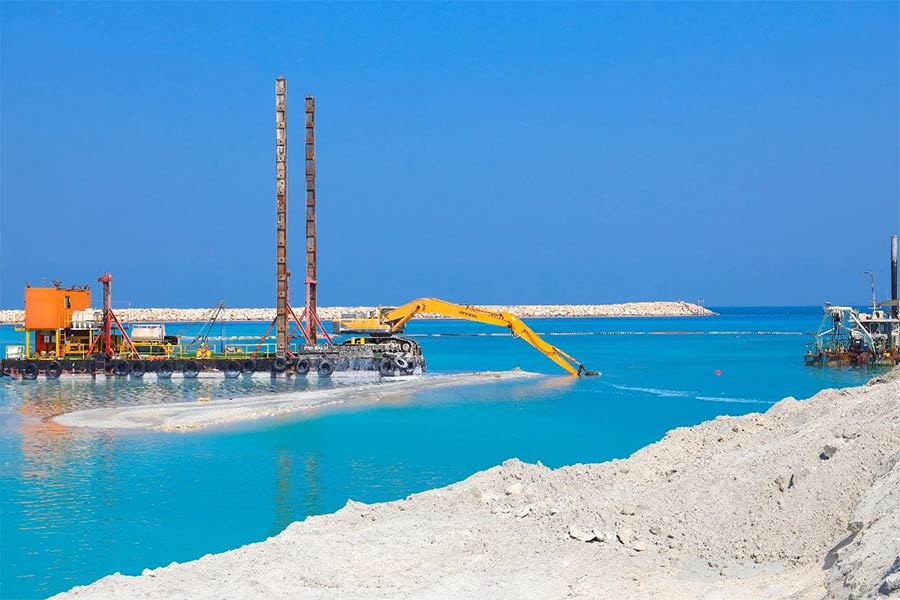
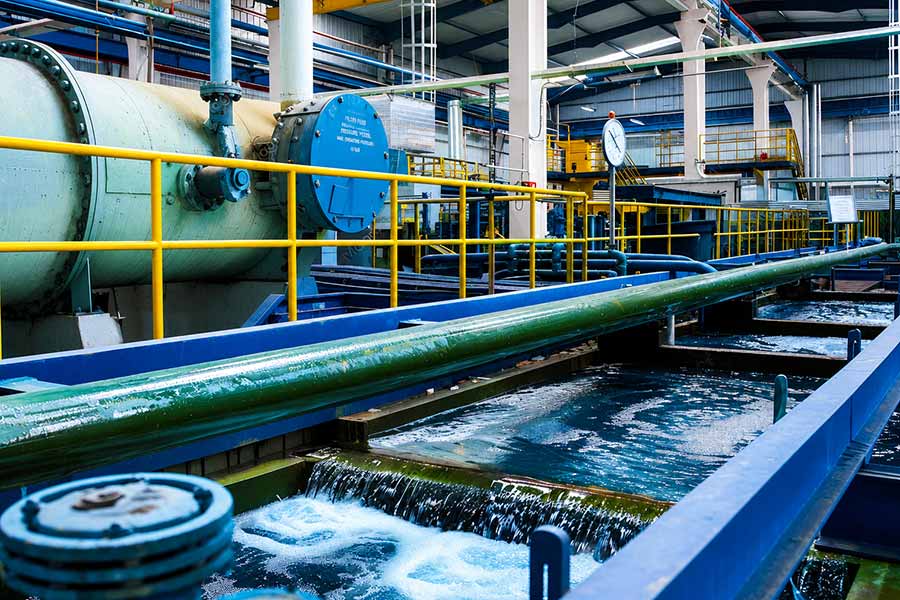
- Island Water Supply
For islands far from the mainland, seawater desalination is a reliable solution for obtaining fresh water.
- Drinking Water Supply in Coastal Areas
In some arid coastal regions, seawater desalination can provide local residents with a stable and reliable source of drinking water.
- Industrial Water Supply
Many industrial processes require large quantities of water. Seawater desalination can meet these needs while reducing dependence on conventional freshwater resources.
- Cooling Water Supply for the Power Industry
Power plants typically require large amounts of water to cool generator units and other equipment. Seawater desalination can provide sufficient non-potable water for the power industry’s cooling systems. Power plants typically require large volumes of water for cooling generating units and other equipment. Seawater desalination can provide an adequate supply of non-potable water for cooling systems in the power generation industry.
- Agricultural Irrigation
Agriculture is another sector that can benefit from seawater desalination technology. In water-scarce regions, treated desalinated water can be used for crop irrigation, significantly improving crop yields and maintaining product quality.
- Tourist Resorts and Water Recreation Facilities
Coastal tourist destinations require stable water resources to support various water-based and recreational activities. Seawater desalination systems can be used for seawater purification and replenishment in facilities such as swimming pools and water parks. Coastal tourist destinations require a stable water supply to support various aquatic and recreational activities. Seawater desalination systems can be used for seawater purification and water replenishment in facilities such as swimming pools and water parks.
- Water Treatment for Oilfield Development
Oilfield operations require large quantities of clean water to ensure the safety and efficiency of drilling and production activities. In such applications, seawater desalination systems can be installed to provide treated water for both oilfield operations and daily life.
Reverse Osmosis Membranes
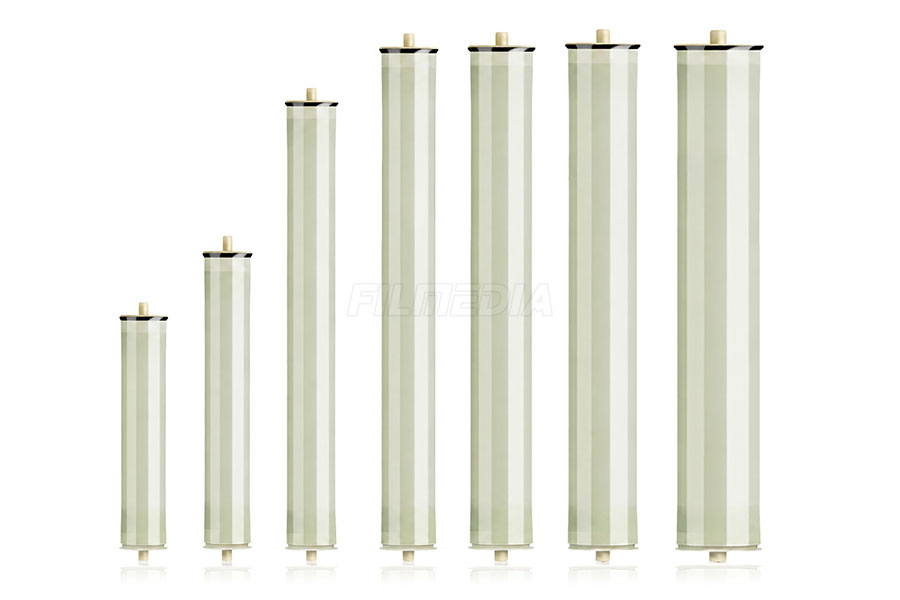
The Core Filtration Component of Seawater Desalination Equipment
Reverse osmosis (RO) is an advanced and energy-efficient membrane separation technology. Its principle is to apply pressure greater than the osmotic pressure of the solution, allowing water molecules to pass through a semi-permeable membrane while dissolved substances and other impurities are retained. RO membranes have extremely small effective pore sizes, approximately 10 Å, effectively removing dissolved salts, colloids, microorganisms, organic matter, and other contaminants from water, achieving removal rates of 97–98%. Because the effective pore size of the RO membrane is extremely small, approximately 10 Å (angstroms), it can effectively remove dissolved salts, colloids, microorganisms, organic matter, and other contaminants from water, with a removal rate of up to 97–98%.
☑ Simple Operation
The system is easy to operate and can produce fresh water whenever a power supply is available.
☑ Energy-Efficient Membrane Technology
The system employs energy-efficient membrane technology, reducing operating energy consumption by up to 30%. The equipment can operate at room temperature and features good selectivity, strong adaptability, and ease of operation. The system adopts energy-saving membrane technology, reducing operating energy consumption by up to 30%. It can operate at ambient temperature and features good selectivity, strong adaptability, and simple operation.
☑ Easy Membrane Maintenance
Membrane elements are easy to maintain, require low chemical consumption, and involve relatively low chemical cleaning costs while providing effective cleaning performance. The service life of the membrane elements can reach approximately 3–5 years.
☑ Continuous and Stable Freshwater Production
The system can operate continuously 24 hours a day, stably producing freshwater; while retaining beneficial minerals from seawater, the produced freshwater can be used directly as drinking water. The system can operate continuously 24 hours a day, providing stable freshwater production. It retains beneficial minerals from seawater, and the produced freshwater can be used directly as drinking water.
☑ Compact Design and Easy Operation
The system can be installed and operated in limited spaces, requiring only one operator.
☑ Reliable Equipment Performance
The system adopts internationally advanced membrane elements and plunger pumps, ensuring reliable and stable equipment performance.