
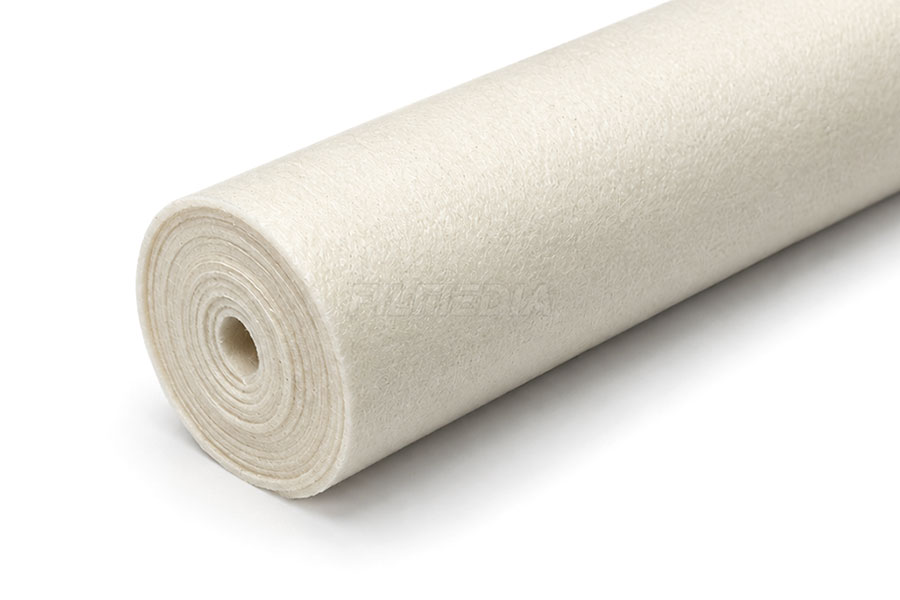
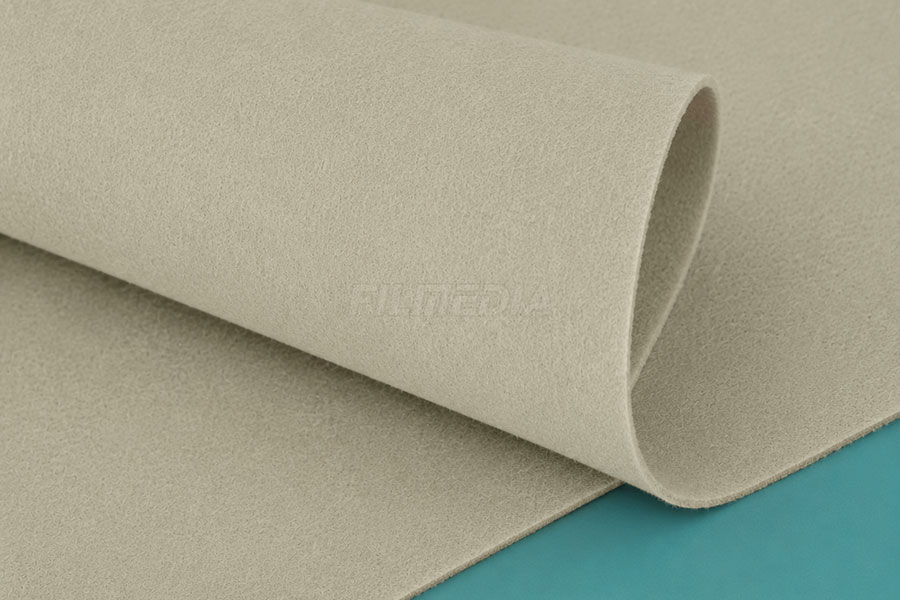
Homopolymer Acrylic Needle-punched Felt Filter Fabric
The continuous operating temperature reaches 130°C, with a recommended operating range of 125°C–130°C; it can also withstand momentary temperature spikes of 140°C–160°C.
Acrylic fibers demonstrate excellent resistance in both acidic and alkaline environments, operating reliably within a pH range of 3–11. The filter material resists chemical degradation and performance loss even in complex flue gas conditions containing acidic gases (such as SO₂ and NOx) and certain alkaline substances.
One of the most significant advantages of acrylic needle-punched felt is its superior resistance to hydrolysis. In environments characterized by moderate temperatures, high humidity, and a tendency for condensation, its hydrolysis resistance far surpasses that of polyester (PET) filter materials. Even with prolonged exposure to water vapor, the material retains good mechanical strength and filtration performance, effectively preventing premature filter bag failure caused by hydrolytic degradation.
The standard air permeability is approximately 14 m³/m²·min, adjustable within the 10–18 m³/m²·min range depending on basis weight and manufacturing specifications. High porosity ensures excellent airflow characteristics, allowing the filter material to maintain low operating resistance even under high dust loads.
The surface of acrylic needle-punched felt typically undergoes singeing, heat calendering, and smoothing treatments to ensure a flatter, smoother finish. These processes reduce fiber fuzzing and minimize dust penetration into the interior of the filter material.
Description
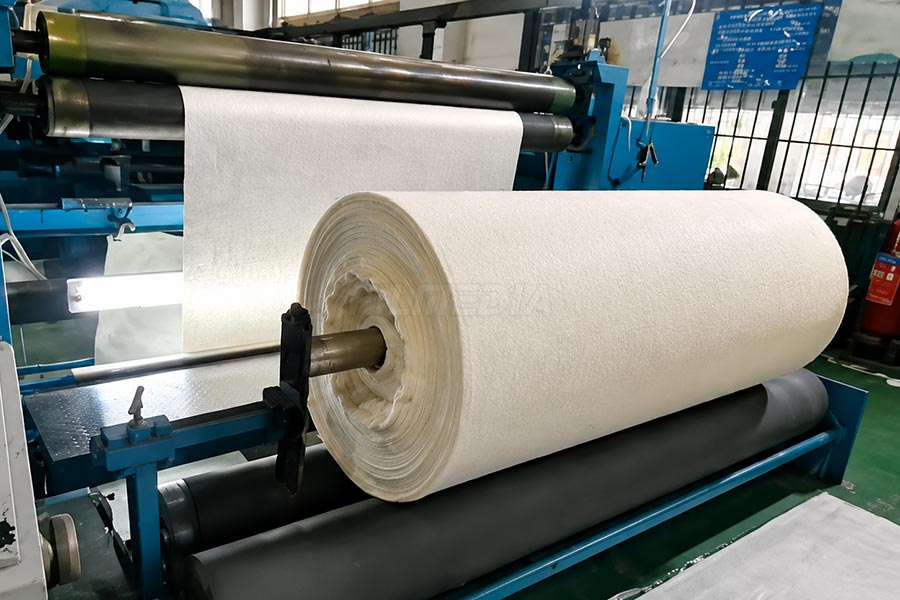
Acrylic needle-punched felt—chemically composed of homopolymer polyacrylonitrile (PAN)—is a high-performance filtration material produced using a non-woven needle-punching process. It is manufactured from acrylic staple fibers that undergo opening, carding, web formation, and needle-punching reinforcement to create a three-dimensional fibrous structure. Characterized by a uniform, interlaced fiber arrangement and an optimal pore distribution, the material offers excellent air permeability and filtration performance.
As a manufacturer of premium needle-felt filtration materials, Filmedia® leverages extensive industry experience and a team of technical experts to gain a deep understanding of filtration requirements across diverse operating conditions. We provide scientifically sound, practical, and reliable filtration solutions tailored to our customers’ specific applications. Our comprehensive technical support—encompassing material selection, product design, and process optimization—aims to enhance filtration efficiency, extend product service life, and reduce overall operating costs.
Physical and Chemical Properties of Homopolymer Acrylic Needle Felt
| Weight(gs m) | 500 | |
| Thickness(mm) | 1.8 | |
| Width(m) | ≤2.2 | |
| Finish treatment | Singeing, Calendering, Heat setting | |
| Air permeability(L/m2.s) | 200-350 | |
| Tensile strength(N/5cm) | warp | ≥900 |
| weft | ≥1000 | |
| Tensile elongation(%) | warp | ≤35 |
| weft | ≤60 | |
| Heat shrinkage(%) | warp | ≤1.5 |
| weft | ≤1.0 | |
| Temperature(°C) | Continue | 120 |
| Instant | 140 | |
| Anti-acid | Excellent | |
| Anti-alkali | Excellent | |
| Anti-abrasion | Good | |
| hydrolysis stability | Excellent | |
Common Post-Treatment Options
To enhance filtration performance and adapt to different operating conditions, acrylic needle-punched felt can be treated with various surface finishing technologies.
☑ Water & Oil Repellent
Through deep padding with fluorocarbon resin, the filter felt achieves low surface energy properties similar to a lotus effect. This treatment prevents liquid molecules from wetting the fibers.
☑ PTFE Membrane Lamination
By laminating a highly efficient microporous membrane onto the dust-facing side, traditional deep-bed filtration is upgraded to near-perfect “surface filtration.”
☑ Anti-static
By precisely blending stainless steel or carbon conductive fibers during the needling stage, a comprehensive static-conduction network is woven inside the filter medium. It instantly releases and dissipates electrostatic charges generated by high-frequency friction, eliminating spark hazards at the source.
☑ Acrylic Coating
By applying a microporous acrylic resin coating onto the filter felt surface, the initial pores between fibers are compressed to create a uniform interception layer.
☑ PTFE Impregnation
By immersing the entire needle felt into a concentrated PTFE dispersion, every single acrylic fiber is fully encapsulated with a micron-level PTFE protective layer.
☑ Carbon Coating
This process utilizes specialized conductive carbon black to form a highly conductive coating on the surface of the filter medium, making it an ideal choice for specialized chemical off-gas treatment applications that require both explosion protection and the control of trace organic emissions or odors.
Application Industries
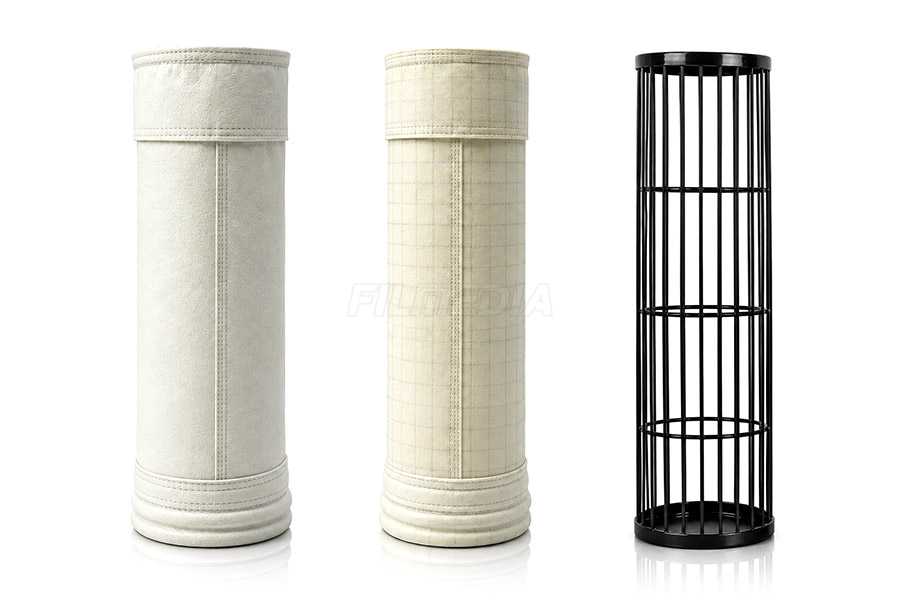
Dust collection filter bags made of acrylic needle-punched felt are particularly suitable for industrial applications characterized by moderate temperatures, high humidity, high dust concentrations, the presence of acidic gases, and stringent filtration requirements.
- Incinerator tail gas dust removal
- Flue gas purification systems
- Rotary dryer dust removal
- Asphalt fume treatment
- Pulverized coal collection
- Explosion-proof dust removal systems
- Coal-fired boiler dust removal
- Flue gas purification systems
- Cement mill dust removal
- Packaging machine dust removal
- Detergent production
- Powder recovery
- Chemical tail gas filtration
- Spray dryer exhaust collection
- High-humidity dust filtration