
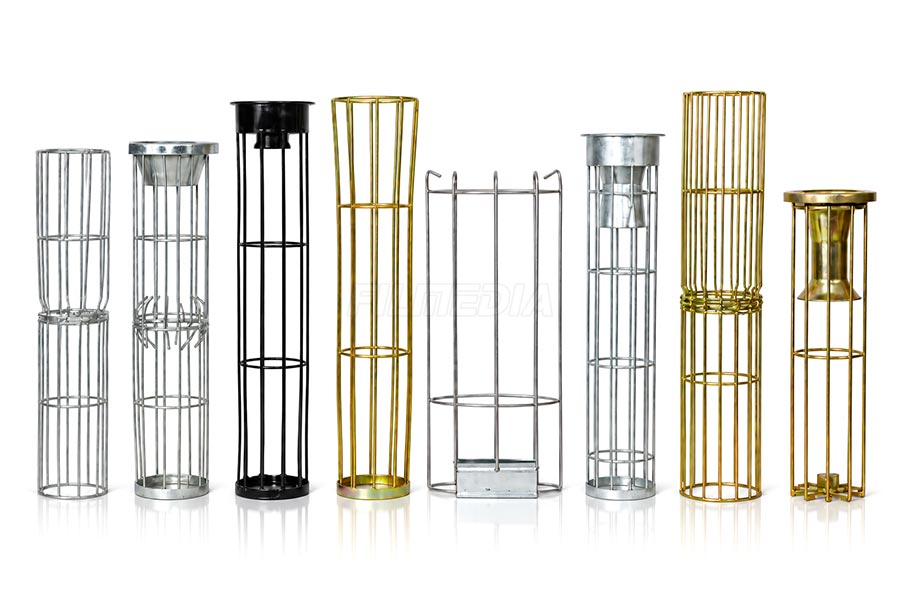
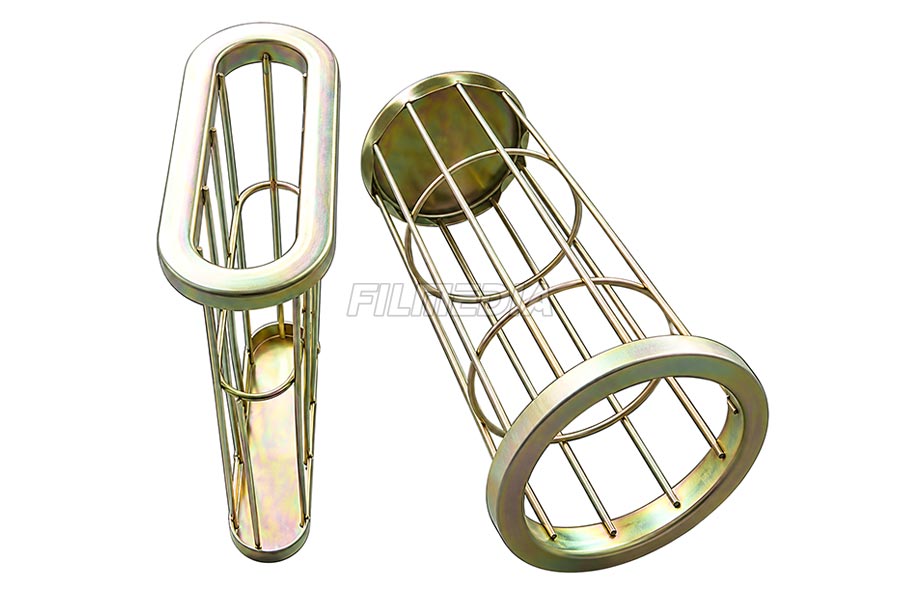
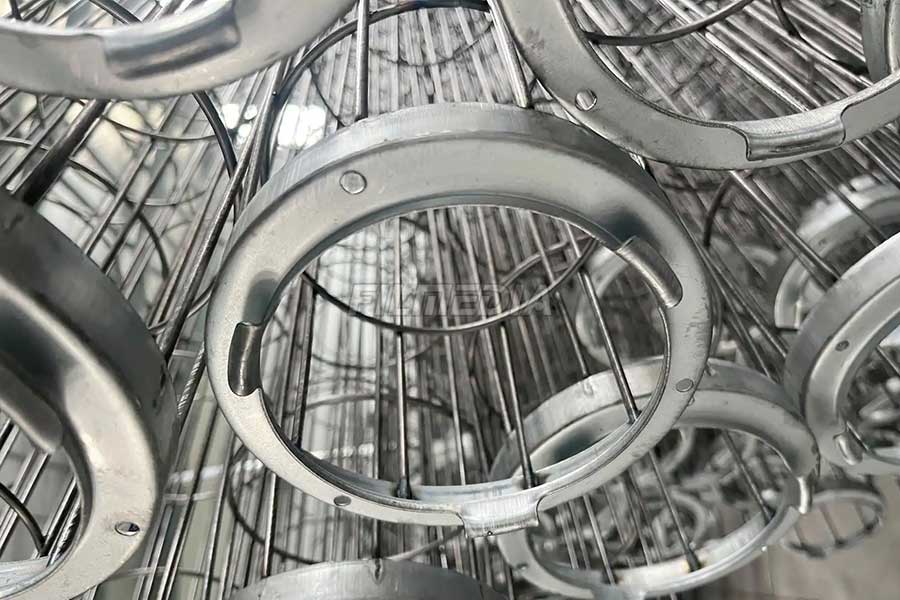
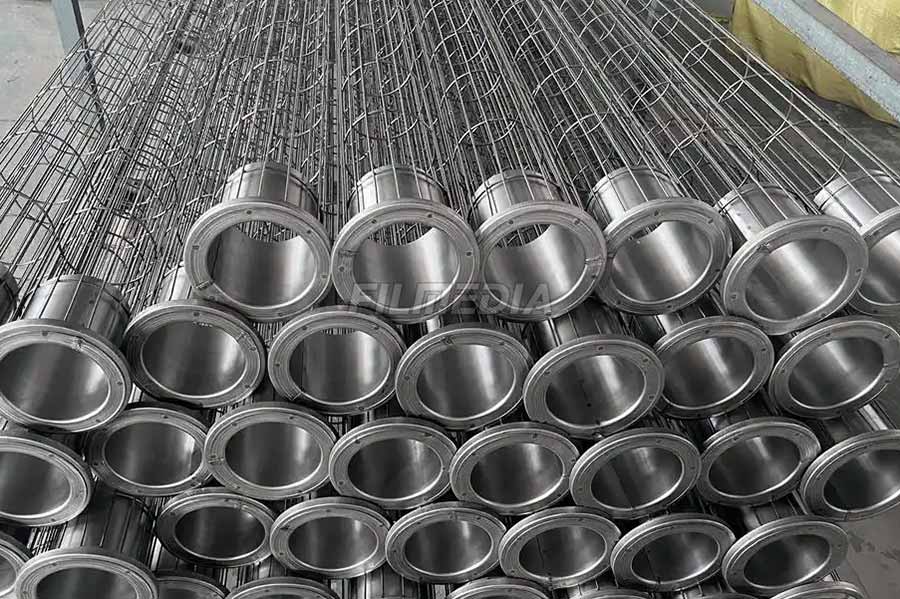
Galvanized steel filter cages are essential support components for filter bags in industrial pulse-jet dust collection systems. They are typically manufactured from high-quality low-carbon steel wire, which undergoes straightening, welding, shaping, and a final galvanizing (zinc-coating) process. Their primary function is to provide stable internal support for the filter bags, preventing excessive deformation, collapse, or localized wear during filtration (under negative pressure), pulse-jet cleaning, and long-term operation. Furthermore, the zinc coating effectively reduces the risk of corrosion in humid environments, thereby extending the service life of the cages.
Description

Specifications
| Shape | Round, Pleated, Oval, Flat, Trapezoidal |
| Material | Carbon Steel |
| Surface Finish | Hot-dip galvanizing, electro-galvanizing |
| Connection Type | One-piece, Two-piece, Multi-section |
Galvanizing Processes
There is more than one approach to galvanizing. Common industrial methods include hot-dip galvanizing and electrogalvanizing, which rely on fundamentally different mechanisms for coating formation. In practical engineering projects, hot-dip galvanizing is typically specified when flue gas has high moisture content or contains sulfur oxides; conversely, electrogalvanizing may be used in drier operating environments where cost is a primary concern.
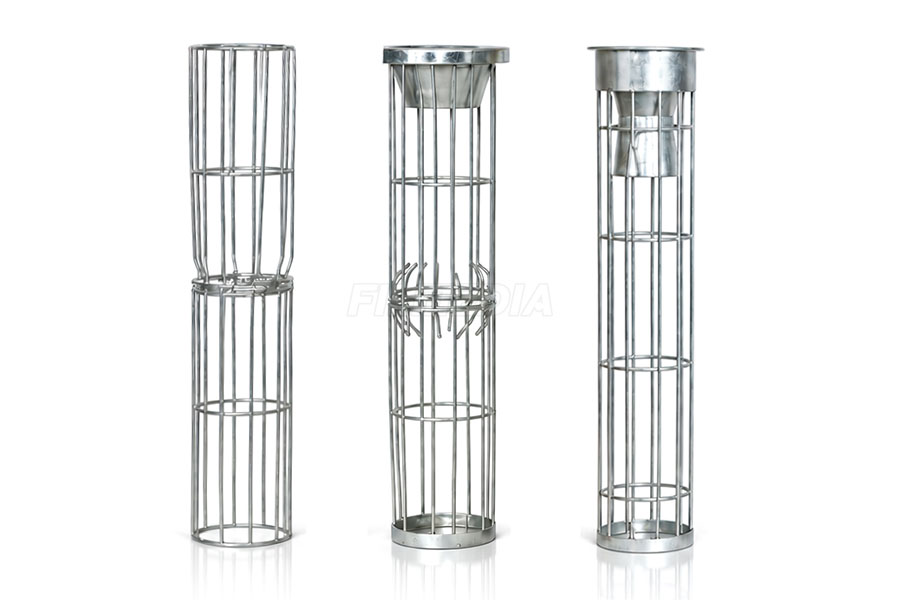
Galvanized Steel Filter Cages
The filter cage is immersed in molten zinc at approximately 450°C, forming a firmly bonded zinc-iron alloy layer and an outer zinc coating. This process typically provides a thicker coating and better corrosion resistance, making it suitable for relatively humid environments and applications requiring longer service intervals. Proper process control is essential to minimize zinc buildup and thermal deformation.
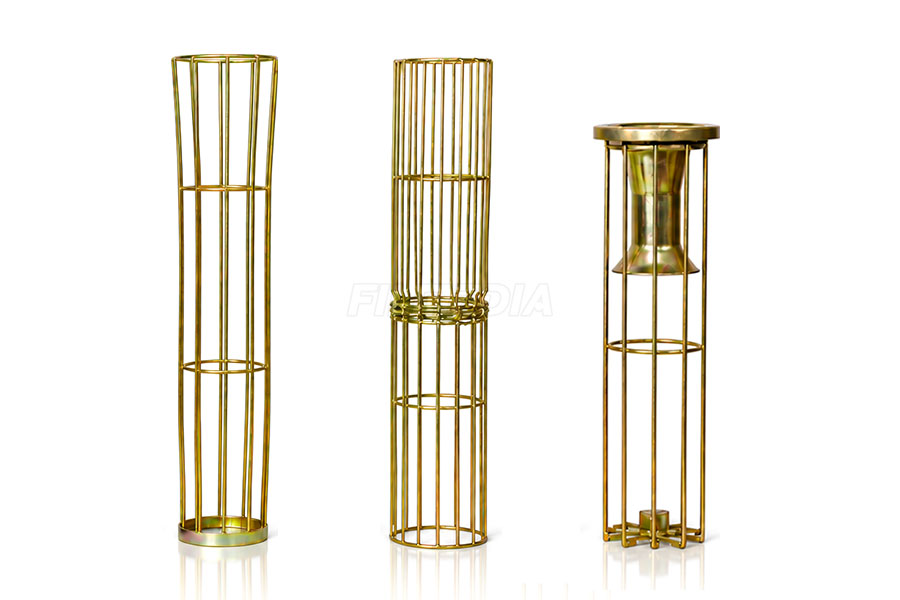
Electro-Galvanizing Filter Cages
Zinc is deposited onto the steel surface through an electrolytic process, typically producing a coating thickness of around 8–12 μm. The resulting surface is smooth, dimensional stability is well maintained, and production costs are generally lower. This process is suitable for dry environments with low corrosion risks.