
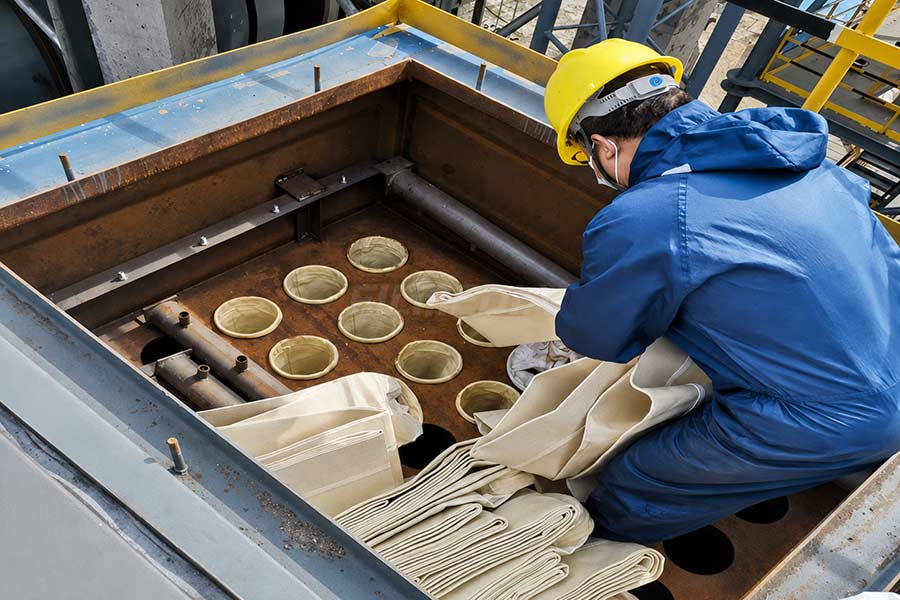
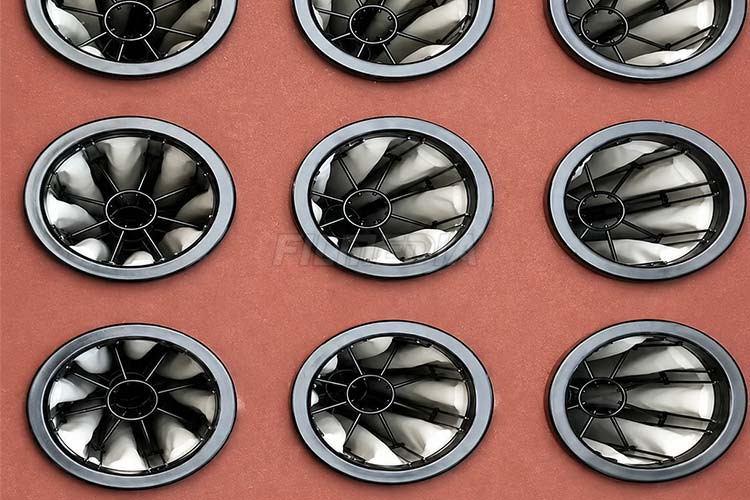
As the core component of a baghouse (dust collector), filter bags represent a significant portion of the system’s capital and maintenance costs. Consequently, the service life of the filter bags directly dictates the overall operational efficiency, downtime, and cost-effectiveness of the entire filtration system.
Below is an analysis of the primary factors that influence filter bag longevity.
1. Filter Bag Material Selection
Choosing the correct material based on the operating environment is foundational to bag life. Materials are generally categorized by their temperature resistance:
- Ambient Temperature Materials (< 120°C): Common options include standard polyester needle-punched felt, anti-static polyester felt, and PTFE-coated or water-and-oil-repellent polyester felts. These perform reliably under normal, dry temperature conditions.
- High-Temperature Materials (> 160°C): For harsh, high-heat environments, specialized materials are required. These include FMS (fiberglass blended needle felt), pure fiberglass needle felt, and PPS (polyphenylene sulfide) needle felt, which offers excellent acid and alkali resistance.
Note: Using an ambient-rated bag in a high-temperature environment will cause rapid thermal degradation and immediate failure.
2. High-Temperature Exposure and Thermal Degradation
When flue gas temperatures exceed 160°C, heat significantly accelerates the aging process of the filter medium.
- Thermal Loss: As temperatures rise, the mechanical strength of the synthetic fibers gradually diminishes, making them brittle and prone to tearing.
- Chemical Acceleration: If the flue gas contains corrosive chemical substances or high oxygen levels, elevated temperatures act as a catalyst, accelerating oxidation and hydrolysis. This drastically worsens chemical corrosion and shortens the bag’s lifespan.
3. Low-Temperature Condensation and “Bag Blinding”
Conversely, excessively low temperatures—particularly during winter or due to localized ambient air leakage—pose a severe threat.
- The Dew Point Risk: If the internal temperature drops below the moisture or acid dew point, condensation forms on the bags.
- Moisture and Caking: Dust mixes with this condensation to create a sticky paste. Over time, this mud-like mixture cakes and hardens over a large area (known as “bag blinding”). The excessive weight can cause the filter bags to stretch, sag, or even tear and fall off their cages.
4. Air-to-Cloth Ratio (Filtering Wind Speed)
The filtering velocity (air-to-cloth ratio) must be carefully balanced. If a system is forced to run at an excessively high wind speed to meet production demands, a cascading failure occurs:
- High Resistance: Dust particles are driven deep into the filter matrix rather than staying on the surface, causing the differential pressure (resistance) to rise sharply.
- Mechanical Fatigue: To combat high resistance, pulse-jet cleaning frequency must be increased. This excessive mechanical flexing accelerates fabric fatigue.
- Winter Aggravation: If winter condensation is also present, high wind speeds pack the wet dust tightly into the fabric pores, compounding the “sticky bag” phenomenon.
5. Air Inlet Design and Gas Distribution
The structural design of the dust collector’s inlet heavily influences localized bag wear.
- Balanced Flow: In a typical side-in, side-out configuration where one flue serves multiple chambers, the differential pressure remains relatively balanced. If resistance rises in one chamber, gas naturally diverts to the others.
- The Failure Loop: However, if a filter bag in a specific chamber tears or leaks, the local resistance drops sharply. Because gas follows the path of least resistance, a massive volume of flue gas will rush into this single chamber. This localized spike in velocity creates a severe abrasive “sandblasting” effect, rapidly destroying the surrounding filter bags.