
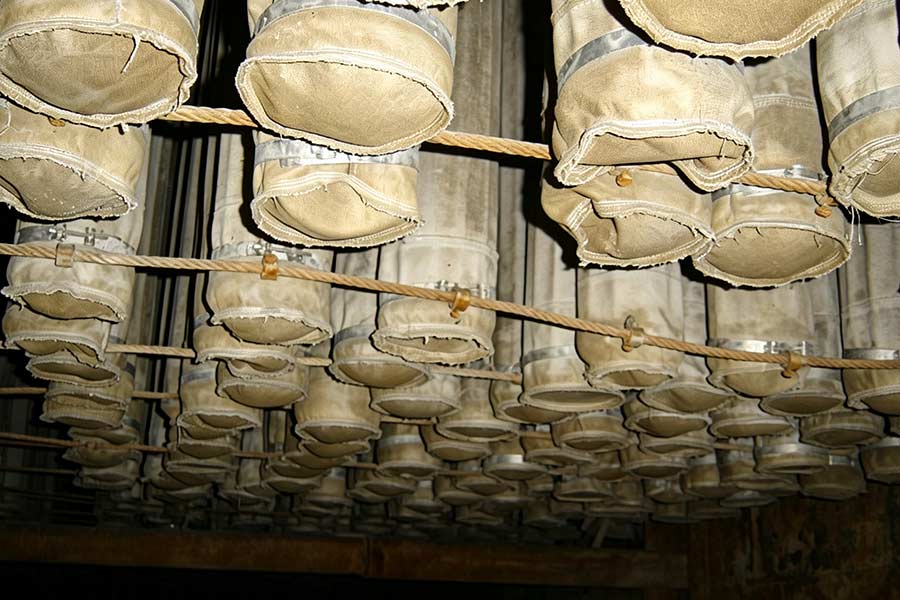
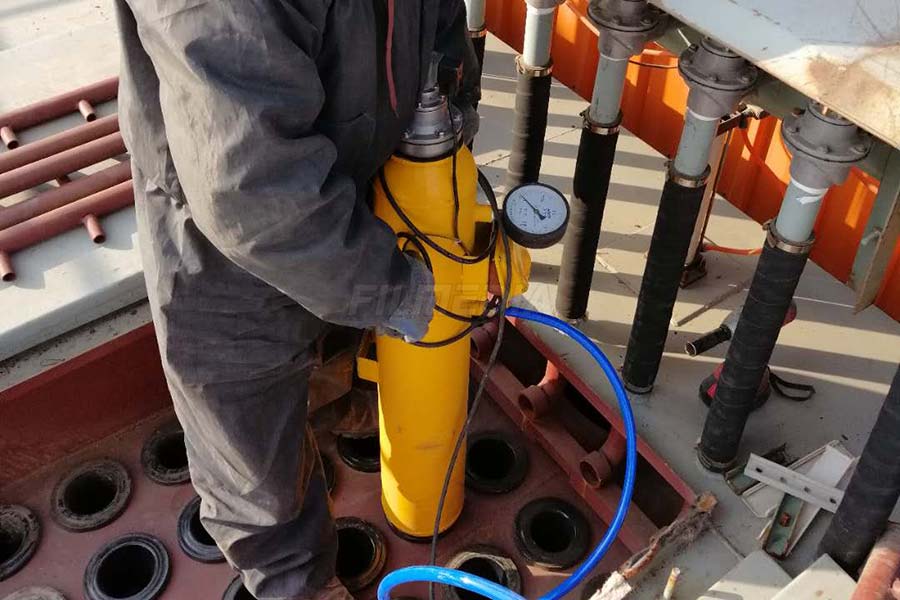
01. High-Frequency Vibration (Pre-cleaning)
High-frequency vibration is applied to dislodge large dust particles embedded within the filter bag walls. This process is carefully calibrated to ensure the fiber entanglement strength and structural integrity of the filter media are maintained, preserving the bag’s surface properties for easy cake release.
02. Chemical and Laboratory Analysis
Fabric samples are taken from the filter bags and analyzed using comparative instruments to identify oil and hydrocarbon components. This assessment ensures the selection of the most effective, non-destructive cleaning agents tailored to maximum soil removal.
03. Chemical Soaking
Filter bags are soaked in specialized chemical solutions to dissolve and break down stubborn oil-based contaminants within the fabric pores, thereby restoring the material’s original air permeability.
04. Controlled Washing
Bags are washed using precisely proportioned detergents in a low-temperature, uniform-flow water system. The washing mechanical agitation is strictly controlled to ensure thorough cleaning without causing any physical or mechanical damage to the fabric.
05. Hot-Air Drying
The filter bags are dried using forced hot air maintained at approximately 110°C. This temperature ensures dimensional stability, preventing the bags from shrinking or deforming during the drying process.
06. Performance Testing
The physical indicators and properties of the cleaned filter bags are tested using professional instruments to ensure they meet specified quality standards. (Any bags failing to meet the standards are routed to the repair station for rectification.)
07. Repair and Refurbishing
Filter bags with minor wear or localized corrosion from field operations are repaired to achieve a high recycling rate. For damaged hardware accessories (such as snap rings or collars), replacements will be provided to users at cost price.
08. Quality Inspection & Packaging
Once fully qualified and inspected, the refurbished filter bags undergo a final quality check. They are then sub-packaged, labeled with an inspection certificate, and transferred to the designated warehouse for delivery.