
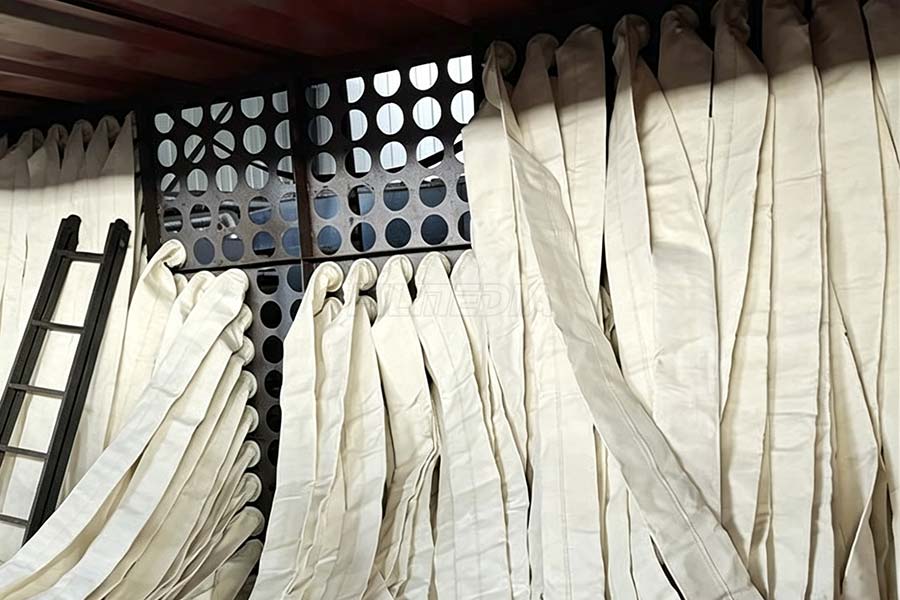
During pulse-jet cleaning, flat filter bags experience greater deformation than round ones. Consequently, when the bag snaps back after deflation, it impacts the cage more violently, leading to increased dust leakage. This violent motion also worsens dust migration to adjacent bags compared to round designs.
Under identical flue gas volumes, filtration velocities, and bag diameters, increasing the bag length reduces the total number of bags required. This minimizes the system’s footprint and reduces the number of solenoid valves, pulse valves, and blowpipes, thereby lowering initial investment and shortening the cleaning cycle. However, for online cleaning systems, longer bags increase the risk of expelled dust being re-entrained onto the bags. For offline cleaning systems, longer bags require extended pause times after pulsing, which slows down the filtration recovery rate of the isolated compartment.
To prevent the warp and weft yarns from fraying during production, it is best to cut the filter bag fabric using a electric soldering iron (ideally 1500W). For the pharmaceutical industry, filter bags should be rinsed with warm water before use to remove surface contaminants. Periodic washing (with chemical concentrations adjusted based on specific conditions) helps soften the fabric body, restore the bag’s hydrophobicity and air permeability, and ultimately extend its service life.