

Why Dust Control Is Essential in Cement Production
In cement production, dust control is not only a rigid requirement for environmental compliance, but also a key means to improve resource utilization and protect equipment and employee health. As a core component of baghouse dust collectors, the selection of filter bags (dust collector filter bags) directly affects the operating efficiency of the entire production line.
- Compliance with Environmental Regulations
- Protection of Worker Health
- Improved Equipment Reliability
- Recovery of Valuable Materials
- Better Workplace Environment
Most Common Filter Bags Used in Cement Plants
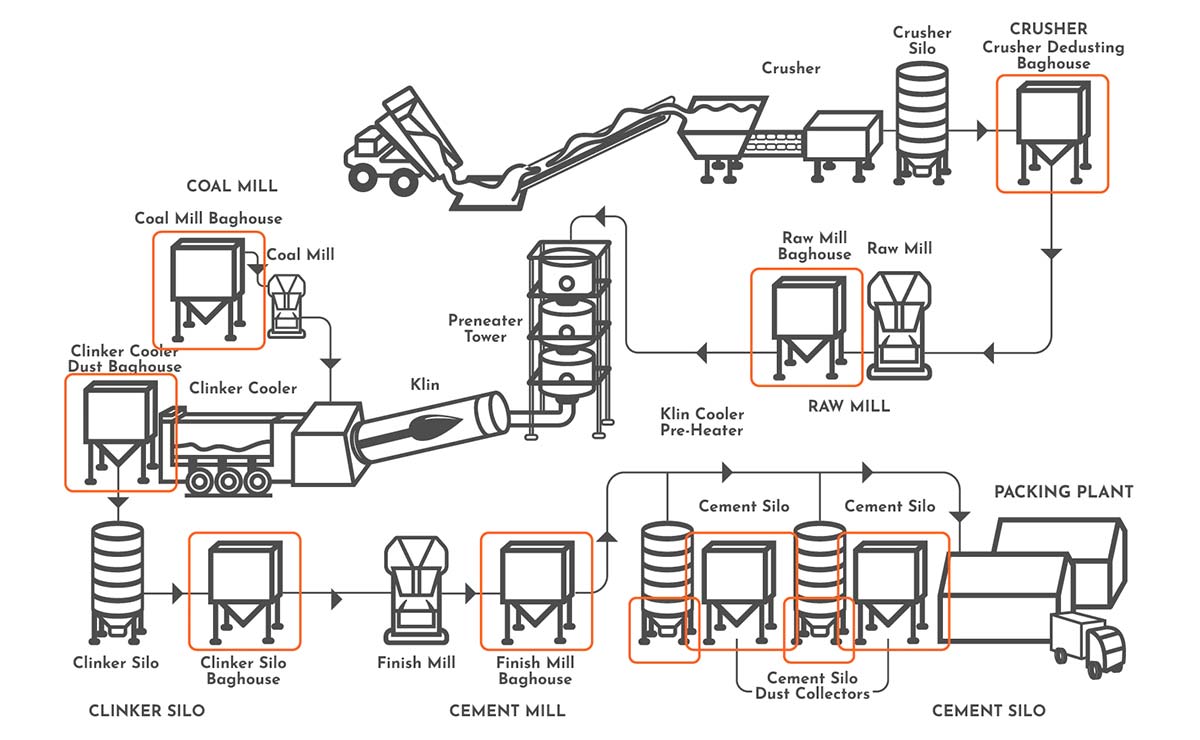
The raw material preparation stage includes the crushing, conveying, stacking, and storage of limestone, iron ore, coal, and other raw materials.
The raw meal preparation stage mainly involves raw mills (ball mills or vertical roller mills), separators, and raw meal homogenization silos.
The clinker calcination stage is the most challenging and critical dust collection application in a cement plant.
The coal preparation stage includes coal milling, pulverized coal conveying, and storage systems.
The cement grinding stage consists primarily of cement mills, separators, and finished product handling systems. Operating temperatures are typically between 80°C and 120°C.
The packaging and material handling stage includes bulk cement silos, packing machines, loading stations, and belt conveyor transfer points.
Working Principle of Bag Filter in Cement Plant
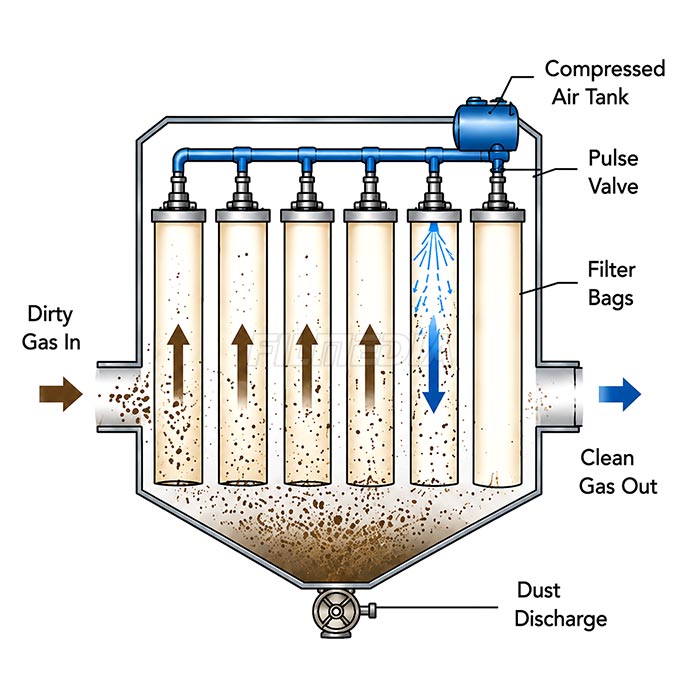
Dust-containing gas enters the middle and lower boxes from the air inlet of the dust collector, and enters the upper box through the filter bag. Due to the various effects of the filter bag, the dust and gas are separated. The dust is adsorbed on the filter bag, and the gas passes through the filter bag and enters the upper box through the venturi, and is discharged from the air outlet. In the process of purifying dust-containing gas through the filter bag, as time increases, more and more dust accumulates on the filter bag, so the resistance of the filter bag gradually increases, and the amount of gas passing through the filter bag gradually decreases. In order for the dust collector to work normally, the resistance must be controlled within a limited range (usually 120 to 150 mm water column). In this way, when the resistance rises to the limited range, the controller will issue instructions to trigger the control valves in order, open the pulse valve, and the compressed air in the air bag will be sprayed into the corresponding filter bags from the holes of the blowing pipe through the venturi. The filter bag expands sharply under the momentary reverse action of the airflow, so that the dust accumulated on the surface of the filter bag falls off, the filter bag is regenerated, and the cleaned dust falls into the ash hopper and is discharged from the body through the ash discharge system. Because the dust accumulated on the filter bag is regularly removed, the purified gas passes through normally, and the dust collector works normally.
Suitable Filter Media for Cement Dust Collection
☑Low / Medium-Temperature Applications (130 -170°C)
Suitable for: Raw material crushing systems, raw meal silos, cement mills, packing plants, and similar dust collection applications.
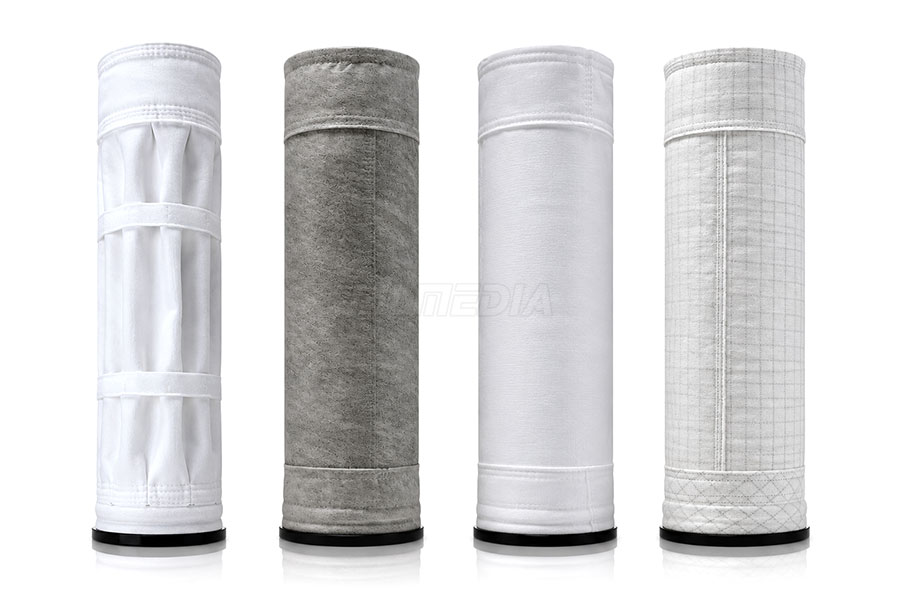
- Excellent overall mechanical strength.
- High abrasion resistance.
- Outstanding cost-performance ratio.
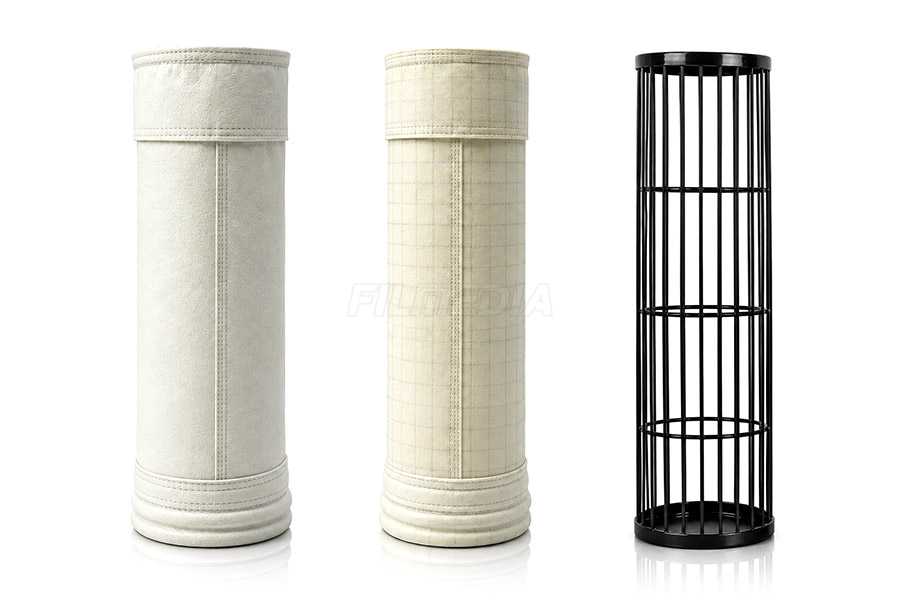
- Significantly better hydrolysis resistance than polyester.
- Suitable for moderate-temperature and humid operating conditions.
- Excellent resistance to moisture-related degradation.
☑ High-Temperature / Highly Corrosive Applications (180–260°C)
Suitable for: Rotary kiln exhaust gas filtration, high-sulfur coal combustion flue gas, and other severe operating environments.
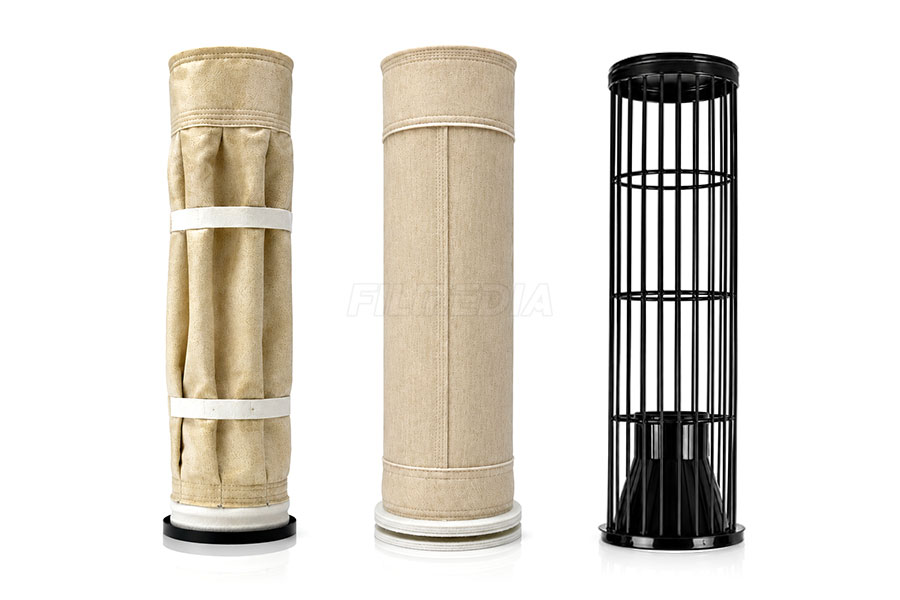
- Instantaneous temperature resistance up to 240°C.
- Excellent abrasion resistance.
- Superior flex and fold resistance.
- Suitable for grate cooler dust collectors and medium-temperature flue gas applications.
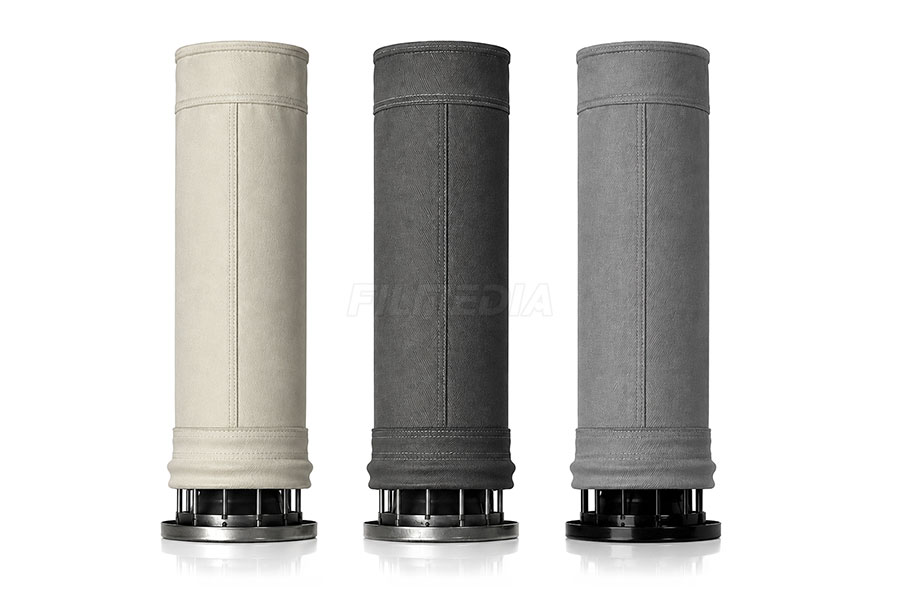
- Excellent high-temperature resistance (continuous operation up to 260°C).
- Good chemical corrosion resistance.
- Outstanding dimensional stability.
- Relatively economical compared with premium high-temperature filter media.
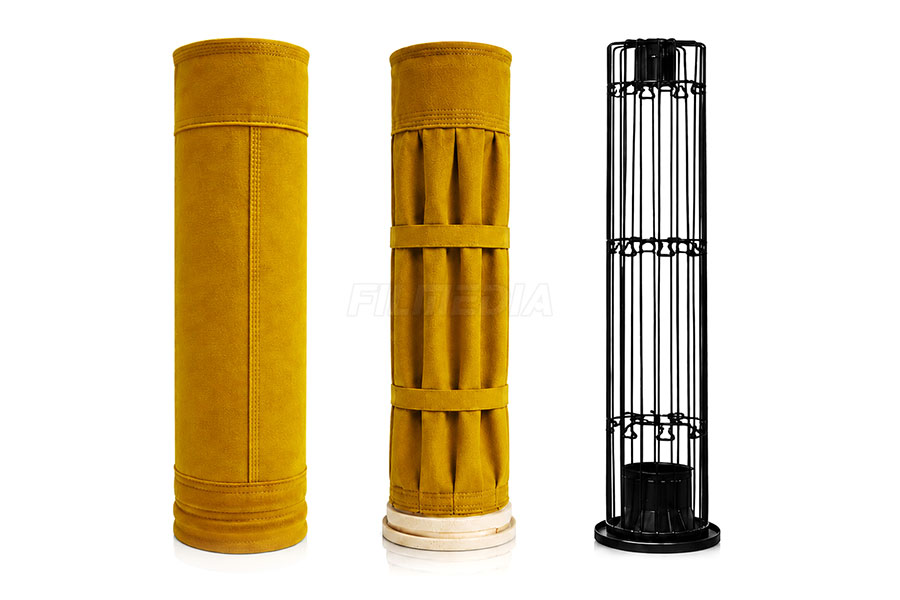
- Irregular trilobal fiber cross-section provides exceptional fine dust capture efficiency.
- Excellent high-temperature resistance.
- Superior filtration performance for submicron particles.
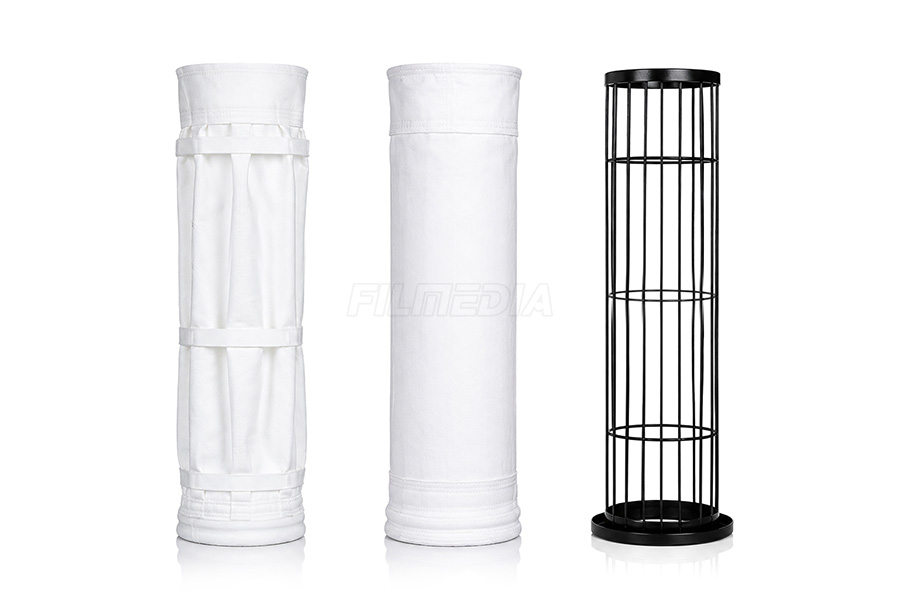
- Known as the “King of Filter Media”.
- Exceptional chemical stability with resistance to virtually all acids and alkalis.
- Excellent high-temperature resistance.
- Extremely smooth surface for easy dust cake release and superior cleaning performance.